

In comeback, Mun makes Asian Games golden for DPR Korea
Friday, October 6, 2023 - 11:34 By Vinay Siwach

LIN'AN, Hangzhou, China (October 6) -- After two heartbreaking losses to Japan in the finals of Women's Wrestling, DPR Korea finally got the better of arguably the best wrestlers in the world.
Hyon Gyong MUN (PRK) stunned world champion Nonoka OZAKI (JPN) with a comeback victory in the 62kg in the final at the Asian Games to make sure that her country finished Women's Wrestling with at least a gold medal.
A day before, wrestlers from the country suffered final-second losses to Japanese wrestlers. In the 50kg final, Son Hyang KIM (PRK) lost 5-4 to Remina YOSHIMOTO (JPN) while In Sun JONG (PRK) fell to world champion Tsugumi SAKURAI (JPN) 7-6.
But Mun changed the script, giving DPR Korea something to cheer about on their comeback after four years. The country has not wrestled globally since the 2019 World Military Games.
In the 62kg final, Mun, down 6-0 at the break, came alive in the second period. She scored a counter exposure to make it 6-2 before an arm-lock throw in the final minute saw Ozaki, who wrestled like a world champion till then, fall on her back.
Though Ozaki kept her one shoulder from touching the mat, Mun was happy to hold her in danger for the remainder of the clock to win 6-6 as she had a four-point move over Ozaki's two-pointers.
A stunned Ozaki took her own time to get up from the mat while Mun jumped around in joy and finished her celebrations with a somersault.
 Hyon Gyong MUN (PRK) in action against Nonoka OZAKI (JPN) in the 62kg final. (Photo: UWW / Sachiko Hotaka)
"I was in a situation where I didn't know anything about the DPR Korean wrestler," Ozaki said after the final. "In that context, the biggest thing is the mentality. I felt that I was prepared. After I beat Tynybekova, I knew that the job wasn't finished. I got my mind focused on the final. I wasn't feeling overconfident. I didn't think about being defensive. The problem was that I didn't get off to a good start that I wanted to."
This is not the first time Mun has troubled a Japanese wrestler. Back in 2019 at the Asian Championships in Xi'an, Mun led 4-3 against Yukako KAWAI (JPN) in the semifinal and with 12 seconds left, she tried a headlock throw which Kawai defended and scored a takedown. Mun would go on to lose that semifinal 5-4.
 Nonoka OZAKI (JPN) defeated Aisuluu TYNYBEKOVA (KGZ) 3-1 in the 62kg quarterfinals. (Photo: UWW / Sachiko Hotaka)
While the 20-year-old Ozaki could not win her first Asian Games gold, she did have a mini-achievement in Hangzhou. Ozaki defeated Aisuluu TYNYBEKOVA (KGZ) 3-1 in the quarterfinals, their fifth career meeting in two years. A takedown from Ozaki in the second remained the difference between the two wrestlers after passivity points. Ozaki now leads the head-to-head 3-2. The two exchanged titles in 2021 and 2022 and Asian titles in 2022 and 2023.
 Aiperi MEDET KYZY (KGZ) scores a takedown against Zhamila BAKBERGENOVA (KAZ) in the 76kg final. (Photo: UWW / Sachiko Hotaka)
While Tynybekova, the Asian Games champion from 2018, could not defend her title, bronze medalist from Jakarta Aiperi MEDET KYZY (KGZ) improved to gold after beating the Asian champion at 72kg Zhamila BAKBERGENOV (KAZ) in the 76kg final.
Medet Kyzy had injured her knee in the final of the World Championships in Belgrade two weeks ago but showed little signs of injury winning the final 7-4. Not only was her offense on point, but the Kyrzgy wrestler was up to the mark in defense as well.
"After the World Championships, my goal was this tournament," Medet Kyzy said. "After Belgrade, I thought that I would not wrestle in the Asian Games but we discussed with the coaches and they said you can win the Games with one leg and decided to wrestle."
 Feng ZHOU (CHN) defended her Asian Games title at 68kg. (Photo: UWW / Sachiko Hotaka)
The third gold medal in Women's Wrestling was captured by home favorite and defending champion Feng ZHOU (CHN) at 68kg. After Greco-Roman and Women's Wrestling, Zhou was the only wrestler to defend the title from Jakarta.
Zhou was up against a surprise finalist in Nurzat NURTAEVA (KGZ) who defeated world silver medalist Delgermaa ENKHSAIKHAN (MGL) in the semifinal. The former Asian champion launched a barrage of high gut wrenches to beat Nurtaeva 13-2.
"I feel quite emotional right now," Zhou said. "I did better in the second round. I was quite nervous in the first and was a big tight. But I was able to let things go from there. I took my chance and successfully extended the gap."
The gold medal is Zhou's third of the Asian Games as she won the title in 2014 as well at 75kg as only four weight classes were included in the Games back then.
"I never thought about the two previous Asian Games gold. I just took it one bout at a time," she said. "I overcame myself. I didn't do well at the World Championships just before the Asian Games. To b able to recover from that, pick myself up and regain confidence, wasn't that easy to do."
The 30-year-old two-time world medalist was wrestling at home for the first time in a while and expressed that the cheers from the crowd was the extra motivation she needed.
"It's definitely more motivation," she said. "It's so different competing at home. I hear everyone cheering for me and that helps drive me. It's so much nicer to compete at home."
Tynybekova wins bronze
World champion Tnynbekvoa returned to win the bronze medal at 62kg, beating Irina KUZNETSOVA (KAZ) 2-1. The three-time world champion and Olympic silver medalist relied on her strong defense to see off Kuznetsova.
"I weighed around 60kg as I fell sick when I came here," Tynybekova said. "I have not eaten in three days. I am a little tired and I think I need a holiday."
The other bronze medal went to SONAM who defeated the world silver medalist from 2022 Jia LONG (CHN) 7-5 with a takedown in the last 30 seconds.
At 68kg, Naruha MATSUYUKI (JPN) completed a fall over KANHA CHEA (CAM) to win the medal while Enkhsaikhan pinned 2010 Asian Games champion Yelena SHALYGINA (KAZ) after an action-packed bout in which Enkhsaikhan led 10-6 before getting the fall.
The bronze medals at 76kg went to KIRAN who managed to beat Ariunjargal GANBAT (MGL), 6-3, and Juan WANG (CHN) who won 6-0 against Hui Tsz CHANG (TPE).
RESULTS
62kg
GOLD: Hyon Gyong MUN (PRK) df. Nonoka OZAKI (JPN), 6-6
BRONZE: SONAM df. Jia LONG (CHN), 7-5
BRONZE: Aisuluu TYNYBEKOVA (KGZ) df. Irina KUZNETSOVA (KAZ), 2-1
68kg
GOLD: Feng ZHOU (CHN) df. Nurzat NURTAEVA (KGZ), 13-2
BRONZE: Naruha MATSUYUKI (JPN) df. KANHA CHEA (CAM), via fall
BRONZE: Delgermaa ENKHSAIKHAN (MGL) df. Yelena SHALYGINA (KAZ), via fall
76kg
GOLD: Aiperi MEDET KYZY (KGZ) df. Zhamila BAKBERGENOVA (KAZ), 7-4
BRONZE: KIRAN df. Ariunjargal GANBAT (MGL), 6-3
BRONZE: Juan WANG (CHN) df. Hui Tsz CHANG (TPE), 6-0
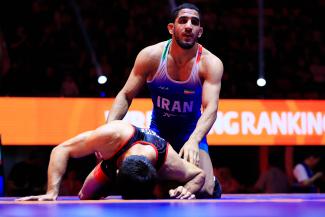
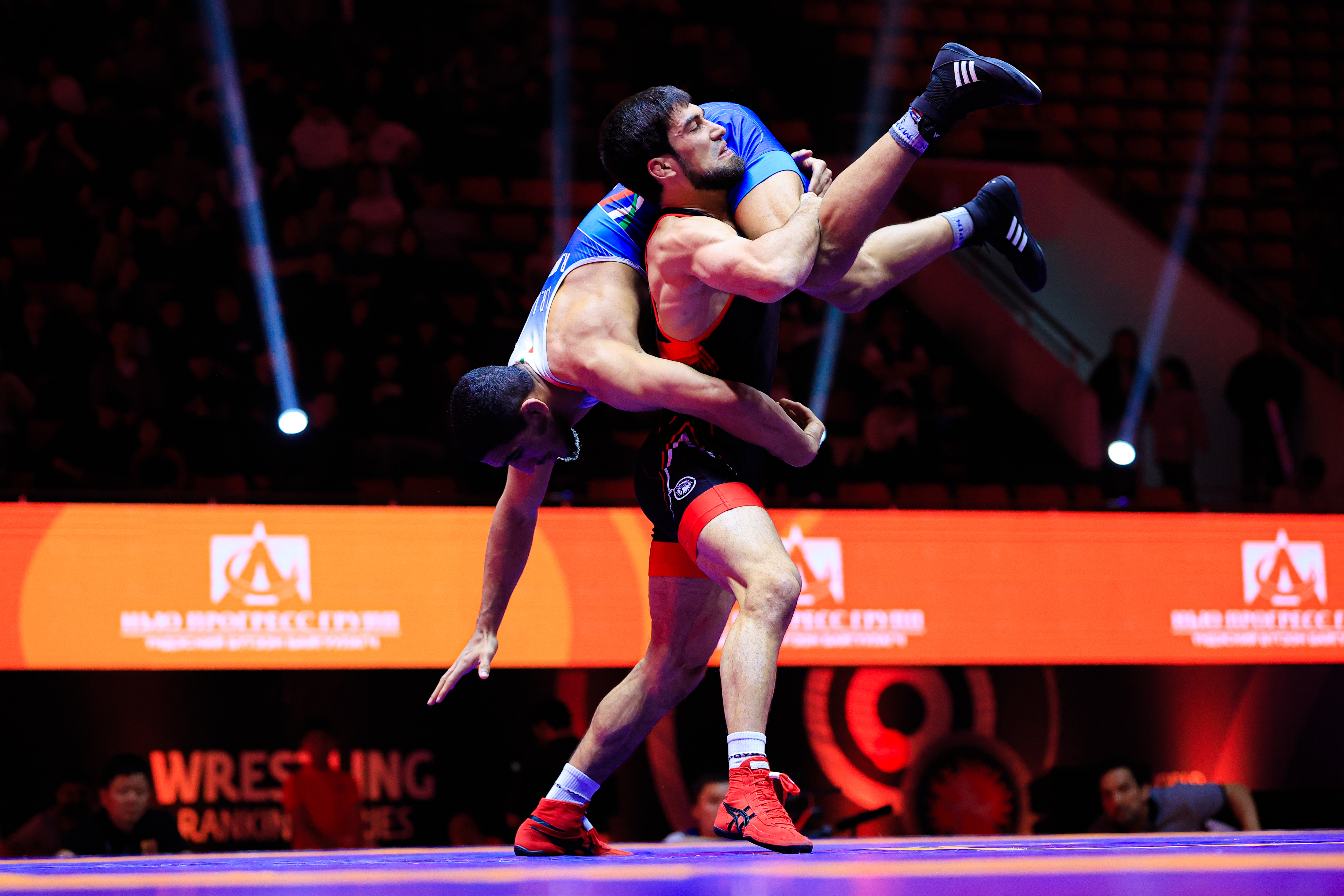 Shamil MAMEDOV (BUL) loads to throw Rahman AMOUZAD (IRI) at the start of their 65kg final. (Photo: United World Wrestling / Kostadin Andonov)
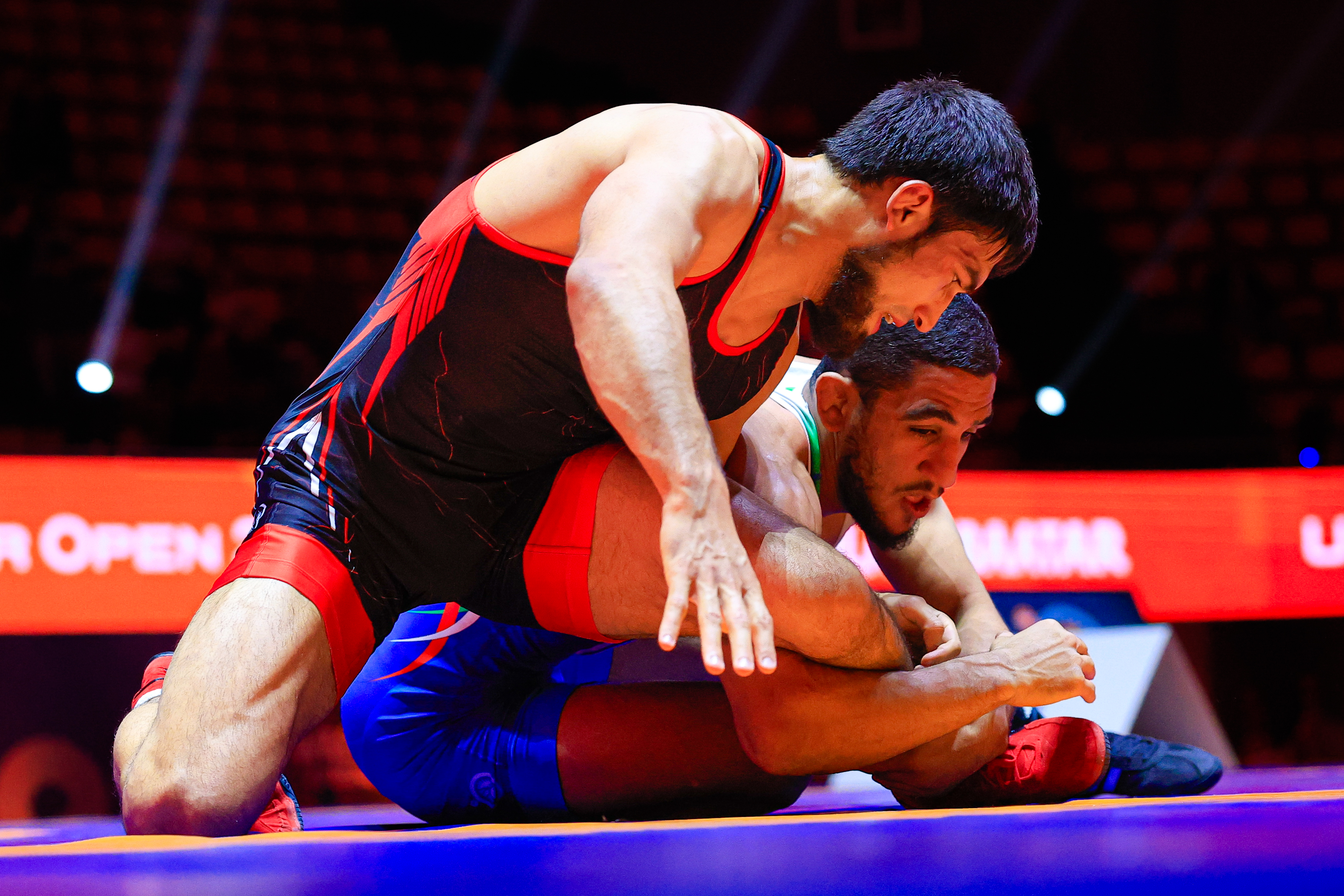 Rahman AMOUZAD (IRI) scored 14 unanswered points on Shamil MAMEDOV (BUL) in the 65kg final. (Photo: United World Wrestling / Kostadin Andonov)
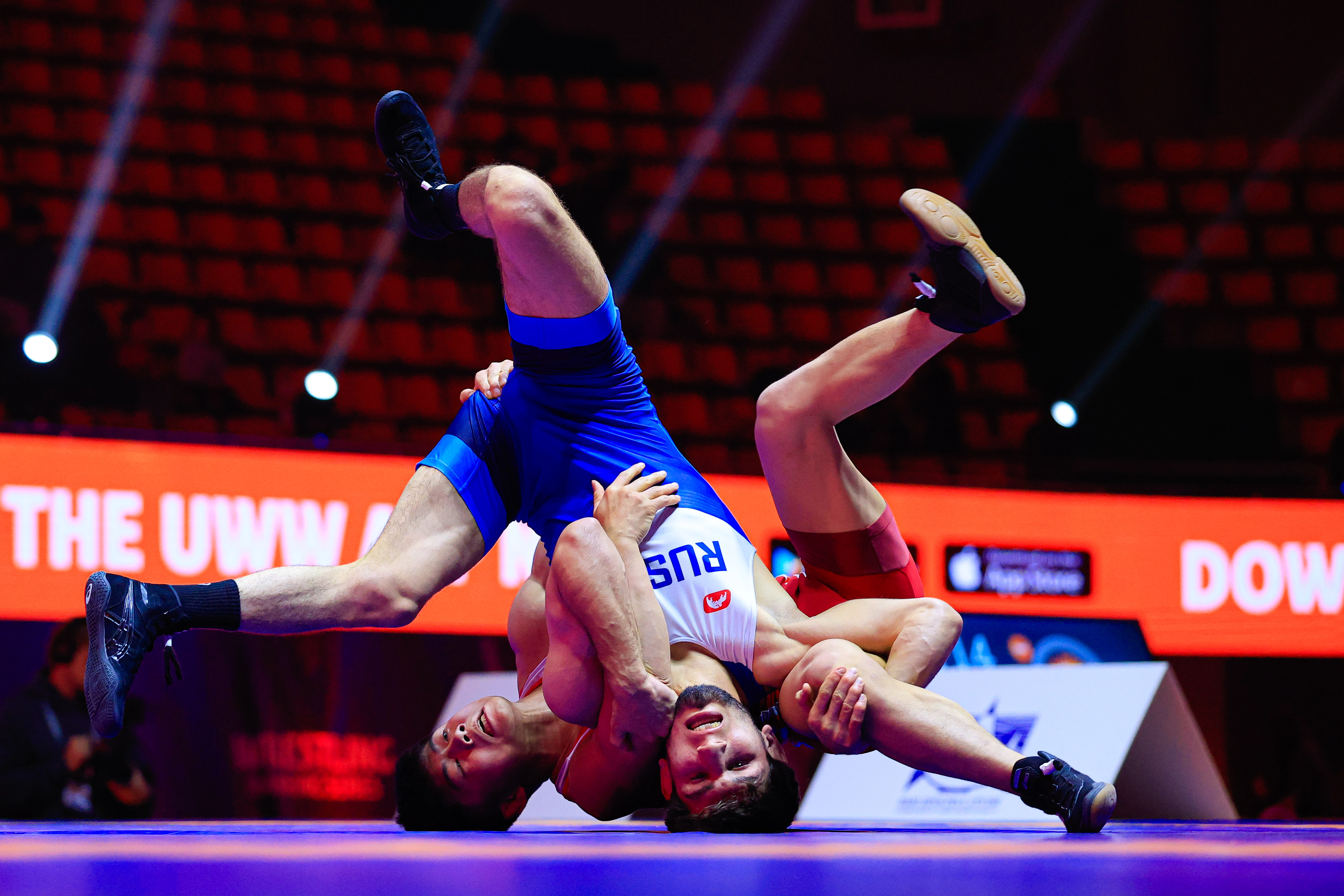 Musa MEKHTIKHANOV (RUS) hits a fireman's carry on Chong Song HAN (PRK) during the 57kg final. (Photo: United World Wrestling / Kostadin Andonov)
Share your thoughts.
Comments