

#BurundiWrestling

Burundi Begins the Development Process of its National Sports System

By United World Wrestling Press

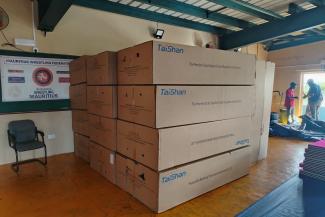
Following the agreement of Olympic Solidarity to grant the program of development of the structure to the Burundian wrestling federation. United World wrestling, through its development department headed by Madame Deqa Niamkey, has dispatched Vincent AKA, development officer, to carry out this program. This program will run for one year and will be carried out in three stages:

The first phase, taking place from November 31 to 8, 2021 made it possible to assess the situation of the fight in Burundi. The entire first phase also made it possible to train young coaches and to launch the phase of structuring wrestling clubs. Burundian level 1 coaches trained in 2019 by educator Juan Maren Delis were thus able to be contacted for the launch of this program.

Following this phase, the expert gave recommendations for the next step.

This first phase ended on a positive note because the expert was able to meet the President of the Burundian NOC and IOC member, Ms. NSEKERA Lydia, who is committed to supporting the wrestling development project in Burundi. The president also showed her willingness to help women's wrestling.


The second phase of the DNSS (from April 1 to 10, 2022): Intermediate evaluation regarding the recommendations and directives of the first phase, training of national technical officials. The training of these national technical officials will be based on an Olympic wrestling competition. At the end of this phase, the expert will also make recommendations for the third phase.

Phase 3 of the DNSS (1st to 10th November 2022): Final evaluation and Complete ‘Establishment of wrestling academies (Wrestle for fun, Beach Wrestling and Olympic value). In this phase will be organize the seminar for club presidents, general secretary, and treasurer. This final evaluation will also be followed by recommendations with regard to the terminal phase in order to allow sustainable development.
#development

Bulgaria hosts OLYMP to increase media literacy

By United World Wrestling Press

BULGARIA (October 15) -- Bulgaria hosted a seminar on the OLYMP project, funded by the European Union's Citizens, Equality, Rights and Values (CERV) Programme, at Diana National Wrestling Hall on October 9. The project aims to improve the media literacy of athletes, coaches, and sports managers.

The seminar was led by Georgi BANOV, one of the doyens of Bulgarian sports journalism, who has covered 14 Olympic Games in winter and summer sports, as well as a number of world and European Championships in wrestling, weightlifting, athletics, biathlon, and more.

The seminar was organized for the athletes of the national wrestling teams. The event was hosted by Belcho GORANOV, Chairman of the Ethics and Legal Commission of the United World Wrestling (UWW) and project manager on behalf of the Bulgarian Olympic Committee (BOC).


A post shared by bgolympic (@bgolympic)

The team emphasized that the seminar is part of a six-month cycle of informal training under the OLYMP project, which covers a total of 110 young athletes. The program includes weekly sessions in small groups focusing on media and information literacy, critical thinking and analytical skills, as well as developing the participants' confidence and ability to defend their positions with reasoned arguments.

The weekly classes will include readings and discussions on biographies, novels, sports magazines, as well as topics related to sports management and economics. Additional informal activities -- meetings with prominent athletes and film screenings -- will be held twice a month, with each event featuring moderated debates and practical challenges for “fact checking” and ethical behavior on social media.

Banov drew the athletes' attention to how to verify the information they receive through social media and other sources, how to recognize fake news, how to search for reliable information, and how to use social networks correctly, avoiding hate speech.

At the end of the media literacy program, a combined (formal and informal) assessment is planned – short tests and case studies, observation of group work, participant portfolios, and satisfaction surveys—to report on the specific results of the training and its impact on the engagement of young athletes in public life.

Read more on BOC website