

After Heartbreaking Rio Exit, Lappage Focused on Tokyo Olympics
Monday, June 7, 2021 - 18:08 By Vinay Siwach

Three hours before her bout at the Rio Olympics, Danielle Lappage made an entry in her personal wrestling journal:
“August 18, 2016. 7 a.m. Today is the day I have been dreaming of for over a decade! I will be the first women’s wrestling match of the day against Ukraine- she is tough but I am better. You are an OLYMPIC CHAMPION!”
All the sacrifices she had made, all the hard work she’d put in for 13 years was now on the line.
Alas, it was not meant to be.
The warm-up hall at the Olympic center in Rio was full of wrestlers gearing up for the big day – the fifth of wrestling at the 2016 Games. Lappage was one of them. Like everyone else, the Canadian was also giving final touches to her preparations. "It was very random. It was a warm-up I had done hundreds of times before,” she says. “I had a lot of pain in my butt.”
Lappage lay on the mat, hiding her pain from her competitors, who were training right next to her. She asked her sparring partner to call the medical staff. During her second last warm-up, her partner made a slight movement and a sharp feeling went through her left butt. Lappage collapsed right there. "I was super devastated and emotional," she says.
She doesn't turn emotional while recounting the horrific incident from Rio almost five years ago but that day, Lappage was left in tears and her Olympic dream was shattered.
Lappage was born in Olds, a small town south of Alberta to Valerie and Robert Lappage. At the age of three, she joined gymnastics classes and later she added swimming to her schedule. Her introduction to wrestling was only when she was 12 years old.
“When I got to sixth grade, my school offered many sports for free. Badminton, athletics, basketball, volleyball, wrestling and rugby,” she says. “Because I was strong and athletic, I tried every sport. I was never just a wrestler until after high school.”
But when it came to picking a sport in which she wanted to make a career in, Lappage was always clear in her mind. “I truly had a passion for it [wrestling]. I always knew that I was going to wrestle,” she says. “I went to Simon Fraser University in Vancouver and continued to wrestle there.”
The seeds of the Olympic dream had been sown before that. Back in 2004 when women's wrestling was inducted into the Games, Lappage was wrestling her first national championships. She did not win but she knew she wanted to be an Olympian. Next year, she won the gold medal. The dream was quickly becoming her belief that she can win the Olympics by 2016.
“My career up to Rio was focused on 2016,” she says. “Even when I was a young girl I was thinking that 2016, it would be the ideal year, I would be the ideal age.”
The journey began with the junior world title in 2010. Lappage did try to be on Canada's 2012 Olympic team but missed out. A couple of years later, she took big strides. She won the senior nationals, world university championships and even the Commonwealth Games.
But life gifts you a sucker punch when you are least ready. Lappage took two weeks off after the 2014 World Championships and in her first practice on return, tore her ACL. Was that the end of a dream? She went into a soul-searching mode. Wrestling took a back seat but only momentarily.
Against all odds, she won the Canadian Olympic trial in December 2015. She had taken her first step towards the goal and was motivated to achieve it until it all came crashing down in that warm-up hall.
“I was pinching myself and telling myself that it had to be a nightmare,” she recalls. “But when I realised it wasn't, I was trying to pump myself in my mind saying 'you can wrestle with an injury, people have done this before.'
“Then I went to wrestle but I could even use my left leg. I had to forfeit the tournament. What I remember the most in the moment of pulling out was looking up to the stands and seeing my parents. They were so confused and scared. At that moment I became super emotional and the day, the moment, even months after that moment, were devastating.”
There was no clarity over the injury. Her taking the mat against Yulia TAKCH (UKR) was just an athlete desperate to not let go of the dream.
“I had ruptured a hamstring muscle,” Lappage says. She was told about it when she returned to the Olympic village. “It's so unexplainable and so confusing to me as to how and why it happened.”
The days that followed were hard. During the recovery phase after the ACL injury, Lappage had the motivation of the Rio Olympics. After Rio, she had none.
“The emotional toll that injury had on me and the uncertainty that will I be able to come back physically, had me questioning whether I could, or whether I wanted to, whether it was the right thing in my life to wrestle,” she says.
Her blog entries give a clearer picture of her thoughts soon after. Six months passed as she battled self-doubts and thought of leaving the sport. “The mental side, the uncertainty of 'will I be the same? Will I re-hurt it?'” she continues, “have always been the most challenging.”
Thankfully, she could take her mind off wrestling and focus on her studies. At the Simon Fraser University, Lappage had completed her BA in Criminology and followed it with a MA degree in the same. Her injury made her give up the plans of policing.
Back in 2012, she sat for LSAT but could not clear for law school. It was luck by chance that while applying for different jobs she realized that her score was considered for five years. She applied for the University of Calgary. She never thought of it but she was accepted.
Calgary was going to become her new home after eight years at SFU. While she had to leave her former teammates, she would be paired with Rio Olympic champion Erica Wiebe.
“I saw having a law degree, being a lawyer was the best way I could help the less fortunate and my community,” she says. “Formal education was actually helpful to me to be a great wrestler and also be a good student. It was an opportunity to have a balance – the physical and mental, both. When I was having a hard day physically or emotionally or mentally with wrestling, it was good to have something else to focus on.”
Perhaps that's what got her back into wrestling.
In February 2018, Lappage decided to wrestle again. She instantly did not make goals but she wanted to test herself again and test at the highest level.
Klippan Lady Open is one of the most prestigious wrestling tournaments for women. In the Nordic country of Sweden, female wrestlers from around the world try to win the gold medal. Lappage, in that year, was also trying.
In her first international bout after a long hiatus, Lappage faced Tamyra MENSAH STOCK (USA), a two-time Ivan Yargiun champion and USA's brightest prospect. The category was also 68kg, a bump up from Lappage's regular 63kg.
The Canadian won 4-2. Laura SKUJINA (LAT) did not pose any challenge in the semifinal and Lappage was in the final. She could not have planned it better.
Against Alla CHERKASOVA (UKR), Lappage won 9-4 and the gold medal on her return to the international stage. That was the beginning of a memorable year.
She racked up gold medals at All Ukrainian Memorial Tournament, Canada Cup and Poland Open with a silver medal at the Commonwealth Games sandwiched between them. To cap it all off, she won a silver medal at the World Championships, only her second in the long career.
“I surprised myself and a lot of people that I was able to come back, move and wrestle the way I did,” she says.
She could see the Tokyo Games were on the horizon. She had to make a decision of committing herself to another Olympics, live life thinking and preparing for one specific day.
"I didn't have my goals set on Tokyo until 2018. I took it season by season because I was so upset,” she says. “It was fast approaching so I had to commit myself. Around that time, I made Tokyo a specific goal.”
 Danielle LAPPAGE (CAN) lost in the quarterfinal of the 2019 World Championships in Nursultan, Kazakhstan. (Photo: UWW / GABOR MARTIN)
Securing a quota for a country is the first step towards fulfilling an Olympic dream. Lappage could not even do that.
“2018 was a great year for me. I was confident and didn't feel too much pressure,” she says. “A year after, I think I didn't work on my mental game as much as I needed to. I took my confidence and focus for granted and I didn't wrestle my best, for example the 2019 World Championships.”
That was the first qualifying event for the Tokyo Games. In Nursultan, Kazakhstan, Lappage had the chance to book Canada's ticket in the 68kg weight class. She was 30 seconds away when a lapse in concentration took it all away.
Just 18 months ago, she had defeated Cherkasova in Sweden. But she lost to her 7-8 when it mattered the most. The Ukrainian lost her semifinal, ending Lappage's repechage hopes.
“One of those losses that I thought is going to harm me after, follow me in my career,” she says. “That happens in wrestling. Just had to go back to the drawing board, analyse that, work on that part of the game and that's what I did.”
But then, the Covid-19 pandemic brought everything to a standstill. Sports events were getting cancelled and the Pan-Am Olympic Qualifier in Ottawa, Canada was under a cloud. Two years after she came back to relaunch her wrestling career, Covid-19 threatened to take it all away.
Ultimately, United World Wrestling, wrestling’s global governing body, decided to conduct the qualifiers without spectators. It was enough for Lappage, as she won the 68kg gold medal and with that, earned an Olympic spot for her country, two months after winning the national Olympic trials. Finally, she could dream of being an Olympic champion again.
But there was one more twist to Lappage's story. Canada announced they would pull out of the Olympics because of the pandemic if they went ahead as scheduled. But then, the International Olympic Committee announced the Games were postponed by a year.
A year and three months have passed since that day in Ottawa, Lappage has not competed internationally. Forget competing, she has not stepped outside Canada, majorly because of the strict quarantine rules of the country.
“The uncertainty of it all has been very difficult when you sit back and you allow the fear and anxiety to stir up, it does get a little bit stressful obviously,” she says.
“In sports, you face struggles, challenges, setbacks regularly. I guess it was just one of those," she says. "It was similar to an injury. You have to sit back and reflect and plan training and plan better when things are not ideal. When they announced that it was going to be delayed, of course, it was not ideal. But in my opinion, it was better than being cancelled. It's still happening and I have an extra year to prepare and be better than I would have in 2020.”
Just to ascertain that, she will be wrestling at the last ranking series event in Poland in June before the Games. The Poland Open will be her big test since the World Championships in Central Asia. Like Lappage, her opponents are also getting better and she knows it.
“There are no easy opponents,” she says. “It's an open field and I am not looking at anybody lightly. Hence, we all ought to be on our 'A' game and we ought to be the best on our day and if we are able to bring everything together on that day we will be successful.”
 Danielle LAPPAGE (CAN) won the Pan-Am Olympic Qualifiers in Ottawa, Canada to qualify Canada for the Olympic Games. (Photo: UWW / TONY ROTUNDO)
Lappage is in the twilight of her career. But like many elite athletes, she is wrestling with the idea of when to call it quits.
“I enjoy the training, the process, the schedule, the details, the experiences and the social aspect,” she says. “But of course it will end soon. Maybe one more cycle would be max. I have not thought about it, I have not committed to it.”
Lappage has clearly come a long way from that injury in Rio. At one point she was on the verge of leaving the sport and five years later, she is thinking about Paris. But in sport, as in life, nothing should be taken for granted.
“Since Rio, I have not taken any day for granted, any competition for granted, any experience for granted. For years, I count this as my bonus life, my second life and in the sport my second chance. It's been awesome.”
Lappage learnt that lesson long back.
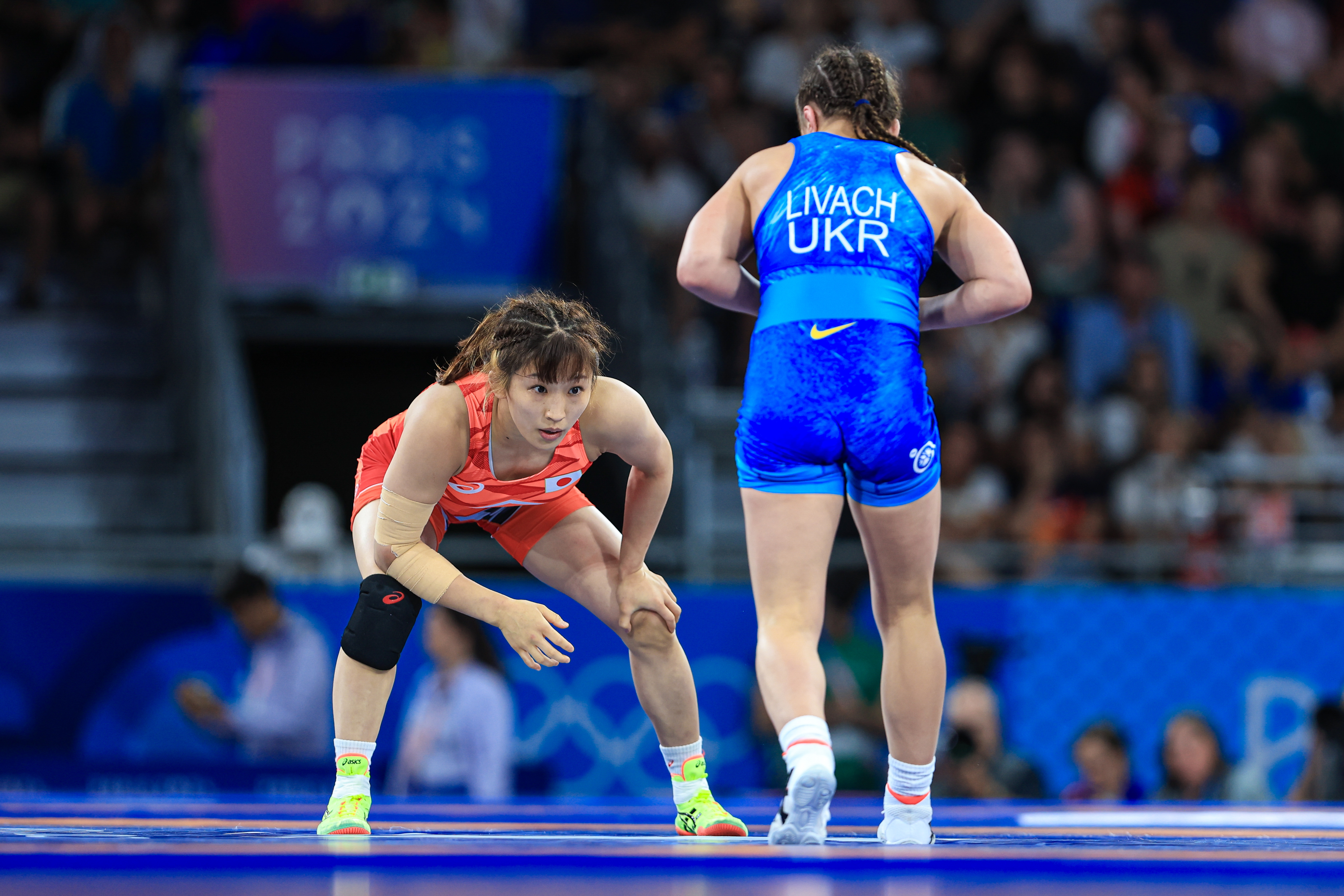 Yui SUSAKI (JPN) will compete at 50kg at the Emperor's Cup. (Photo: United World Wrestling / Amirreza Aliasgari)
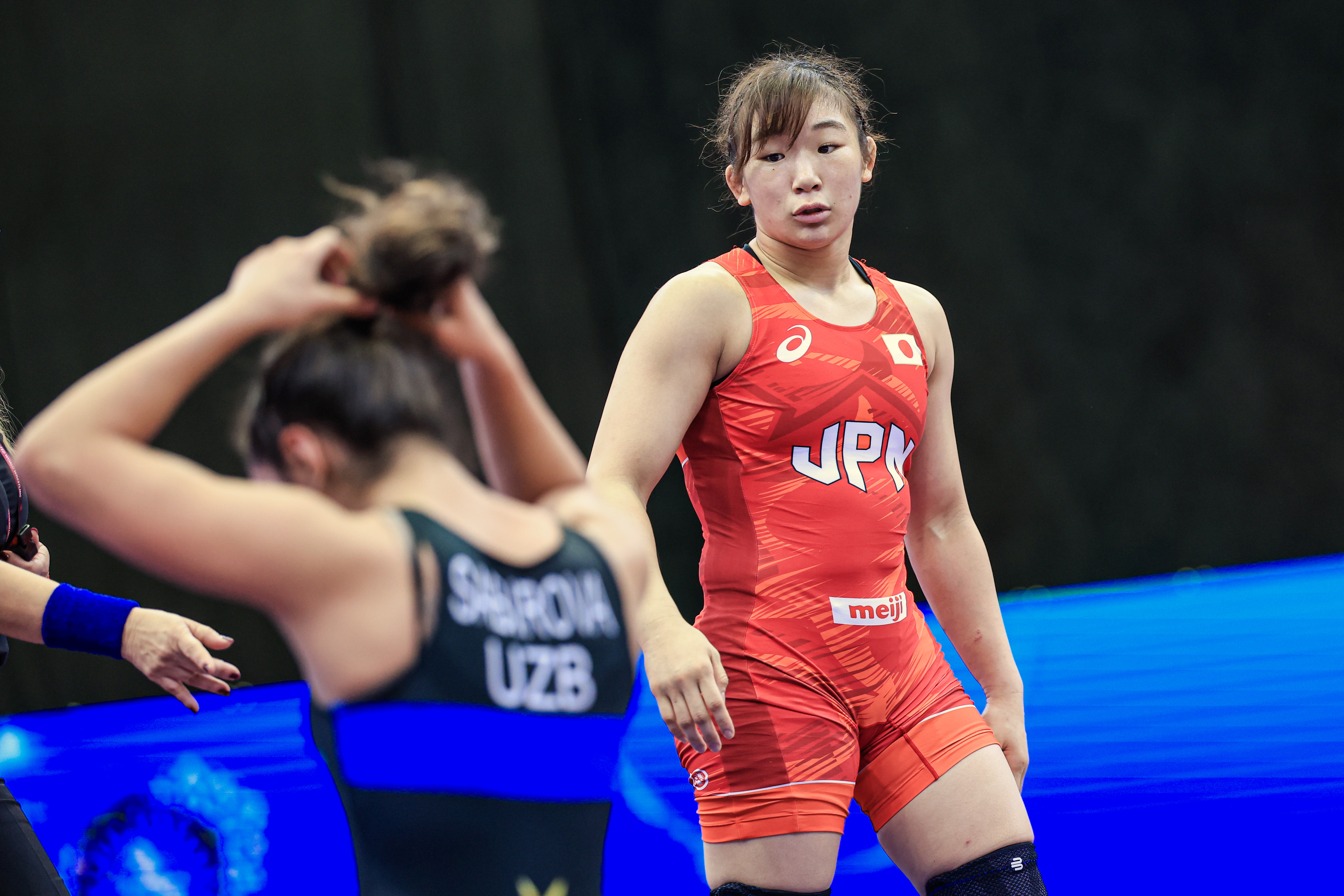 Paris Olympic and 2025 world champion Sakura MOTOKI (JPN). (Photo: United World Wrestling / Amirreza Aliasgari)
Share your thoughts.
Comments