

African Beach Games: Olympic medalist Oborududu solid on sand
Thursday, June 29, 2023 - 20:52 By Vinay Siwach

HAMMAMET, Tunisia (June 29) -- Blessing OBORUDUDU (NGR), an Olympic silver medalist, has achieved remarkable feats on the wrestling mat.
At the African Championships in women's wrestling, the 34-year-old holds the record for the most gold medals, with 12. In Tokyo, she became the first African woman wrestler to reach an Olympic final, making her one of the best among wrestlers who have wrestled on the mat.
However, on Wednesday, Oborududu stepped onto the sands for the first time and returned home with a gold medal at the 2nd African Beach Games in Hammamet, Tunisia.
Despite being a regular in Olympic wrestling at 68kg, Oborududu decided to represent Nigeria in Hammamet, where Beach Wrestling made its debut on the African Beach Games program.
Read: Traditional Wrestling Hotbed Senegal Dominates African Beach Games
While most victories in Beach Wrestling resemble Olympic wrestling, there are a few differences. In Beach Wrestling, a throw awards three points, ending the bout. If a throw is not executed, the bout continues for the stipulated three minutes. The wrestler who accumulates at least three points before their opponent is declared the winner.
Oborududu achieved this in three of her four bouts. She made her debut against Erica NGAKALI (CGO) in Round 1 and had no trouble defeating Ngakali 3-0 to secure victory via superiority.
In her next match against Patricia ELNOUR (SUD), Oborududu triumphed 3-1, advancing to the semifinal against Anta SAMBOU (SEN). Despite facing a challenge and giving up two points, Oborududu held on for a 3-2 victory, securing her spot in the final against Amy YOUIN (CIV).
Youin, who had not conceded a single point in the group stages and the semifinal, scored two points against Oborududu in the final. However, Oborududu used her experience and strength to defeat Youin 3-2, capturing Nigeria's first-ever gold medal in Beach Wrestling at the African Beach Games.
 Blessing OBORUDUDU (NGR) made a golden debut at African Beach Games in Hammamet. (Photo: United World Wrestling / Bayrem Ben Mrad)
"Another gold in the bag!," Oborududu wrote on her Instagram. "Glory to God for yet another addition and new win in my career. This win is quite personal to me, as this is my first hand trying beach wrestling. I stepped on the sand with hope as usual. 'Well, I'm here to wrestle yeah, so let me give it my best shot like I always do on the mat' I said to myself. And guess what? I won gold in the ongoing African Beach Wrestling (Games), Tunisia 2023."
This marked the beginning of Nigeria's gold rush, as they went on to win two more gold medals in women's Beach Wrestling. The only weight class in which Nigeria failed to win gold was at 70kg, where Safietou GOUDIABY (SEN) claimed the top spot.
 Miesinnei GENEISI (NGR) made a perfect run to the 50kg gold at the African Beach Games. (Photo: UWW / Bayrem Ben Mrad)
At 50kg, Commonwealth Games and African champion Miesinnei GENEISI (NGR) showcased her dominance, winning all her bouts without conceding a single point.
Geneisi, who had previously won the African Beach Championships in May, began with a 3-0 victory against Emma WANGILA (KEN) in Round 1. She followed it up with a similar scoreline, defeating Cheima CHEBILA (ALG) in Round 2. When Mbuka CAROLINA (ANG) withdrew due to injury in Round 3, Geneisi was declared the winner after three wins in the round-robin bracket involving five wrestlers.
Nahamie SAMBOU (SEN) secured two wins, earning the silver medal, while Cheima CHEBILA (ALG) won the bronze after defeating Wangila in the Round 3 bout.
 Esther KOLAWOLE (NGR) won the gold medal at 60kg at the 2nd African Beach Games. (Photo: UWW / Bayrem Ben Mrad)
Another African champion who won a gold medal was Esther KOLAWOLE (NGR) in the 60kg weight class. While not as dominant as her compatriots, she managed to win gold with close victories.
Kolawole began with a 3-0 win over Siwar BOUSETA (TUN) but encountered difficulty in a 2-1 win against Nogona BAKAYOKO (CIV) in Round 2. Mame SAMBOU (SEN) also put up a fight, but Kolawole emerged victorious with a 2-1 scoreline, securing her place in the semifinal. Emily WANYAMA (KEN) proved no match for Kolawole, who won 3-0 via a fall to advance to the final.
Chaimaa AOUISSI (ALG) provided a formidable challenge in the final, but she was unable to overcome the 1-0 deficit. Kolawole secured the victory and the gold medal with a 1-0 scoreline.
 Safietou GOUDIABY (SEN) won the 70kg gold after beating Bea MEIRING (RSA) in the final. (Photo: UWW / Bayrem Ben Mrad)
Maintaining a clean slate, Goudiaby emerged as the champion in the 70kg weight class. Goudiaby only had to wrestle one bout to reach the semifinal, as her first opponent, Winrose ALIVISA (KEN), withdrew due to an injury sustained in a previous bout.
In the semifinal, Goudiaby prevented Faiza AOUALI (ALG) from scoring and won 2-0, securing her place in the final against Bea MEIRING (RSA), who defeated Olympian Khadija JLASSI (TUN) 4-1 in the other semifinal.
Meiring, however, struggled in the final against Goudiaby who won 3-0, a victory by superiority.
Both Nigeria and Senegal ended with 75 points each in the team titles. However, with two extra gold medals than Senegal, Nigeria was declared the team title winner while Senegal finished second. Algeria, with 47 points, finished third.
RESULTS
50kg
GOLD: Miesinnei GENEISI (NGR)
SILVER: Nahamie SAMBOU (SEN)
BRONZE: Cheima CHEBILA (ALG)
60kg
GOLD: Esther KOLAWOLE (NGR) df. Chaimaa AOUISSI (ALG), 1-0
BRONZE: Mame SAMBOU (SEN) df. Emily WANYAMA (KEN), 3-1
70kg
GOLD: Safietou GOUDIABY (SEN) df. Bea MEIRING (RSA), 3-0
BRONZE: Khadija JLASSI (TUN) df. Faiza AOUALI (ALG), 3-0
+70kg
GOLD: Blessing OBORUDUDU (NGR) df. Amy YOUIN (CIV), 3-2
BROZE: Anta SAMBOU (SEN) df. Erica NGAKALI (CGO), via fall
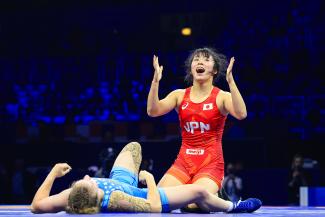
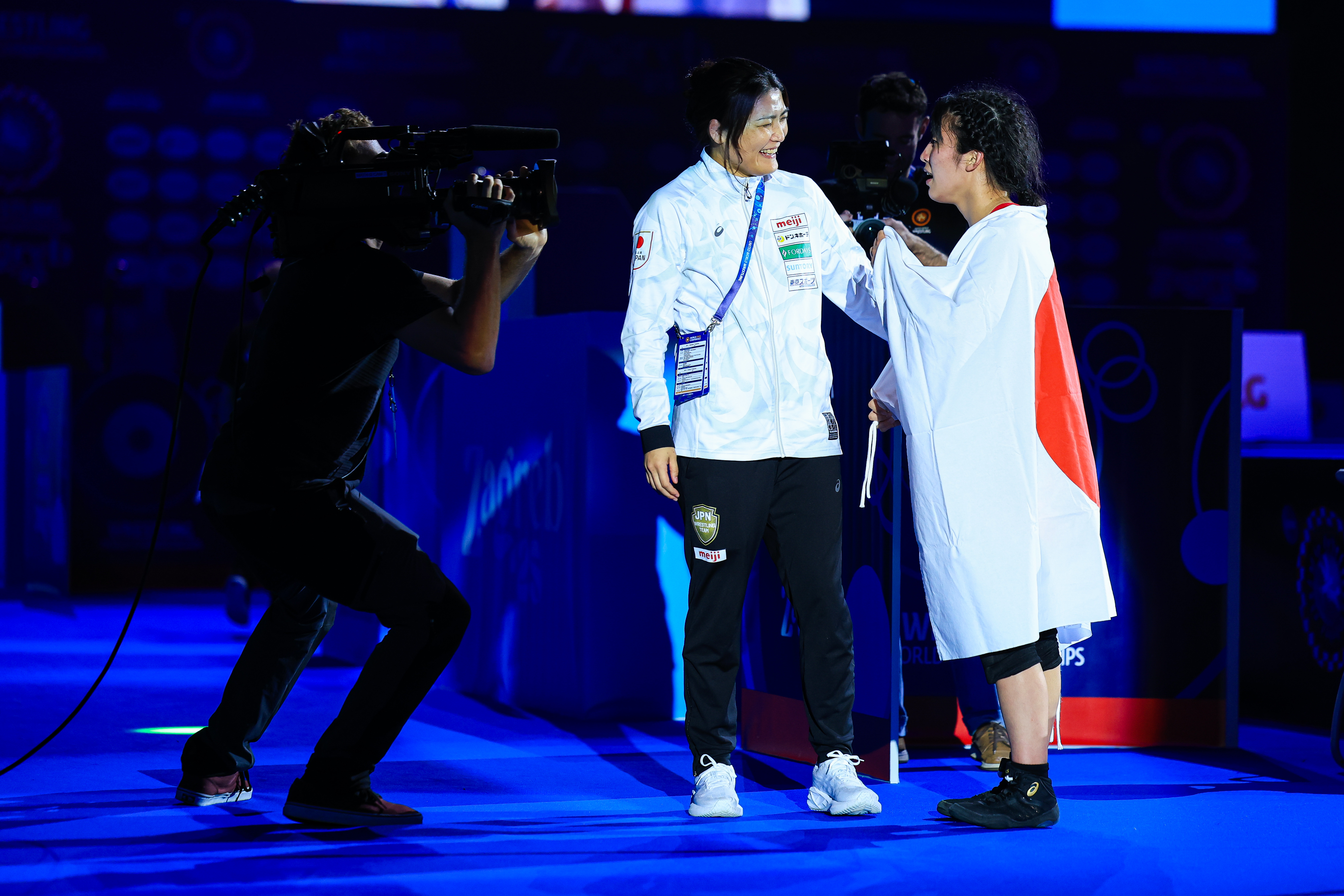 Kaori ICHO (JPN), left, congratulates Sakura ONISHI (JPN) after the 59kg final. (Photo: United World Wrestling / Kadir Caliskan)
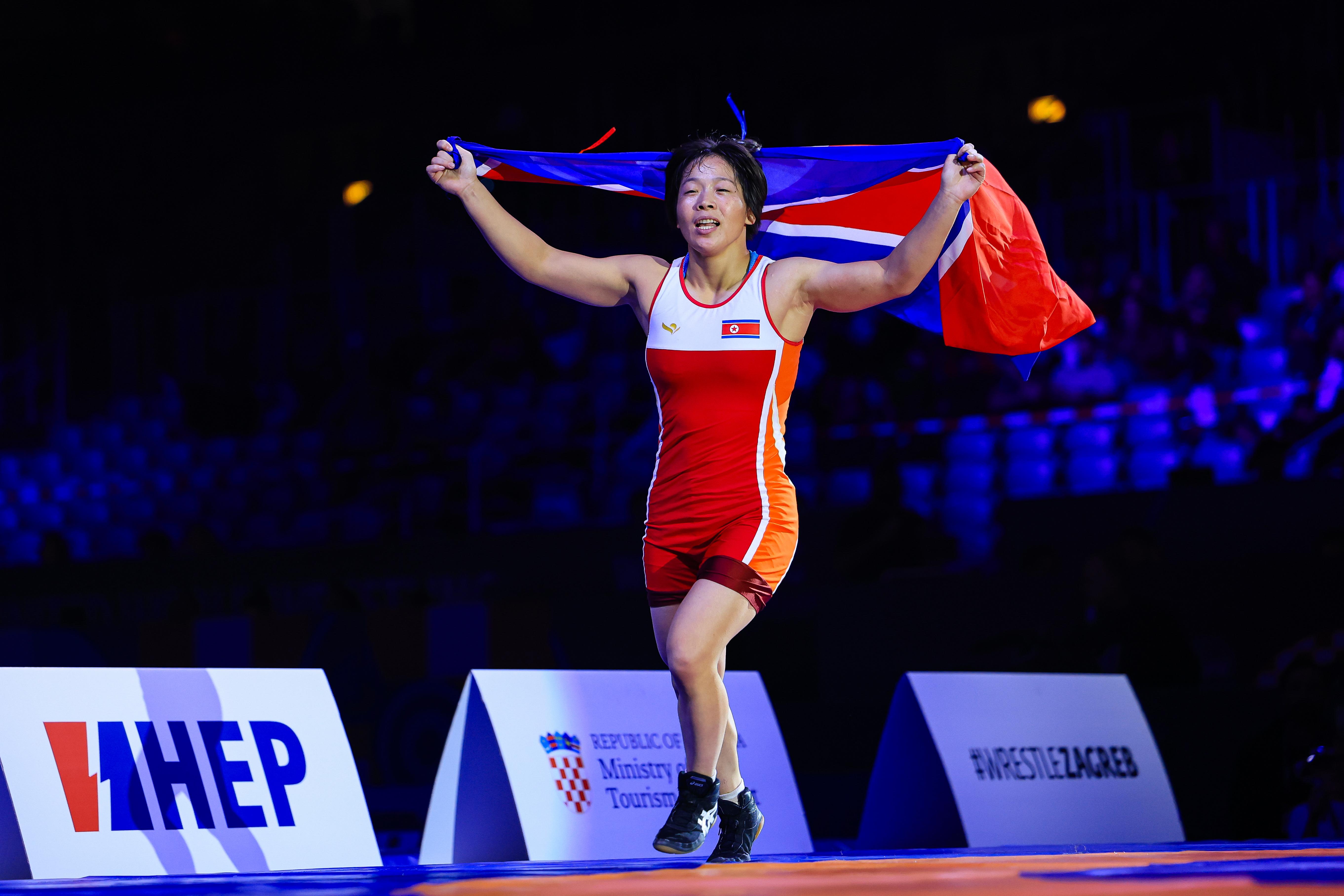 Kyong Ryong OH (PRK) added a world title to her Asian title. (Photo: United World Wrestling / Kadir Caliskan)
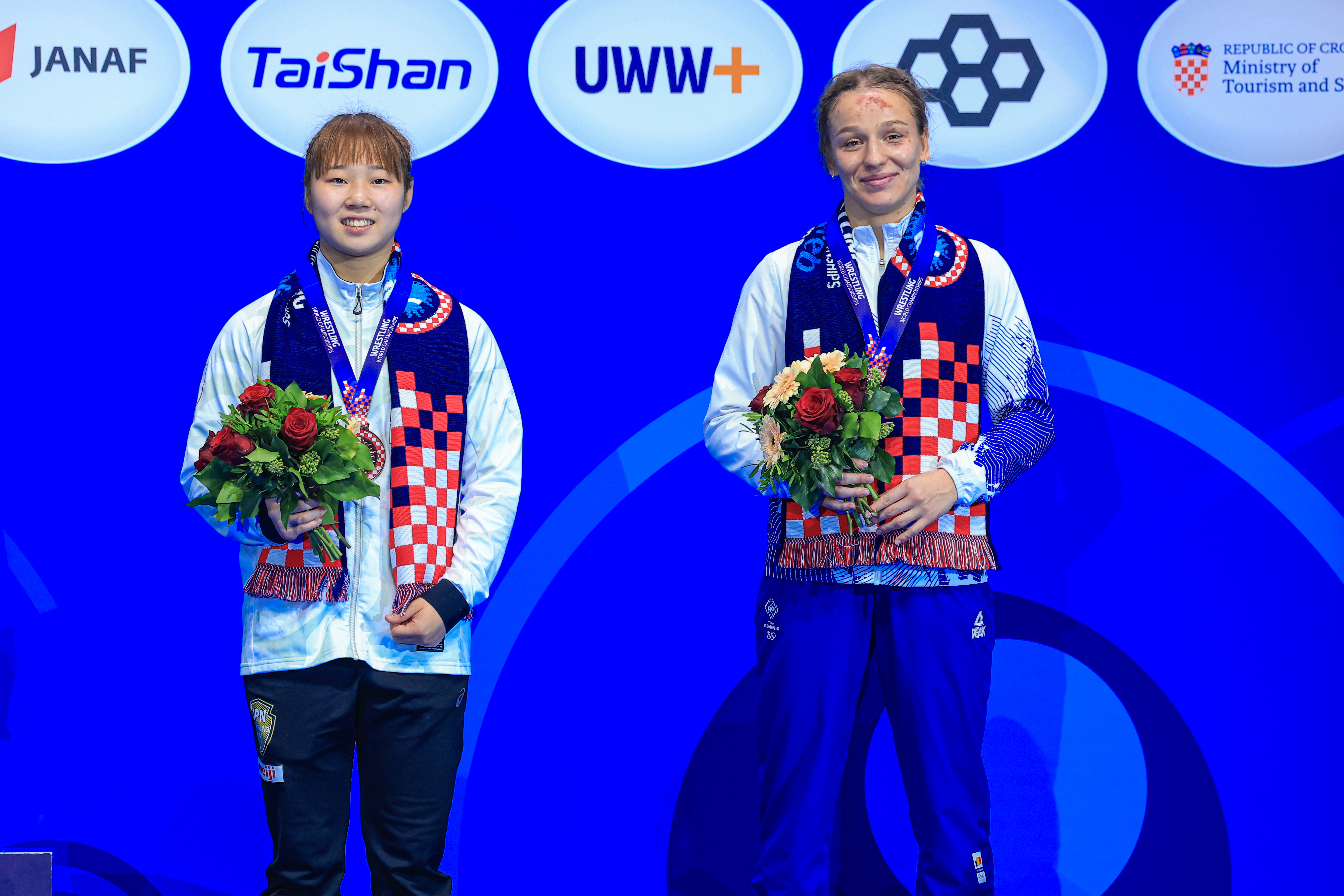 The two bronze medalists at 55kg -- Sowaka UCHIDA (JPN), left, and Andreea ANA (ROU). (Photo: United World Wrestling / Kadir Caliskan)
Share your thoughts.
Comments