

#WrestleHammamet

African and Oceania Olympic Qualifier Entries

By Eric Olanowski

HAMMAMET, Tunisia (March 24) --- The fourth qualification event for the Tokyo Olympic Games, the African and Oceania OG Qualifier (April 2-4), kicks off next Friday. Over 150 athletes from 22 countries will attempt to finish top two in their respective weight classes and qualify their nations for the Olympic Games.

Freestyle
57kg

Abdelhak KHERBACHE (ALG)
Josh FAILAUGA (ASA)
Raoul Brillant NGANJI (BDI)
Gamal Abdelnaser Hanafy MOHAMED (EGY)
Junjun ASEBIAS (FSM)
Diamantino IUNA FAFE (GBS)
Mohamed Ismaele CAMARA (GUI)
Ethan Mikquin Tomapa AGUIGUI (GUM)
Chakir ANSARI( MAR)
Soufiane KABIL (MAR)
Ebikewenimo WELSON (NGR)
Jakobo Tanki TAU (RSA)
Saber DRIDI (TUN)
Kossai AJIMI (TUN)
Hachem HASNAOUI (TUN)

65kg
Amar LAISSAOUI (ALG)
Mostafa REZAEIFAR (AUS)
Fathi Tarek Fathi Attia ISMAIL (EGY)
Mbunde CUMBA MBALI (GBS)
Aime Mbolalalaina Joel RAKOTONIAINA (MAD)
Otmane EL BAHJA (MAR)
Abdelwahad BADRI (MAR)
Amas DANIEL (NGR)
Cristian Etpison NICOLESCU (PLW)
Reynhardt LOUW (RSA)
Adama DIATTA (SEN)
Farouk JELASSI (TUN)
Haithem DAKHLAOUI (TUN)
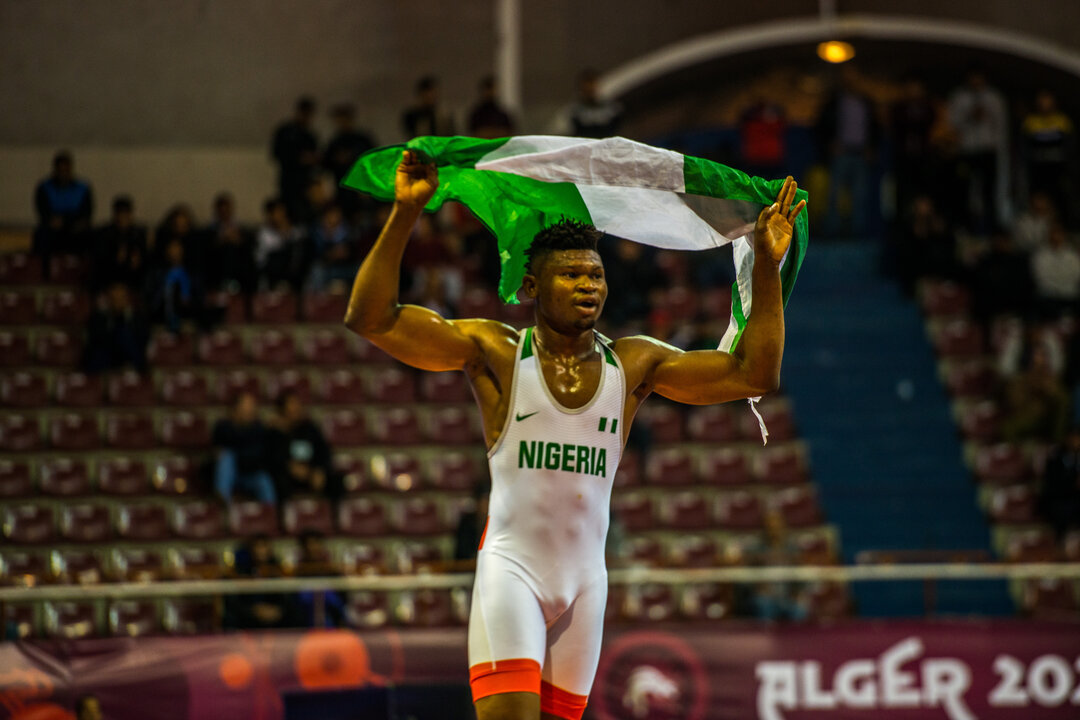
Reigning four-time African champion Ogbonna JOHN (NGR) will compete at 74kg. (Photo: United World Wrestling)

74kg
Ishak BOUKHORS (ALG)
Elias Lauofo VAOIFI (ASA)
Ethan James THOMAS (AUS)
Amr Reda Ramadan HUSSEN (EGY)
Augusto MIDANA (GBS)
Mathayo Matonya MAHABILA (KEN)
Rabii REGANI (MAR)
Ogbonna Emmanuel JOHN (NGR)
Guy Robert DE LUMEAU JR (PLW)
Jaundre VAN RIEL (RSA)
Foday KARGBO (SLE)
Ayoub BARRAJ (TUN)

86kg
Fateh BENFERDJALLAH (ALG)
Nolan Ili PULETASI (ASA)
Jayden Alexander LAWRENCE (AUS)
Khaled Masoud Ismail ELMOATAMADAWI (EGY)
Bedopassa Buassat DJONDE (GBS)
Ekerekeme AGIOMOR (NGR)
Zander GERINGER (RSA)
Maher GHANMI (TUN)
Imed KADDIDI (TUN)
Sabri MNASRIA (TUN)

97kg
Mohammed FARDJ (ALG)
Ariston Faamalosi BARTLEY (ASA)
Thomas John Mcglinchey BARNS (AUS)
Ulrich Elyse MANOUAN (CIV)
Hosam Mohamed Mostafa MERGHANY (EGY)
Anas LAMKABBER (MAR)
Soso TAMARAU (NGR)
Martin ERASMUS (RSA)
Kamel JAWEDI (TUN)
Chiheb Eddine CHIHI (TUN)
Mohamed SAADAOUI (TUN)

125kg
Djahid BERRAHAL (ALG)}
Tommy Dean JAMES (ASA)
Param Pal SINGH (AUS)
Diaaeldin Kamal Gouda ABDELMOTTALEB (EGY)
Ahmed SEREHALI (MAR)
Johannes Jacobus KRIEL (RSA)
Thiacka FAYE (SEN)
Abdelmoneim ADOULI (TUN)

Greco-Roman
60kg

Abdelkarim FERGAT (ALG)
Josh FAILAUGA (ASA)
Haithem Mahmoud Ahmed Fahmy MAHMOUD (EGY)
Fouad FAJARI (MAR)
Abderrazak ROUINB I(MAR)
Romio Ricardo GOLIATH (NAM)
Mohamed Yassine HKIRI (TUN)
Salim HAMDI (TUN)
Mehdi JOUINI (TUN)

67kg
Abdelmalek MERABET (ALG)
Bilal EL BAHJA (MAR)
Gert Cornelius Johannes COETZEE (RSA)
Souleymen NASR (TUN)
Mohamed Amine MALHI (TUN)
Radhwen TARHOUNI (TUN)
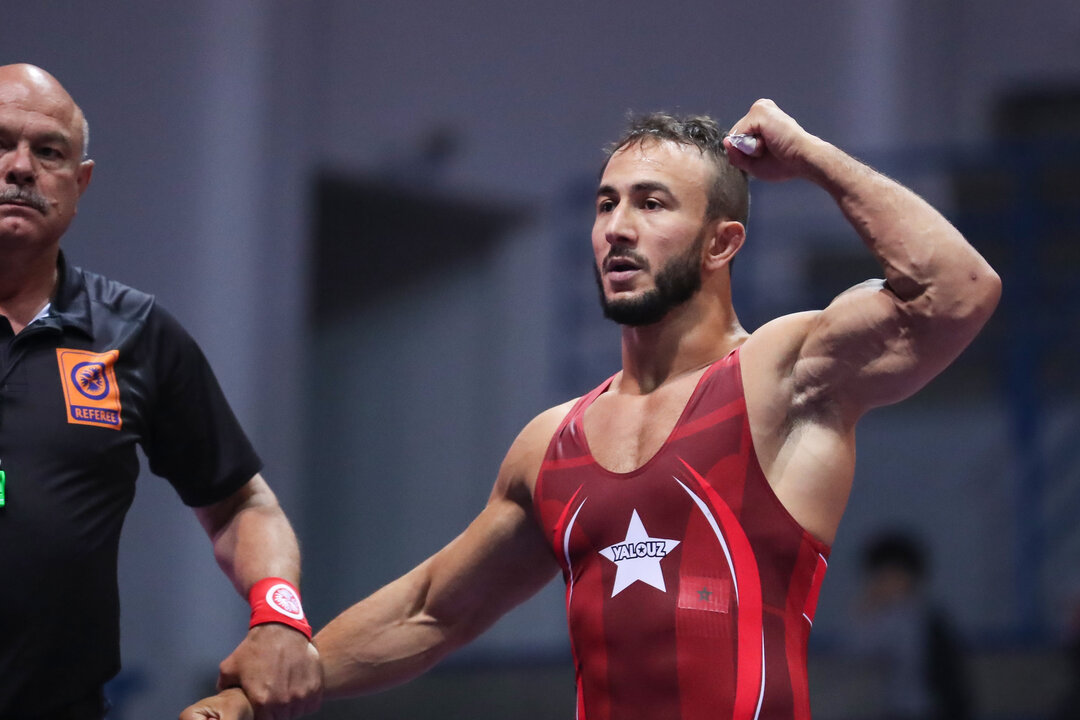
Zied AIT OUAGRAM (MAR), the ten-time African champion, will compete at 77kg. (Photo: Kadir Caliskan)

77kg
Abd Elkrim OUAKALI (ALG)
Sunil SHARMA (AUS)
Wael Hamdy Mohamed ABDELRAHMAN (EGY)
Zied AIT OUAGRAM (MAR)
Richard FERREIRA (RSA)
Lamjed MAAFI (TUN)
Mohamed Aziz LANDOLSI (TUN)

87kg
Bachir SID AZARA (ALG)
Ariston Faamalosi BARTLEY (ASA)
Mohamed Moustafa Ahmed Abdall METWALLY (EGY)
Aziz BOUALEM (MAR)
Khalid SAHLI (MAR)
Edward Louwis LESSING (RSA)
Hakim TRABELSI (TUN)
Mohamed Skander MISSAOUI (TUN)

97kg
Adem BOUDJEMLINE (ALG)
Tyler Talalemotu ILI (ASA)
Mohamed Ali Elsayed GABR (EGY)
Mohamed FAIQ (MAR)
Amadu O KAMARA (SLE)
Haikel ACHOURI (TUN)
Amir ALAWAD (UWW)

130kg
Hichem KOUCHIT (ALG)
Tommy Dean JAMES (ASA)
Abdellatif Mohamed Ahmed MOHAMED (EGY)
Choucri ATAFI (MAR)
Amine GUENNICHI (TUN)

Women's Wrestling
50kg

Ibtissem DOUDOU (ALG)
Nada Medani Ashour Abdalla MOHAMED (EGY)
Debora Valeria TURE (GBS)
Adijat Avorshai IDRIS (NGR)
Sarra HAMDI (TUN)

53kg
Lamia CHEMLAL (ALG)
Irene SYMEONIDIS (AUS)
Joseph Emilienne ESSOMBE TIAKO (CMR)
Rckaela Maree Ramos AQUINO (GUM)
Emma Nekesa WANGILA (KEN)
Elisa Emma Patricia RASOANANTENAINA NOMENJANAHARY (MAD)
Wissal EL GNAOUI (MAR)
Bose SAMUEL (NGR)
Lobna ICHAOUI (TUN)
Siwar LOUATI BEN ALI (TUN)
Nour El Houda RAOUAFI (TUN)

57kg
Rayane HOUFAF (ALG)|
Nadine NDAYISHIMIYE (BDI)
Eman Essam Guda EBRAHIM (EGY)
Fatoumata Yarie CAMARA (GUI)
Mia Lahnee Ramos AQUINO (GUM)
Atika EL ASLA (MAR)
Ikram BEN HAMMOUDA (TUN)
Faten HAMMAMI (TUN)
Siwar BOUSETA (TUN)

62kg
Amel HAMMICHE (ALG)
Berthe Emilienne ETANE NGOLLE (CMR)
Zineb HASSOUNE (MAR)
Aminat Oluwafunmilayo ADENIYI (NGR)
Fatma INOUBLI (TUN)
Khouloud EL OUNI (TUN)
Marwa AMRI (TUN)

68kg
Enas Mostafa Youssef Khourshed AHMED (EGY)
Blessing OBORUDUDU (NGR)
Anta SAMBOU (SEN)
Lilia MEJRI (TUN)
Khadija JLASSI (TUN)
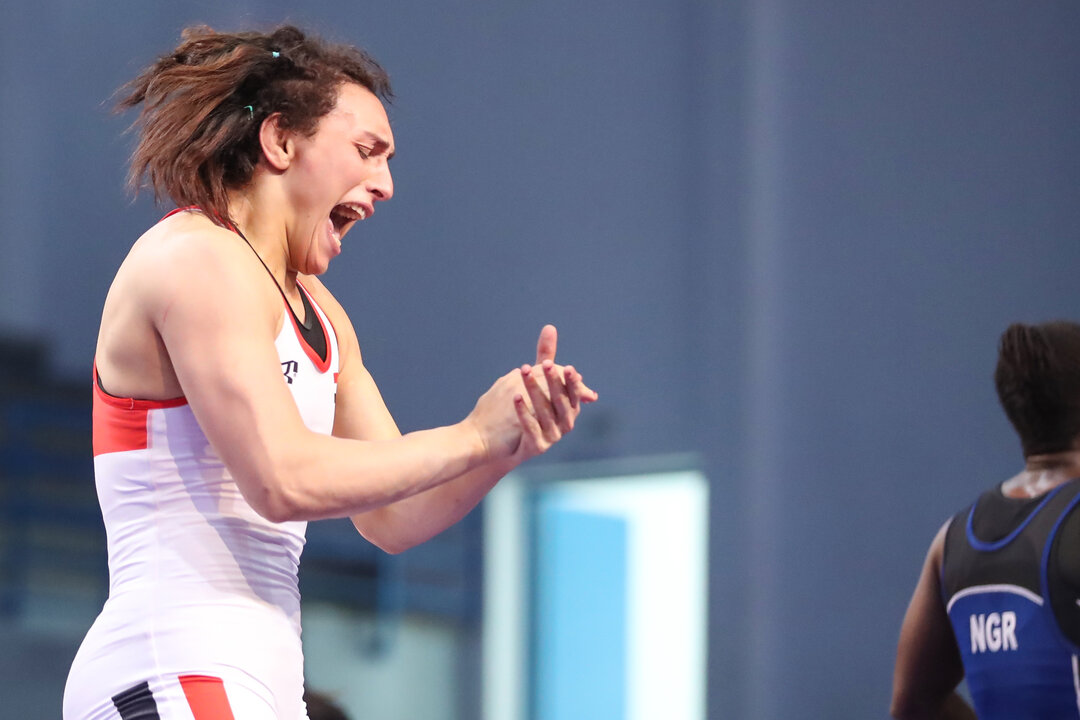
No. 2-ranked Samar HAMZA (EGY) highlights the entries at 76kg. (Photo: Kadir Caliskan)

76kg
Amy YOUIN (CIV)
Samar Amer Ibrahim HAMZA (EGY)
Nour JELJELI (TUN)
Zaineb SGHAIER (TUN)

Japan Wrestling

Shozo Sasahara, 1956 Olympic champion and former Japan federation president, dies at 93

By Ken Marantz

TOKYO (March 6) --- Hall of Famer Shozo SASAHARA, a gold medalist at the 1956 Melbourne Olympics who went on to become president of the Japan Wrestling Federation and an executive of FILA, the predecessor of UWW, has died of natural causes, the Japan federation announced on Monday. He was 93.

Sasahara, who had suffered a stroke in 2014, won the gold medal in the featherweight class (62kg) of freestyle at the Melbourne Games, where he  served as flag-bearer for Japan in the opening ceremony. Two years earlier, he had won the gold at the World Championships held in Tokyo.

Sasahara became renowned for his pioneering use of legs in what is today referred to as a grapevine, but was reverently termed by the English-speaking press in his prime as "Sasahara's Leg Scissors."

Those would be his lone international triumphs, as he was a late bloomer who only started wrestling after entering Chuo University in Tokyo, having previously competed in judo. He retired after the Melbourne Olympics and would have a long career in business and sports governing.

"He was always a leader in the sports world with ideas and actions that were ahead of the times," current JWF President Hideaki TOMIYAMA said in a statement. "As a wrestler, he was adored by many people from around the world as a pioneer of techniques. It is sad not only for wrestling, but the sports world. I would like to express my sincere condolences."

Sasahara was the national team performance enchancement director when Japan won five gold medals at the 1964 Tokyo Olympics and four at the 1968 Mexico City Olympics. He served as JWF president from 1989 to 2003, and was a director at FILA from 1972 to 1993, during which time he also served as a vice-president.

Sasahara also held the post of vice-president of the Japanese Olympic Committee, and was awarded the Olympic Silver Order by the International Olympic Committee in 1995.

Sasahara was born on July 28, 1929, in Yamagata, the capital city of Yamagata Prefecture in the cold-weather Tohoku region of northern Japan.

According to an account he penned himself in 2005 for a Japan Olympic Committee website series titled "Japanese Olympian Spirits," he said he was in the sixth year of elementary school when World War II broke out, and that inspired him to want a career in international trade, so he enrolled in Yamagata Commercial School for his junior and high school years.

His home was in the north part of the city and the school was four kilometers away in the south. In his third year, he started working at an aircraft factory, which was also four kilometers from his home, so every day for five years until graduation, he had an eight-kilometer round-trip walk. As he needed to learn English, he would carry flash cards and study them as he walked.

At school, judo, kendo (Japanese fencing), and swordsmanship were regular parts of the curriculum, and there was also military training, such as throwing grenades. After the war ended, he would visit a nearby U.S. military base, where he was able to practice his English on a native speaker for the first time, and eventually got a part-time job there.

While at school, Sasahara joined the town's judo club. There, an older teammate said that the university he went to did not have a judo club, so he had switched to wrestling. The friend said Sasahara was perfect for the sport and urged him to try it. Using money he saved from the job on the U.S. base -- and without telling his parents -- he went down to Tokyo to take the entrance exam for Chuo.

As a freshman in the spring of 1950, he started his wrestling career. His first impression of wrestling at Chuo was not good. Blood was splattered on the canvas mat and it smelled of sweat. The mat was hard and wrestlers would sometimes be knocked out. Anyone who skipped practice would be found and beaten. As he had not yet learned the techniques and wasn't physically strong, he thought many times of quitting.

But he didn't give up, and instead drove himself to become better and better. In his second year, he made the finals of several collegiate tournaments, which further encouraged him to  put his full energy into the sport. He would sneak into the other powerhouses of the day, Waseda and Meiji universities, to observe the practices and techniques, and read books written by U.S. coaches. Wrestling became a 24-hour-a-day obsession.

In 1953, he won his first title at the All-Japan Championships, as well as the national collegiate title. After graduating, he captured the world title in May 1954, beating 1952 Helsinki Olympic champion Bayram SIT (TUR), then successfully defended his All-Japan crown.

Sasahara went to Melbourne confident of victory. Japan had only been let back into the Olympics four years earlier in Helsinki, but FILA had been among the first of the individual sports organizations to readmit the nation, in 1949.

International exchanges resumed in 1951. Japanese wrestling was still in the developmental stage, but federation chief Ichiro HATTA saw the exchanges as the optimal path to getting stronger.  Among those who went on a wrestling tour to the United States was Shohachi ISHII, who became Japan's first-ever Olympic wrestling gold medalist in Helsinki. His success, and the speedy moves he brought back from America, served to inspire Sasahara and the others. "If he could do it, we can, too," Sasahara thought.

The team also did tours of the other wrestling powers -- Russia, Iran, Turkey, Bulgaria, Romania -- and Sasahara absorbed it all, which would pay off in gold in Melbourne.

After his triumph, Sasahara, then 27, decided to retire, as he felt he had reached his limit. He noted that it was also a clean way to go out -- from his first All-Japan title to that point, he had won exactly 200 straight matches. He pursued his career in international trade, spending time in America and later importing sporting goods. He was the first to import sports drinks into Japan.

He also got involved in sports organization. He put Japan wrestling's flop at the 1960 Rome Olympics down to poor training and nutrition, which would lead to him to help establish a government-back organization in 1976 to improve the general health and conditioning of athletes.

In one of his last public appearances, Sasahara donated his Olympic gold medal to his high school alma mater in October 2018.