#development

Afghanistan Coaches Build Skills at UWW Level 1 Coaching Course

By United World Wrestling Press

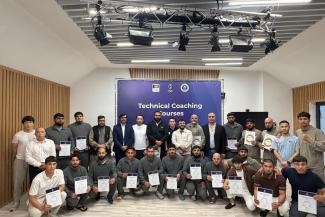
ALMATY, Kazakhstan (June 30) -- Eleven coaches from Afghanistan were among 21 participants who completed a United World Wrestling Level 1 Coaching Course in Almaty, strengthening the country's coaching capacity while building closer ties with neighboring Kazakhstan.

Organized through a partnership between Olympic Solidarity, the Kazakhstan National Olympic Committee, the Afghanistan National Olympic Committee, the Kazakhstan Wrestling Federation, and United World Wrestling, the course focused on developing internationally recognized coaching competencies while fostering collaboration between the two wrestling nations.

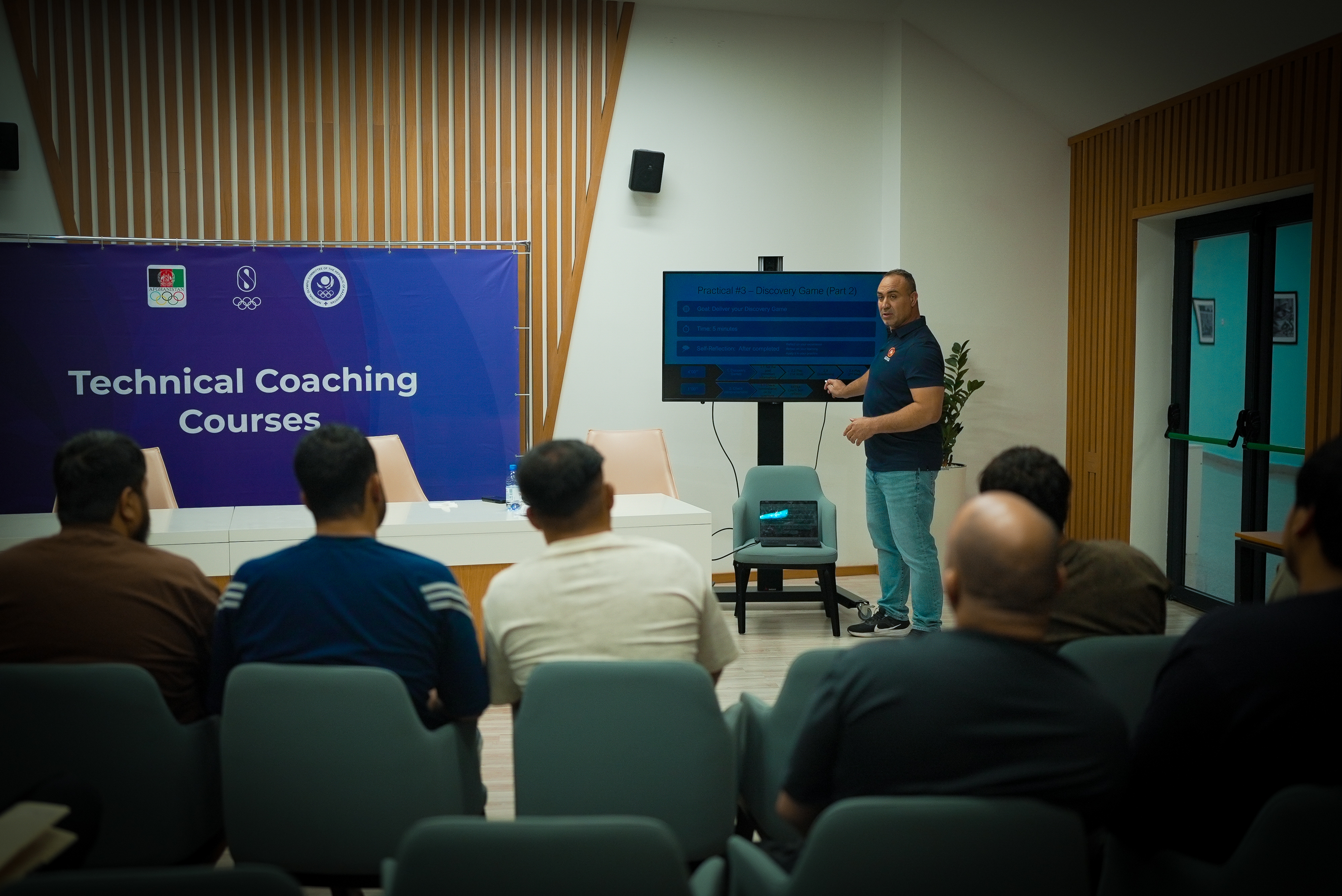
Apart from the 11 coaches from Afghanistan, coaches from Kazakhstan also joined for a comprehensive program. The curriculum covered coaching responsibilities, skill development using UWW's Key Factors teaching methodology, athlete-centered learning through discovery games, coaching self-reflection, risk management, and practical coaching assessment.
Afghanistan

UWW Educator and former world champion Mohammed ABDELFATTAH praised the participants for their commitment throughout the program.

"I was very impressed with the overall level of the participants," Abdelfattah said. "The coaches were highly motivated, actively participated in every session, and continuously asked thoughtful questions throughout the course."

Abdelfattah was particularly encouraged by the technical level demonstrated by the Afghan coaches.

"The Afghan coaches demonstrated a strong technical understanding of wrestling." he said. "After speaking with several participants, I learned that traditional wrestling is extremely popular in Afghanistan and shares many technical similarities with Olympic wrestling. This provides coaches with an excellent technical foundation for further development."

The practical sessions proved to be a particular highlight, with coaches working through technical demonstrations, problem-solving exercises, and athlete-centered coaching activities designed to strengthen both technical instruction and coaching methodology.

The Afghanistan Wrestling Federation views the course as an important step in its long-term development strategy. Dr. Yonus POPALZY, an Afghan NOC and Olympic Council of Asia member, was instrumental in the development, organization, and success of the course.

Participants highlighted the practical nature of the course and the opportunity to exchange ideas with coaches from different backgrounds.

"The course exceeded our expectations. The practical sessions and interactive teaching methods gave us new ideas that we can immediately apply in our daily coaching."

#development

ASOIF: IFs discuss sustainability, development and education initiatives at ASOIF Forum

By United World Wrestling Press

LAUSANNEE, Switzerland (May 31) --- United World Wrestling's Development Director Deqa Niamkey led the ASOIF’s Forum on Sustainability, Development and Education (ASDEG) in Lausanne last week. Here's what ASOIF.com said about the event

Experts from 27 International Federations (IFs) governing Olympic summer and winter sports gathered this week at ASOIF’s Forum on Sustainability, Development and Education (ASDEG). The event was held on 24 and 25 May in Lausanne, Switzerland, led by the Chair of ASOIF’s ASDEG Group Deqa Niamkey from United World Wrestling (UWW).

For the first time, the Forum addressed the important field of sustainability which had been added recently to the group’s portfolio. The International Olympic Committee introduced the topic and shared best practice. World Sailing presented their Agenda 2030, an ambitious sustainability strategy that covers environmental, economic and social aspects. The International Hockey Federation offered insights into how an IF can kick-start the sustainability initiatives at an early stage.

After the pandemic had forced a two-year pause of the Forum, the participants also discussed how COVID-19 has changed their ways of working. UWW presented how the global health crisis has helped their federation embrace online education and showcased a number of online interactive tools, which are accessible to all sports. Meanwhile, World Curling shared how they financed education modules by offering online training courses for an enrolment fee to future umpires and ice technicians.

Deqa Niamkey said during the Forum: "After two years of pandemic, it was great to meet all the IF colleagues in person again at the Forum. We had insightful exchanges on the common challenges we have been facing. I am glad to see that more and more IFs are eager to work together on these important topics and I am looking forward to even more collaboration in the future."

Another important topic on the Forum’s agenda: how to optimise the support to National Federations (NFs). World Rugby introduced their benchmarking tool that has helped them to distribute funds to their member federations. The Badminton World Federation presented their targeted funding models driven by NF assessment data.

Representatives from Olympic Solidarity also joined in to give an update on their 2021-2024 Plan and the global development programmes. 

Organised annually, the Forum facilitates a united approach of a large number of IFs in the implementation of their projects in the fields of sustainability, education and development. This allows efficiencies in terms of human and financial resources, ensures a certain consistency across the sports and thereby maximises the impact of the related IF activities overall.

To learn more about ASOIF.com, click HERE.