CORALVILLE, United States (May 9) -- The third day of wrestling at the Pan-American Championships will welcome in freestyle, while also closing out the final four weights in women's wrestling. The freestyle weights that'll take the mat today are 61kg, 74kg and 86kg, with the final women's weight being 53kg, 59kg, 65kg and 76kg.
12:28: We're going to start 30 minutes earlier than expected. The updated start time is 12:30 (local time)
12:13: That does it for the quarterfinals. We're expected to start at 13:00 but I imagine that'll change. I'll quickly run to see what they plan on doing then post an update shorty.
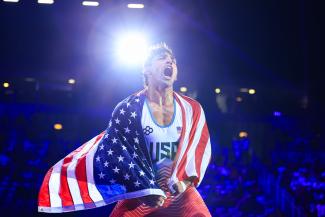
12:07: Welker just nearly took the roof off this place, scoring three takedowns, two turns and a stepout against Renteria to move into the semifinals. She'll wrestle another Paris 2024 bronze medalist in Marin in the semifinals as the Cuban picked up a 12-2 win in her quarterfinals.
11:53: A lot going on right now. Yepez Guzman just picked up a dominant 11-0 win over Cristelle Noelle RODRIGUEZ DOBLER (USA) and moved into the semifinals at 53kg. Also, Welkeer and Renteria are wrestling now on Mat A. The American is up 5-0 with a stepout and two counter-offenseive go behinds.
11:29: Paris 2024 Olympian Ethan Adrian RAMOS (PUR) is up now on Mat A. He's wrestling Angel Eduardo CORTES BONILLA (PAN).
11:23: Zahid VALENCIA (USA) just made quick work of Nestor Joaquin TAFUR BARRIOS (COL), picking up the 10-0 first-period tech fall. The reigning world champion awaits the winner of Pedro Samuel GONCALVES DA SILVA (BRA) and Jorge Ivan LLANO (ARG).
11:08: Miki ROWBOTTOM (CAN) was just down 4-4 on criteria against Alexis GOMEZ (MEX) but stole the match with a double leg with 2.2 seconds left. Since 65kg is a smaller bracket, that win will give the Canadian at least a silver medal.
11:06: Iowa's own Austin James DESANTO (USA) is coming up next on Mat A. He'll take on Irie Alexander JACKSON (JAM).
10:56: On a side note, we're following the 76kg weight class for a mini documentary so make sure you stayed tuned into UWW+ over the next few weeks to watch the behind the scenes doc on the premier weight class of these Continental Championships.
10:50: Nestor TAFUR BARRIOS (COL) just picked up a win over on Mat A, which means he'll take on reigning world champion Valencia in seven matches on Mat A.
10:45: It's funny how things work. The two women's wrestlers who attended the opening press conference were world bronze medalist Kylie Renee WELKER (USA) and Tatiana RENTERIA (COL). Those two will will wrestle in the first round, 13 matches away (bout 180) on Mat A.
10:25: Today's action will feature two reinging world champions in Zahid VALENCIA (USA) and Genesis REASCO (COL), and three Paris 2024 Olympic medalists in Lucia YEPEZ GUZMAN (ECU), Milaimy MARIN (CUB) and Tatiana RENTERIA RENTERIA (COL).




Share your thoughts.
Comments