

The Youngest/Oldest GR Gold Medalists in Olympic History
Monday, May 18, 2020 - 19:25 By Ikuo Higuchi

(This is the last of a three-part series that appeared on the Japan Wrestling Federation website. It was translated for UWW by Ken Marantz.)
A Style Dominated by Europeans
Compared with the United States and Asia, where most wrestlers start the sport in freestyle, many in Europe start out in the sport as youth in Greco-Roman style. This can account for the fact that out of 196 gold medals awarded at the Olympics so far, 168 have gone to Europeans (170 if wrestlers from current Asian countries who competed for the Soviet Union are included).
Even so, it took more than a century of Olympics before a teenager would bring home a gold. Islambek ALBIEV (RUS) broke through the barrier at the 2008 Beijing Olympics, where he won the 60kg gold at 19 years 7 months 15 days. A world junior champion in 2006, Albiev added to his stature when he triumphed at both the European and World Championships the year after Beijing.
Albiev remains the lone teenager to win a Greco gold heading into the Tokyo Olympics, although such a feat might have more to do with timing than skill, given that the Olympics come only once every four years. A wrestler who is 16 or 17 in an Olympic year will likely never get a legitimate shot at a gold as a teenager (not that it really matters in the end if one wins a gold at 19 or 20; it is just being mentioned here for historical purposes).
Take the case of legendary Hamza YERLIKAYA (TUR), who was just 17 years 3 months 16 days when he won the 82kg title at the 1993 World Championships. But his triumph at the 1996 Atlanta Olympics came 1 month 18 days after he had celebrated his 20th birthday. Yerlikaya would add another Olympic title in 2000 and world title in 2005 before going on to become a member of Turkey's Parliament.
The 1987 World Championships in Clermand-Ferrand produced a teenaged Greco champ in Pedro Favier ROQUE (CUB), who won the 52kg gold at 18 years 8 months 26 days. He would have still been 19 at the Seoul Olympics the following year, but it was not to be. Cuba, following the lead of the Democratic People's Republic of Korea, did not participate in the Games in the south of the peninsula.
Comparatively, freestyle has eight Olympic champions who were in their teens or 20, while Greco has just half that number with four. Perhaps this shows how Greco relies more on experience to master.
It looking at the oldest gold medalists, the world and Japanese media heralded the crowning of a 40-year-old champion at the 1972 Munich Olympics. Anatoli ROSCHTSCHIN (URS) was 40 years 6 months 0 days when he won the over-100kg crown. But there had been an older champion before that, back in the days before mass media. At the 1920 Antwerp Olympics, Adolf LINDFORS (FIN) was 41 years 6 months 12 days when he triumphed in the over-84kg class. And he certainly earned his medal--he won all five of his matches by fall, with his second-round victory take 23 minutes 43 seconds and his win in the final lasting a whopping 47 minutes 38 seconds. (In that era, the time limit for a match was reportedly 50 minutes.)
As in freestyle, the majority of champions on the oldest-ever list are in the upper weight classes. Of the top 15, the lone lightweight champions (68kg or lower) came in the pre-World War II era. Since the end of the war, there have been only six gold medalists aged 30 or over in the lightweight divisions, most recently Davor STEFANEK (SRB), who was 30 years 11 months 4 days when he won the 66kg gold at the 2016 Rio de Janeiro Olympics.
By the way, Japan has had four Greco champions in Olympic history. The youngest was Masamitsu ICHIGUCHI (JPN), who was 24 years 9 months 7 years when he took the 57kg gold at the 1964 Tokyo Olympics. The oldest, 1984 Los Angeles Olympic 52kg champion Atsuji MIYAHARA (JPN), was 25 years 7 months 13 days on the day of his triumph.
Why am I bringing this up? If the upcoming Tokyo Olympics had been held as scheduled this summer, current world 60kg champion Kenichiro FUMITA (JPN) could have broken Ichiguchi's record as youngest-ever by winning the gold on Aug. 3, when he will be 24 years 7 months 16 days. But with the Games postponed for year, Fumita instead has a chance to become the oldest-ever. The final is tentatively slated for Aug. 2, 2021, when Fumita will be 25 years 7 months 15 days--just two days older than Miyahara.
TOP 15 YOUNGEST OLYMPIC CHAMPIONS (GRECO-ROMAN)
Name Age Olympics Wt. Date of birth
1. Islambek ALBIEV (RUS) 19 years 7 months 15 days 2008 Beijing 60kg 1988/12/28
2. Hamza YERLIKAYA (TUR) 20 years 1 month 18 days 1996 Atlanta 82kg 1976/06/03
3. Suren NALBANDYAN (URS) 20 years 1 month 21 days 1976 Montreal 68kg 1956/06/03
4. Shazam SAFIN (URS) 20 years 3 months 20 days 1952 Helsinki 67kg 1932/04/07
5. Alexandre KARELINE (URS) 21 years 0 months 2 days 1988 Seoul 130kg 1967/09/19
6. Varteres SAMURGASHEV (RUS) 21 years 0 months 13 days 2000 Sydney 63kg 1979/09/13
7. Boris GUREVICH (URS) 21 years 4 months 4 days 1952 Helsinki 52kg 1931/03/23
8. Ji-Hyun JUNG (KOR) 21 years 5 months 0 days 2004 Athens 60kg 1983/03/26
9. Alexander KOLTSCHINSKI (URS) 21 years 5 months 4 days 1976 Montreal +100kg 1955/02/20
10. Khassan BAROEV (RUS) 21 years 8 months 24 days 2004 Athens 120kg 1982/12/01
11. Roman VLASOV (RUS) 21 years 9 months 30 days 2012 London 74kg 1990/10/06
12. Jouko SALOMAEKI (FIN) 21 years 11 months 7 days 1984 Los Angeles 74kg 1962/08/26
13. Schamil CHISAMUTDINOW (URS) 21 years 11 months 21 days 1972 Munich 68kg 1950/09/20
14. Henri DEGLANE (FRA) 22 years 0 months 18 days 1924 Paris +82kg 1902/06/22
15. Vincenzo MAENZA (ITA) 22 years 2 months 30 days 1984 Los Angeles 48kg 1962/05/02
TOP 15 OLDEST OLYMPIC CHAMPIONS (GRECO-ROMAN)
Name Age Olympics Wt. Date of birth
1. Adolf LINDFORS (FIN) 41 years 6 months 12 days 1920 Antwerp +82kg 1879/02/08
2. Anatoli ROSCHTSCHIN (URS) 40 years 6 months 0 days 1972 Munich +100kg 1932/03/10
3. Johannes KOTKAS (URS) 37 years 5 months 24 days 1952 Helsinki +87kg 1915/02/03
4. Kaaro ANTTILA (FIN) 36 years 10 months 10 days 1924 Paris 62kg 1887/08/30
5. Carl WESTERGREN (SWE) 36 years 9 months 25 days 1932 Los Angeles +87kg 1895/10/13
6. Claes JOHANSON (SWE) 35 years 9 months 16 days 1920 Antwerp 82.5kg 1884/11/04
7. Erik MALMBERG (SWE) 35 years 6 months 23 days 1932 Los Angeles 66kg 1897/01/15
8. Eemeli VAERE (FIN) 34 years 10 months 23 days 1920 Antwerp 67.5kg 1885/09/28
9. Axel GROENBERG (SWE) 34 years 2 months 18 days 1952 Helsinki 79kg 1918/05/09
10. Mijain LOPEZ NUNEZ (CUB) 33 years 11 months 26 days 2016 Rio de Janeiro 130kg 1982/08/20
11. Ahmet KIRECCI (TUR) 33 years 9 months 10 days 1948 London +87kg 1914/10/27
12. Ivar JOHANSSON (SWE) 33 years 6 months 9 days 1936 Berlin 79kg 1903/01/31
13. Rudolf SVENSSON (SWE) 33 years 4 months 11 days 1932 Los Angeles 87kg 1899/03/27
14. Vaeinoe KOKKINEN (FIN) 32 years 8 months 13 days 1932 Los Angeles 79kg 1899/11/25
15. Valentin NIKOLAEV (URS) 32 years 8 months 0 days 1956 Melbourne 87kg 1924/04/06
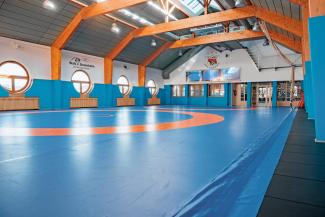
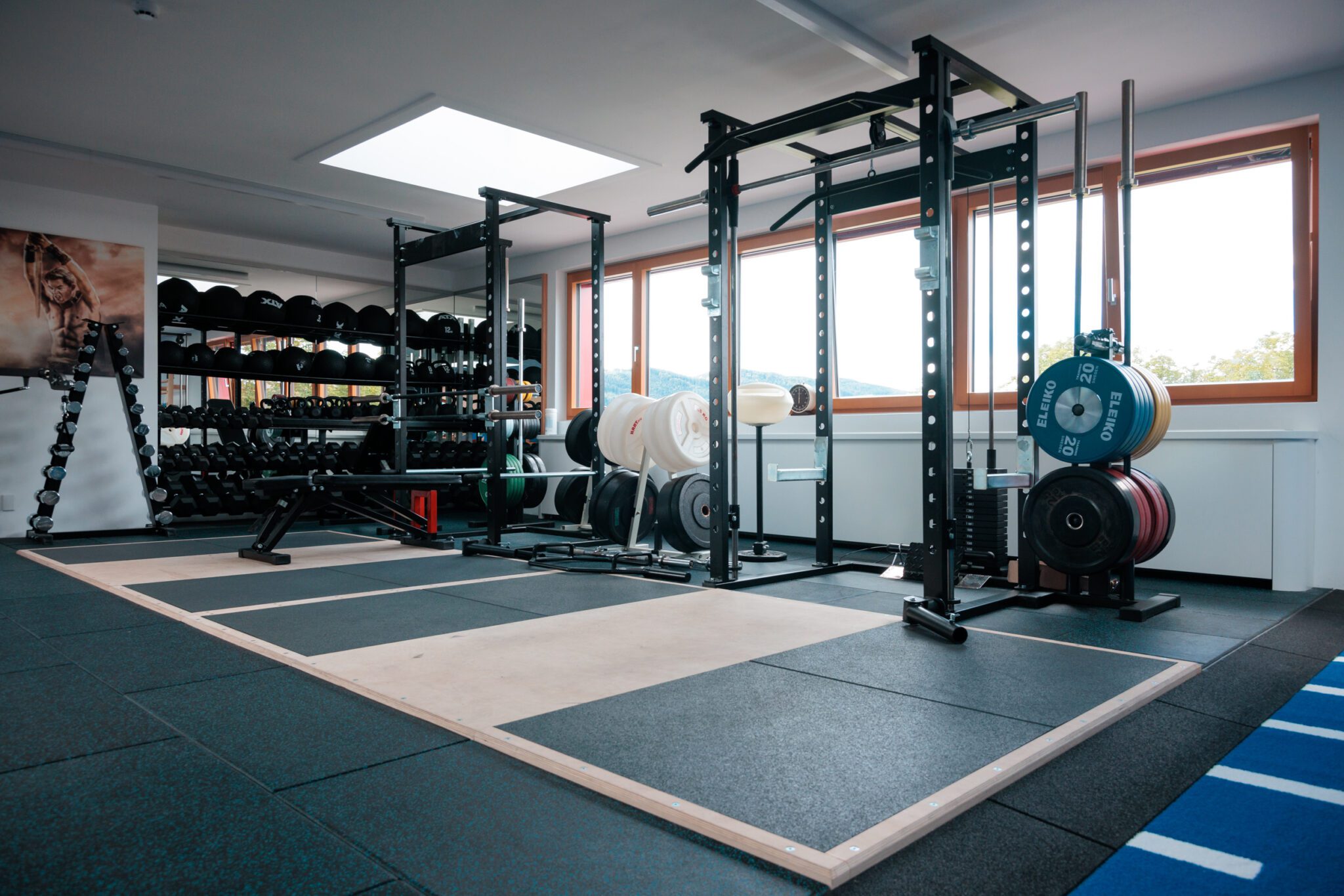 Fitness centre at A.C. Wals. (Photo: Austrian National Wrestling Centre)
 A.C. Wals
Share your thoughts.
Comments