

Women's Wrestling at Olympics: 20 years strong
Monday, July 8, 2024 - 15:09 By United World Wrestling Press

PARIS (July 8) -- Inside an academy located in the middle of a farm at a village in Haryana, the northern Indian state that’s the country’s wrestling capital, a bunch of teenage girls had scribbled the name of their hero on a wall – Helen MAROULIS (USA).
When women’s wrestling made its Olympic debut, some of these girls were not even born. There were no roads leading up to the academy where they trained until a few years ago — the best way to reach the academy was on foot from the nearest highway exit point roughly a couple of miles away. And internet connectivity was patchy at best.
Yet, the story of Maroulis’s dominance had traveled to this far-flung village and became a part of the folklore. Few stories illustrate better the impact and the reach of women’s wrestling.
In less than three weeks, the eyes of the entire sporting – and wider – world will be fixed on Paris when the Olympic Games get underway. On the mat at the Grand Palais Éphémère in Champ de Mars, more stories of inspiration will unfold, paving the way for many young wrestlers to follow in the footsteps of their heroes.
At the Paris Olympics, women's wrestling will celebrate its 20th year of being at the Games. Back in 2004, when it was included in Athens, there were only four categories. In Paris, as was the case in Tokyo, there will be six — the same as Freestyle and Greco-Roman.
The 2024 Games will also be significant for the officials. As many as 11 female referees will be part of the officials. Back in 1988, it was only one.
 Women's Wrestling at the 2004 Athens Olympic Games. (Photo: United World Wrestling / Martin Gabor)
Wrestling at the Paris Olympics will also be a symbolic occasion given the key role France played in the evolution of the women’s game. It was at Pas-de-Calais where women’s wrestling took one of its first steps. A club in Calonne-Ricouart was the first to open its doors to women in 1971.
From this tiny space in a region roughly three hours from Paris, women’s wrestling spread in other parts of France before it became a popular activity in the rest of the world.
The seeds that were sown in France have blossomed in countries across the world. As women’s wrestling traveled to Beijing, London, Tokyo and now arrives in Paris – following the journey that began in Athens – it left behind immaculate footprints for young, aspiring children to follow.
 Tayla FORD (NZL) is the first wrestler from New Zealand who will compete at the Olympics. (Photo: United World Wrestling / Amirreza Aliasgari)
Next month, when the competition gets underway in the French capital, history will be in the offing as Tayla FORD (NZL) will become the first female wrestler from her country to make it to the Olympics.
Ford’s story is one of sheer perseverance, not just hers but even of those around the wrestler. Her father, a high school wrestler, got Ford into wrestling after it was included in the Olympics programme. He had a mat installed in their garage and every day, the father and daughter trained.
In a way, Ford’s story is similar to the wrestlers from the Olympic women’s wrestling’s undisputed powerhouse, Japan.
The queen of wrestling, Saori YOSHIDA (JPN), began her journey in the same way. Before she went on to win every title there was to win – three Olympic gold medals, 13 World Championship titles, four Asian Games and Asian Championship gold medals each – Yoshida learnt the art at home.
Her father built a dojo at home where Yoshida, began to wrestle before she could even run properly. The rest, as they say, is history. The rise of Kaori ICHO (JPN), who went 13 years without a loss, followed a similar arc. And so do the stories of the other Japanese women, from Risako KAWAI to Yui SUSAKI.
Not to forget Icho, who won four gold medals at the Olympics, becoming the first Olympic athlete to win four golds in the same individual sport.
In Athens 20 years ago, Japan won only 2 gold medals. Since then, they have won 13. This level of dominance is rare to see in any sport. One of the few countries that’s consistently come close to challenging Japan’s dominance, and been a thorn in their flesh when it comes to a clean sweep of gold medals, is the USA.
Remarkably, the USA did not even compete at the World Championships until 1989, two years after the first edition for women took place. But once they landed on the scene, they took everyone by storm.
Afsoon JOHNSTON (USA) – who won a bronze medal – Asia DEWEESE (silver) and Leia KAWAII (silver) finished on the podium in 1989 and became sort of the pioneers of women’s wrestling in the US. Since then, there hasn’t been a time when the athletes from the Olympic powerhouse haven’t been among the medals.
The rise of women’s wrestling in the US is also a fascinating story, with nearly 50,000 girls competing in high school championships last year. Those young girls saw the wrestling stars from the country on television and decided to tread the same path they’d chosen.
A major reason for the surge in popularity in the US has been wrestlers like Maroulis. Her gold medal at the Rio Olympics in 2016 – the first American woman to achieve that feat – is seen as one of the big milestones that gave the sport a massive push.
Maroulis’s feat didn’t just inspire children in the US. The story traveled the world over, including a remote village in India. If anything, it showcased the sport’s transcending influence.


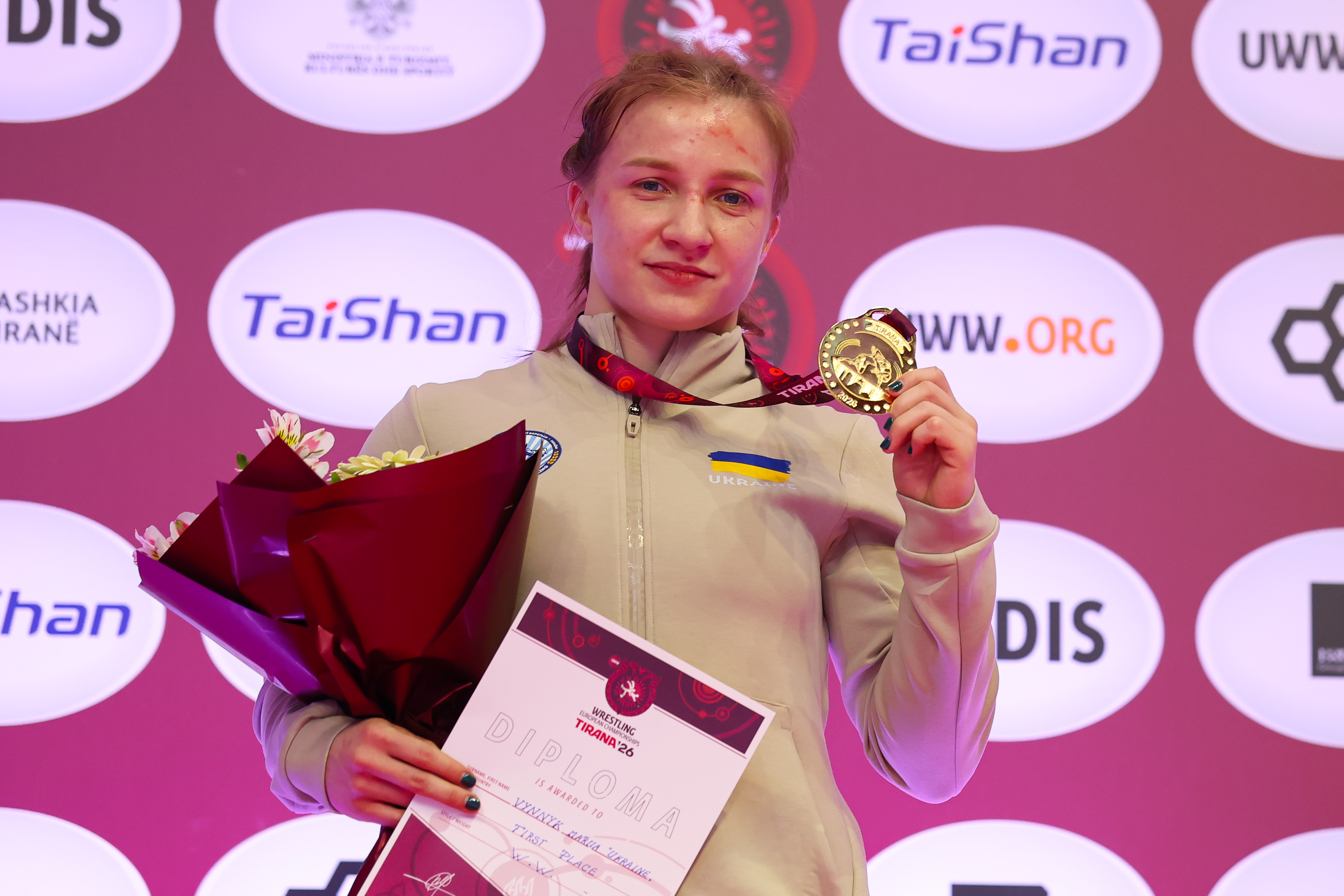 Mariia VYNNYK (UKR) at the medal ceremony for 59kg. (Photo: United World Wrestling / Kadir Caliskan)
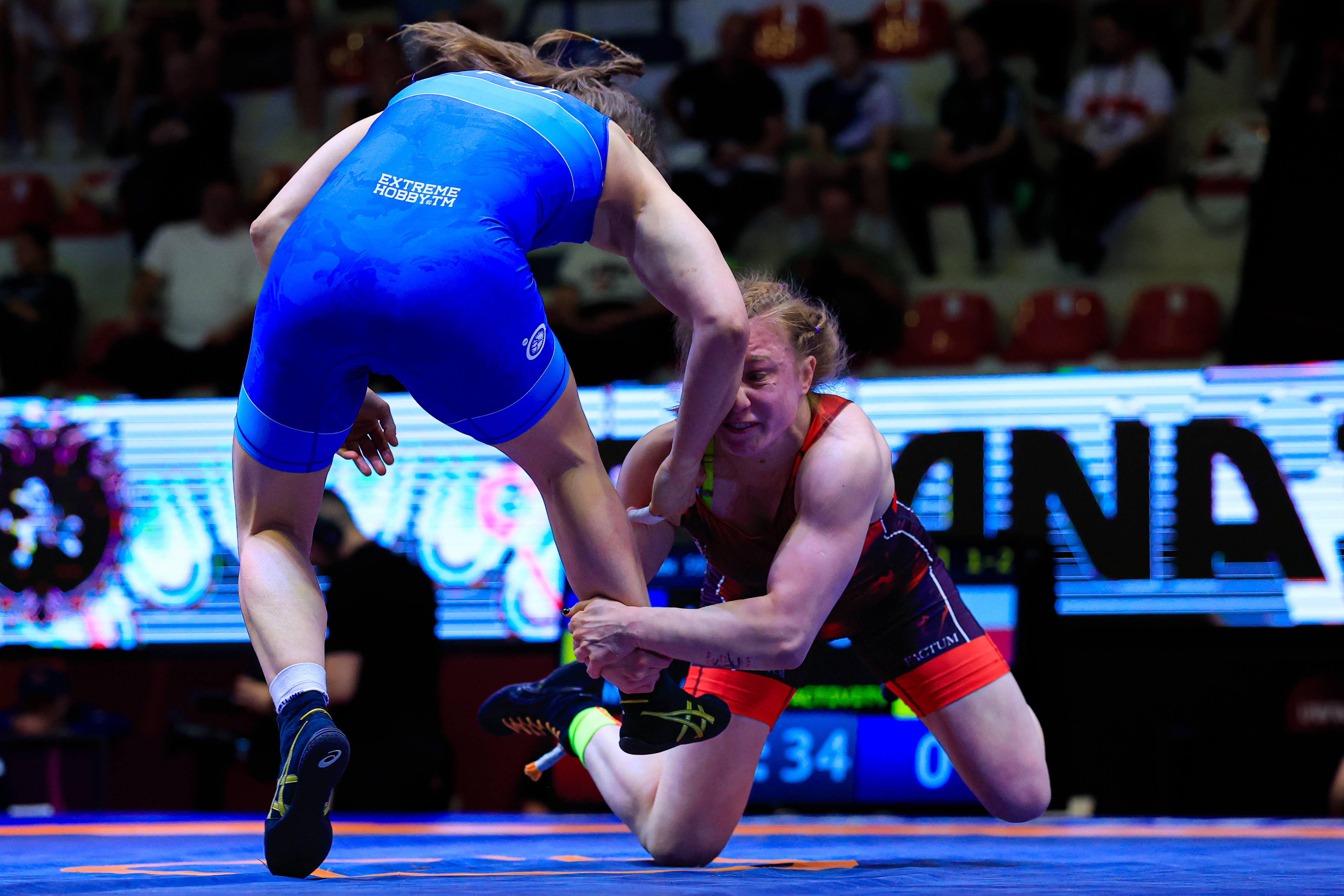 Mariia VYNNYK (UKR) hits an attack on Jowita WRZESIEN (POL) during the 59kg final. (Photo: United World Wrestling / Kostadin Andonov)
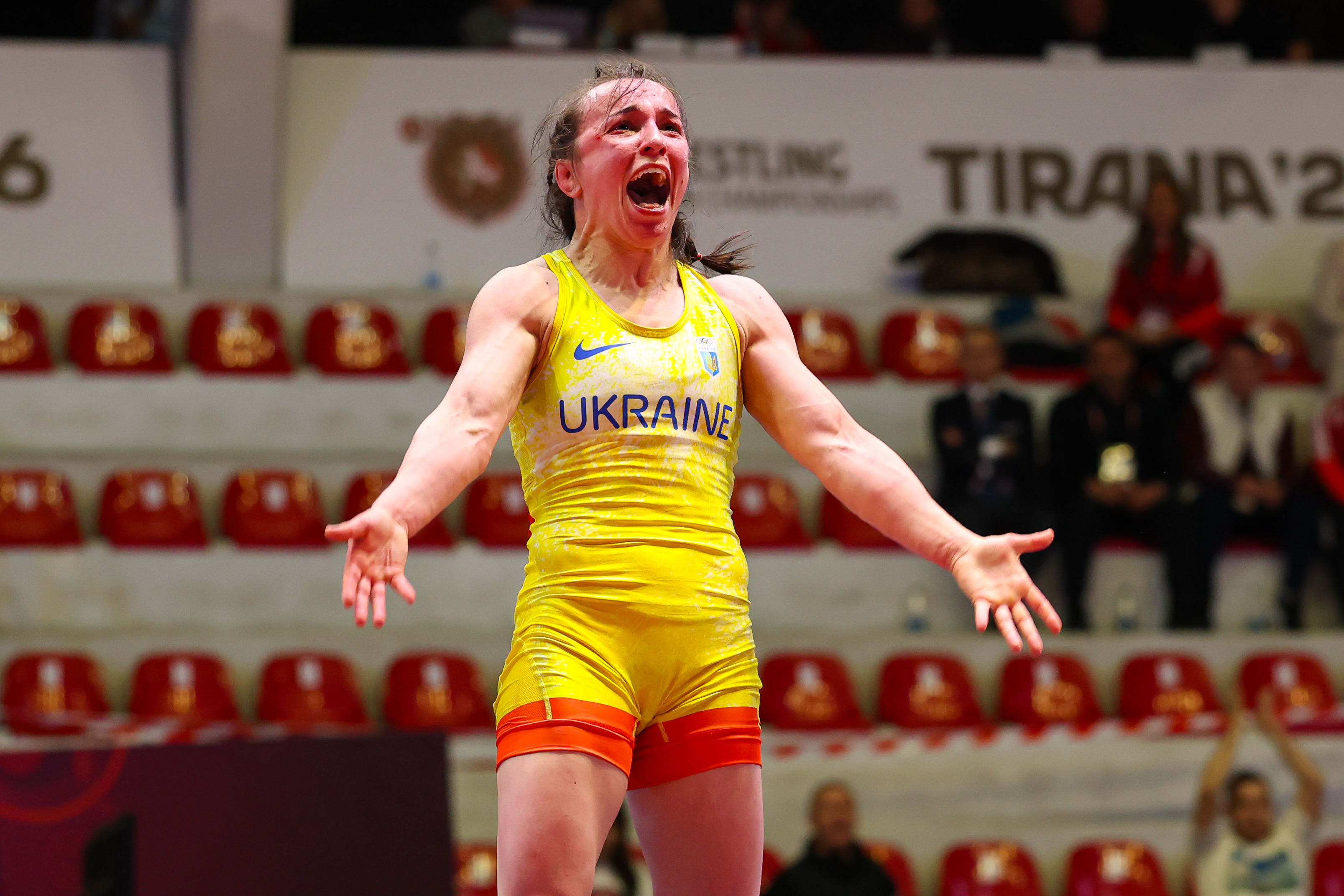 Oksana LIVACH (UKR) won her third European title at 50kg on Thursday. (Photo: United World Wrestling / Kadir Caliskan)
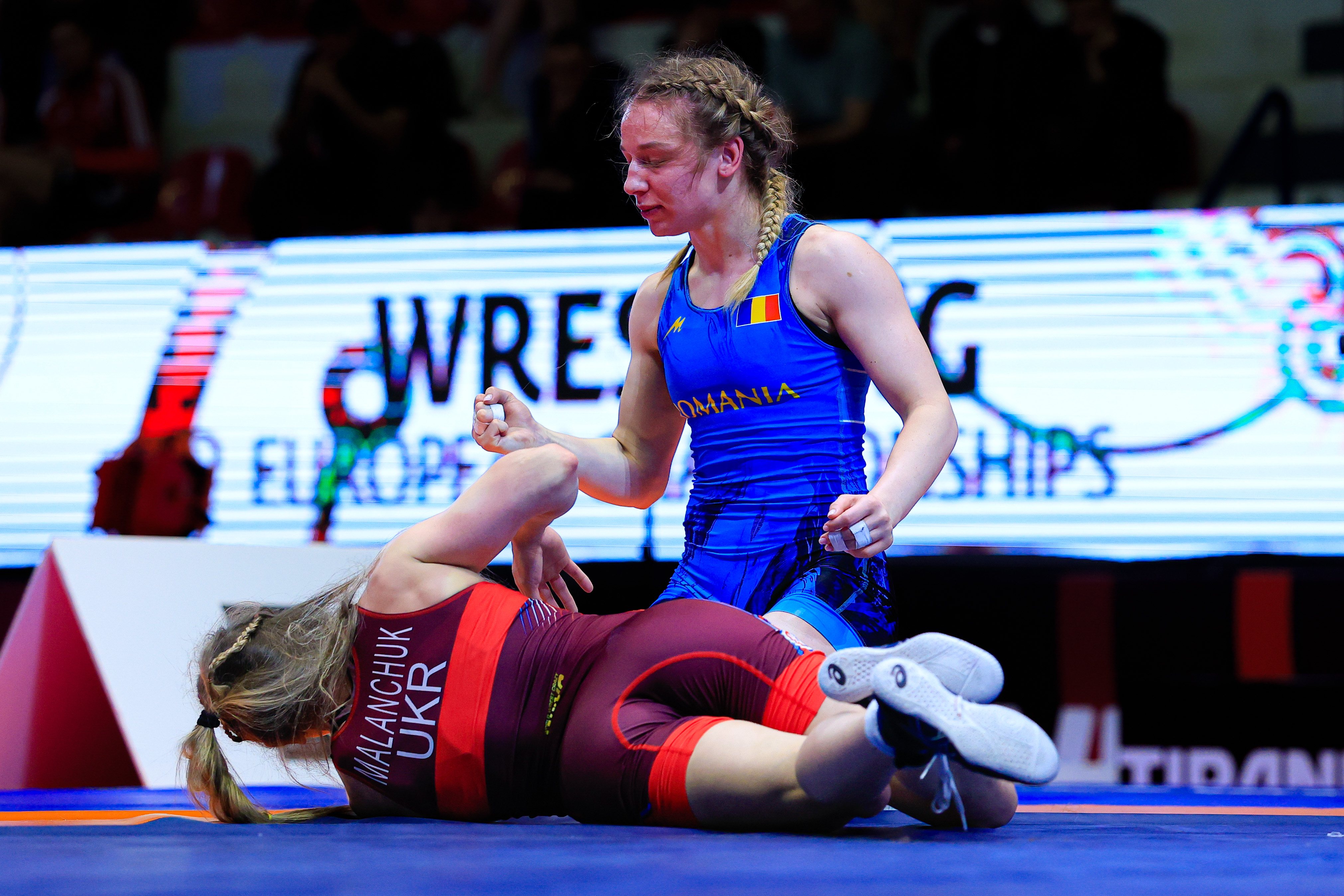 Andreea ANA (ROU) celebrates winning the 55kg gold medal. (Photo: United World Wrestling / Kostadin Andonov)
Share your thoughts.
Comments