

Ten Years Later Guenat Still Bringing Energy, New Tech to the Mat
Thursday, April 2, 2020 - 16:16 By Tim Foley

CORSIER-SUR-VEVEY, Switzerland (April 2) – Everything today feels obvious: a livestream to watch, Arena to follow results, and Athena to manage tournament entries. But ten years ago the sport of wrestling had none of these fan-friendly organizational efforts in place.
“We were in a very different time when I arrived in Corsier,” said Sébastien Guenat who arrived in 2010 as a webmaster to what was then FILA. “We were building a new website for each tournament using Joomla.”
While much has changed in recent years, Guenat has remained a constant in Corsier and at events around the world. This week marks his ten year work anniversary and when looking back at what’s changed at the organizational level Guenat has had his hands in many of the sport’s most important innovations, but thinks the driving force has always been one thing.
“Fairness has always been our mission. We wanted to make sure that everything we do makes it easier for the athletes to compete, the national federations to participate, and for fans to follow along,” said Guenat. “I don’t think we are done, but we have made good progress.”

After FILA adopted new leadership in 2013 and changed to United World Wrestling in 2015 Guenat’s first effort was to create a draw system that was totally randomized. “We use to grab balls out of a bag, which is not the right way to do things,” said Guenat.
To make the process fair Guenat created a randomizer which generated numbers between 1-99 and assigned them to the various entrants. Coaches were allowed to press the button to create the number. This year that system was replaced by blockchain technology which provides absolute random assignment and a method by which fans, coaches, and officials could check the blockchain.
“I’m very happy with the progress for our draws,” said Guenat. "Manu (Veyrat) has been a very important part of all our developments, along with and Csaba (Virag) and Youssef (Bouaziz)."
Following the 2016 Rio Games the UWW bureau tasked Guenat to create a system to randomly assign referees using a system of inputs to ensure a fair outcome. The task was difficult, but in 2020 Guenat and Veyrat believe it's been optimized to the benefit of wrestlers, fans, and even referees.

While fairness has always been the aim, the building blocks of the organization also needed improvement. The new website was launched in 2015, which also hosted Arena a results and tournament management software that helped organize information. It was also given out to free to all interested national federations.
When Arena first launched there was a delay in adoption by federations. At one tournament the organizers had no cables with which to connect the computers to the internet. After some jostling the organizers returned the next day with hundreds of feet – everything Guenat and the team needed.
“They robbed a local school,’ Guenat said flatly. “We got great internet but the school probably didn’t have it again for several months.”
Guenat is quick to point out that the IT team's success at implementing Arena, livestreaming and Athena rests on the hard work of a large international team of up to 16 IT externals that travel to every event and help keep the standards established by headquarters.
"They do the most work," said Guenat. Wrestling is very fortunate to have that staff willing to travel and work so hard for the sport."

Arena has been a gift for fans and organizers, but the development of Athena might prove to be Guenat and the IT teams biggest accomplishment to date. The software logs each wrestler, national federation member, and staff member for each tournament and national federation in the world. Federations can purchase licenses, log their flight arrivals, and pay their entry fees right on Athena.
“For a long time you never knew who would show up to a tournament,” said Guenat. “The organizers could have 100 entries, or 1000. Nobody knew. It’s insane to think about!”
To make these improvements has meant that Guenat has needed to travel around the world dozens of times. Using an app called Wipolo, Guenat knows his exact stats: 63 countries, 116 trips, and an incredible 1,468,876 km traveled in the past ten years. And that’s meant a lot fo time away from home, but also some positive experiences on the road.
“I love working in Japan. Everything works the first time and the food is great,” said Guenat. "Nightlife is also good if you have a free moment."

Though he didn’t mention his less-than-favorite trips, Guenat looks more fondly on locations that allow him to finish his work, enjoy good food, and have great local staff. ‘We spend a lot of time on the road. It’s nice to have things be easier sometime.”
Guenat isn’t stopping anytime soon. In addition to advising the IOC’s boxing commission and working within international sports IT-based commissions, he’s also working on getting everything into the cloud. “We can already do more than ever before with our work in the cloud, With COVID-19 it’s been an advantage to have so much available for our international staff,” said Guenat.
Next up is optimizing 4D Replay (up to 80 cameras around a mat) and maybe further down the road adding some wearable technologies to monitor heart rate of athletes and get better information. IN the immediate future is possibly the biggest project launch of the IT director’s career – a complete, interactive, up-to-date database complete with all videos, photos, and stats of every wrestler in the world.
“We are almost finished,” said Guenat. “This project feels like it’s taken my whole ten years, but I know when it is done we will ask ‘How did we live without this?’”
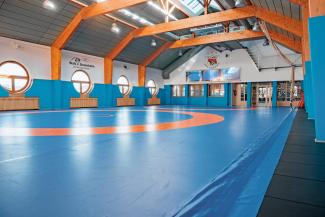
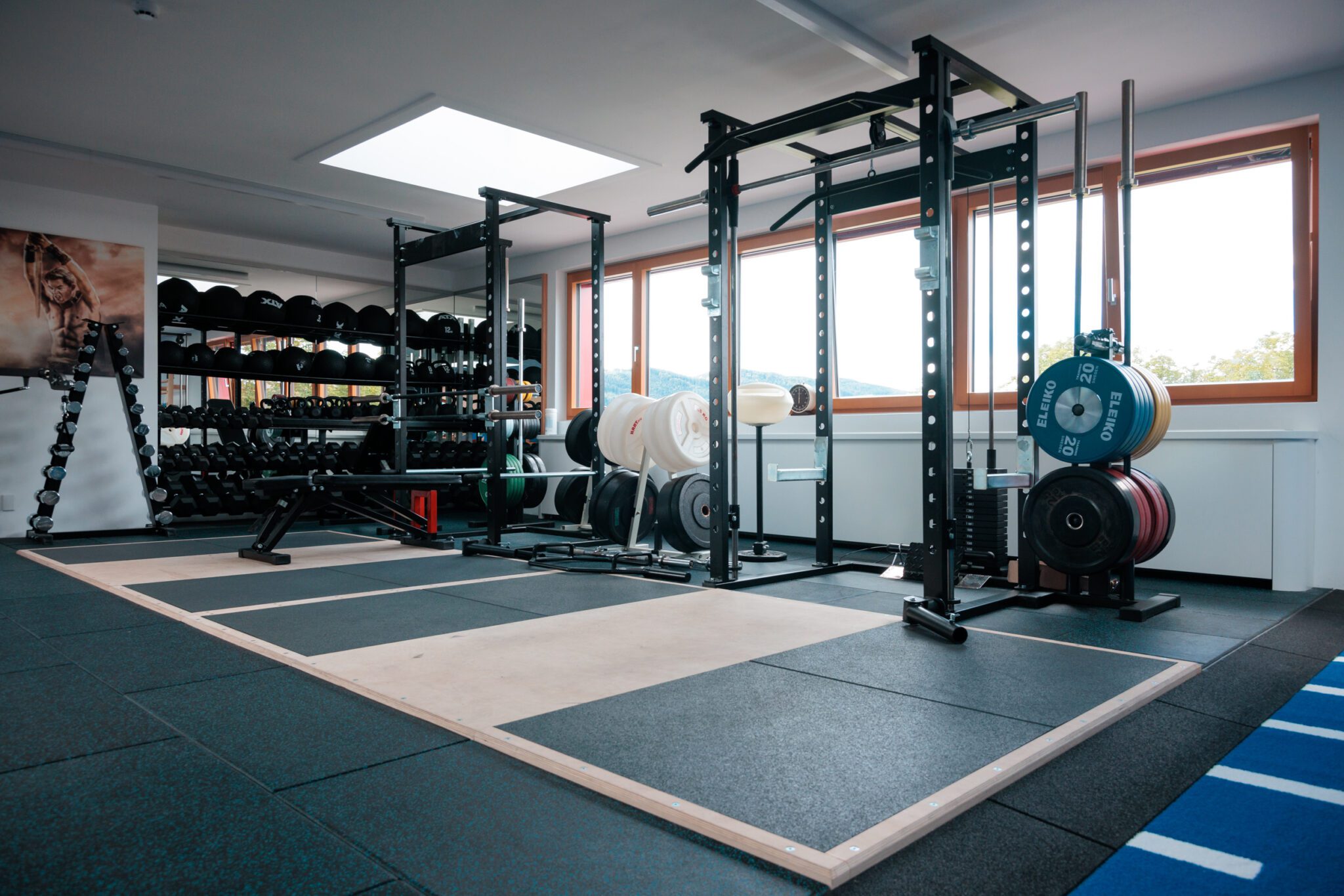 Fitness centre at A.C. Wals. (Photo: Austrian National Wrestling Centre)
 A.C. Wals
Share your thoughts.
Comments