

Tanabe joins Olympic medalist dad as national champion
Thursday, December 21, 2023 - 17:16 By Ken Marantz

TOKYO (December 21)--Almost 27 years to the day after his father won his first national championship in the same arena, Kaisei TANABE made his first trip to the top of the podium. Next up will be trying to equal, or better, that Olympic medal.
Tanabe scored a pair of second-period takedowns to defeat Nippon Sport Science University teammate Yuto NISHIUCHI 6-2 in the final of freestyle 61kg on the opening day of the Emperor's Cup All-Japan Championships on Thursday in Tokyo.
With the victory, Tanabe and his father and coach Chikara, a bronze medalist at 55kg at the 2004 Athens Olympics, became the sixth father-son tandem of national champions in the tournament's 90-year history .
"My father has a bronze medal from the Athens Olympics, I want to do better than that," the 21-year-old Tanabe said.
Naturally, it was a proud moment for dad, too. "I'm more happy than if I won," Chikara said. "When I was also in my third year of college, I won my first All-Japan title. My son now won in his third year of college, so he has caught up to me. Next it will be great if he can get an Olympic medal."
While Kaisei will have to wait for the 2028 Los Angeles Games at the earliest to realize his Olympic dream, for others the tournament is also a qualifier for the Asian Olympic qualifying tournament in April in Bishkek in weight classes in which Japan has not already secured a berth at the 2024 Paris Olympics.
In the non-Olympic weights, a title earns a ticket to the Asian Championships to be held a week earlier in the Kyrgyzstan capital. As in recent years, the competition in non-Olympic weights is being completed in a single day, while the Olympic divisions are over two days.
 Kaisei TANABE scores a late takedown in the freestyle 61kg final against Yuto NISHIUCHI. (Photo: Takeo Yabuki / Japan Wrestling Federation)
In the 61kg final at Yoyogi Gym No. 2, Tanabe sandwiched a pair of stepouts around a takedown by Nishiuchi to trail 2-2 on criteria going into the second period. But he gained a go-behind takedown to go ahead, then added another in the final seconds to secure the title in his third appearance.
"In the final the opponent was strong, so I wasn't so concerned with how I did it, I just wanted to win," Tanabe said. "But I want to fix those points for my next competition. We practice every day so we both know each other well. I think the difference between us is I have more power, and I wanted to take advantage of that."
Although two years Tanabe's junior, Nishiuchi has already had more international success. This year he dropped down to 57kg and won his second straight world U20 gold and finished second at the Zagreb Open. Tanabe was a world cadet (U17) bronze medalist in 2017, but did little else until this year, when he took third at the Dan Kolov-Nikolai Petrov Tournament in Sofia, Bulgaria, which included a win over Olympic bronze medalist and former world champion Thomas GILMAN (USA).
"In the lighter weights, Japan has many strong wrestlers and there are good ones overseas as well," Tanabe said. "I want to get to their level and, if possible, pass them."
Japan has already qualified for the Paris Olympics in freestyle at 57kg, which meant Tanabe could have made a challenge for the open spot at 65kg, where Tokyo Olympic champion Takuto OTOGURO is favored. That's what his main college rival Masanosuke ONO of Yamanashi Gakuin University opted to do, but Tanabe thought the timing was wrong.
"Up to now I've never really done anything at the All-Japan, and I was determined to win a championship so I entered at 61kg," he said.
To get to an Olympics, he knows he will eventually either have to go up or down a weight class. Asked which way he was leaning, "I'm not very good at controlling my weight, so I want to bulk up and become a competitive wrestler at 65kg," he said, adding he has not decided when he will make such a move.
The Tokyo-born Tanabe started wrestling at age 4, and he described his father as "a nice father and a tough coach." Growing up, Tanabe did not gain inspiration from Chikara's Olympic medal--in fact, he never really saw it. "He didn't win [the gold], so the medal was never on display," he said.
Tanabe's older sister, Yumeka, is also an accomplished wrestler who was a two-time world cadet champion. But four third-place finishes at the All-Japan kept the home from having a father-daughter pairing of national champions, like that of the great Saori YOSHIDA and her late father Eikatsu.
Chikara, who won the last of his five national titles in 2003, sees potential in Kaisei. "I wrestle with him and I can feel his power," he said. "From here, he'll keep improving going toward the Olympics. I want him to set a high goal."
 Shingo HARADA flips over Tomohiro INOUE to finish up a title-winning victory at Greco 72kg. (Photo: Takeo Yabuki / Japan Wrestling Federation)
Harada follows up strong showing in Belgrade
In other finals, Shogo HARADA followed up his eye-catching performance at the World Championships with a title at Greco 72kg in his All-Japan debut, thumping veteran Tomohiro INOUE 9-0 in the final.
After scoring a takedown and 2-point tilt to go ahead 4-0, Harada slammed down Inoue to finish off the match with six seconds left in the first period.
The 23-year-old Harada, who switched from judo to wrestling in high school, made his international debut at last year's worlds in Belgrade and turned heads by placing fifth. While still an amazing feat, it left him rueing that he could have done more.
"At the World Championships, I didn't put out all of my power and I lost in the semifinals," Harada said. "I took that back home and reflected on what happened. I found I was too impatient. I think I've improved on that little by little."
At the moment, Harada says he is not yet at the level of domestic competition in the Olympic weight classes both above and below him. "I won this title, but deep down, I'm not yet at the top level in Japan looking at the weight classes around me." he said.
The 36-year-old Inoue said the loss likely marks the end of a career that featured five national titles dating back to 2012, with the most recent in 2021. It also included a silver medal at this year's World Veterans Championships.
While the loss was one-sided, it only makes a difficult decision a little easier. "If it was a closer match, it might have been tougher to take," he said.
 Ayano MORO gets behind in the women's 72kg final against Sumire NIIKURA. (Photo: Takeo Yabuki / Japan Wrestling Federation)
In a battle of a pair of 2022 women's champions, teenager Ayano MORO dropped down to 72kg and dethroned two-time reigning titlist Sumire NIIKURA 6-0.
The 18-year-old Moro twice gained 2-point exposures on counters to add to the title she won at 76kg last year. "I wasn't able to get in on my tackle, which is my strong point, so honestly speaking I'm not so happy," she said.
Moro's chances of making the Paris Olympics ended when the 2020 world U20 champion lost a world team playoff to Yuka KAGAMI, who then clinched her ticket to Paris by winning the gold at the World Championships.
"In December last year at the Emperor's Cup, I entered at 76kg with the goal of the Olympics," she said. "At that time I won the title which was good, but I hurt my shoulder. But I had won, so I had no choice but to keep aiming for the Olympics, although I later lost.
"Now the Olympics is no longer an objective. I had a lot of time to think. Looking at my height and other things, I thought it would be best to drop down, which would allow me to do my tackles. I thought I would give going down a weight class a try."
Moro said that neck problems followed her shoulder injury, keeping her from being in top condition for the tournament. She said she will work to get ready for her senior Asian debut.
"The wrestlers from other countries are strong and I've been to enough international tournaments to know I can't take it lightly," Moro said. "My first priority will be getting healthy. You can't win if you don't practice, but first I need to get my body back in shape."
In the other final, Kagetora OKAMOTO became a first-time champion by beating Kohei YAMAGIWA 6-4 at Greco 55kg. Okamoto made the final by knocking off 2022 world U20 bronze medalist and 2023 world team member Taiga ONISHI.
 Takahiro TSURUTA works to turn Yuta NARA in the Greco 97kg semifinals. (Photo: Takeo Yabuki / Japan Wrestling Federation)
The three upper Olympic weights in Greco got the process started to see who will be going to the Asian Olympic qualifier, with the lone surprise coming at 97kg when Takahiro TSURUTA knocked off six-time champion Yuta NARA 3-1 in the semifinals.
"Since I moved up to this weight class, I've been in three tournaments with him, but we never faced each other," Tsuruta said. "Even if I win the title, if I didn't face him I would have felt like something was missing."
Tsuruta, an Asian Games bronze medalist this year, will take on world U23 bronze medalist Yuri NAKAZATO on Friday for the gold and a chance to make the Olympics.
Tsuruta and Nakazato are familiar with each other. When Tsuruta moved up from 87kg in 2021, he promptly won his first and only title with a victory in the final over Nakazato, who knocked off Nara in the semifinals. Nakazato avenged the loss in the final at the Meiji Cup in June 2022, only to see Tsuruta come back and beat him in a playoff for the world team that year.
Meanwhile, world U23 champion Yuzuku INAGAKI, who lost out to Paris-bound Sakura MOTOKI for a place on the Japan team to the World Championships at women's 62kg, will have to get by another Motoki to add to the lone title she won in 2018.
Inagaki overwhelmed Suzu SASAKI by 10-0 technical fall to set up a clash in the final with Motoki's younger sister Hiyori, who is still looking for her first career title at any level. The two met in the first round at the national collegiate championships in August, with Inagaki scoring a first-period fall en route to a third straight title.
It could be said that the de facto final came in the quarterfinals, when Inagaki was trailing on criteria when she scored two late takedowns to defeat 2020 Asian champion Naomi RUIKE 6-2.
Day 1 Results
Freestyle
61kg
GOLD--Kaisei TANABE df. Yuto NISHIUCHI, 6-2
BRONZE--Kodai OGAWA df. Takumi YOSHIMURA, 3-0
BRONZE--Kosei IDE df. Takara SUDA, 6-5
Semifinal--Yuto NISHIUCHI df. Kodai OGAWA, 6-1
Semifinal--Kaisei TANABE df. Takara SUDA by TF, 11-1. 5:24
74kg
Semifinal--Kojiro SHIGA df. Daiju SUZUKI, 14-6
Semifinal--Kota TAKAHASHI df. Shoto KANEKO by TF, 10-0, 2:56
125kg
Semifinal--Taiki YAMAMOTO df. Ryusei FUJITA by TF, 10-0, :46
Semifinal--Koki YAMAMOTO df. Yuji FUKUI, 5-0
Greco-Roman
55kg
GOLD--Kagetora OKAMOTO df. Kohei YAMAGIWA,. 6-4
BRONZE--Taiga ONISHI df. Kenta OGUSU, 9-4
BRONZE--Soken MASUDA df. Seima TOKUHARA, 7-3
Semifinal--Kagetora OKAMOTO df. Taiga ONISHI, 5-2
Semifinal--Kohei YAMAGIWA df. Soken MASUDA, 11-9
72kg
GOLD--Shingo HARADA df. Tomohiro INOUE by TF, 9-0, 1:54
BRONZE--Daigo KOBAYASHI df. Sanshiro ISHIHARA by Fall, 2:34 (5-0)
BRONZE--Akira MITAMI df. Ryoma TOYOTA, 3-2
Semifinal--Shingo HARADA df. Sanshiro ISHIHARA by TF, 11-0, 2:45
Semifinal--Tomohiro INOUE df. Akira MITAMI, 5-3
87kg
Semifinal--So SAKUBE df. Minto MAEDA, 3-1
Semifinal--Masato SUMI df. Tatsuya FUJII, 5-1
97kg
Semifinal--Takahiro TSURUTA df. Yuta NARA, 3-1
Semifinal--Yuri NAKAZATO df. Masayuki AMANO by TF, 11-0, 1:34
130kg
Semifinal--Sota OKAMURA df. Kyo KITAWAKI by TF, 9-0, 1:55
Semifinal--Shion OBATA df. Yuma MIYAUCHI, 7-1
Women's Wrestling
53kg
Semifinal--Rino KATAOKA df. Mako ONO, 1-1
Semifinal--Mihoko TAKEUCHI df. Chiaki KAWAI, 6-4
62kg
Semifinal--Yuzuka INAGAKI df. Suzu SASAKI by TF, 10-0, 1:57
Semifinal--Hiyori MOTOKI df. Kiwa IWASAWA by Fall, 1:37 (4-0)
72kg
GOLD--Ayano MORO df. Sumire NIIKURA, 6-0
BRONZE--Chisato YOSHIDA df. Kokona TAKADA by Fall, 6:00 (9-2)
BRONZE--Yuka FUJIKURA df. Asahi NAKAMURA, 6-2
Semifinal--Sumire NIIKURA df. Kokona TAKADA by TF, 11-0, 5:57
Semifinal--Ayano MORO df. Yuka FUJIKURA by Fall, 2:37 (8-0)

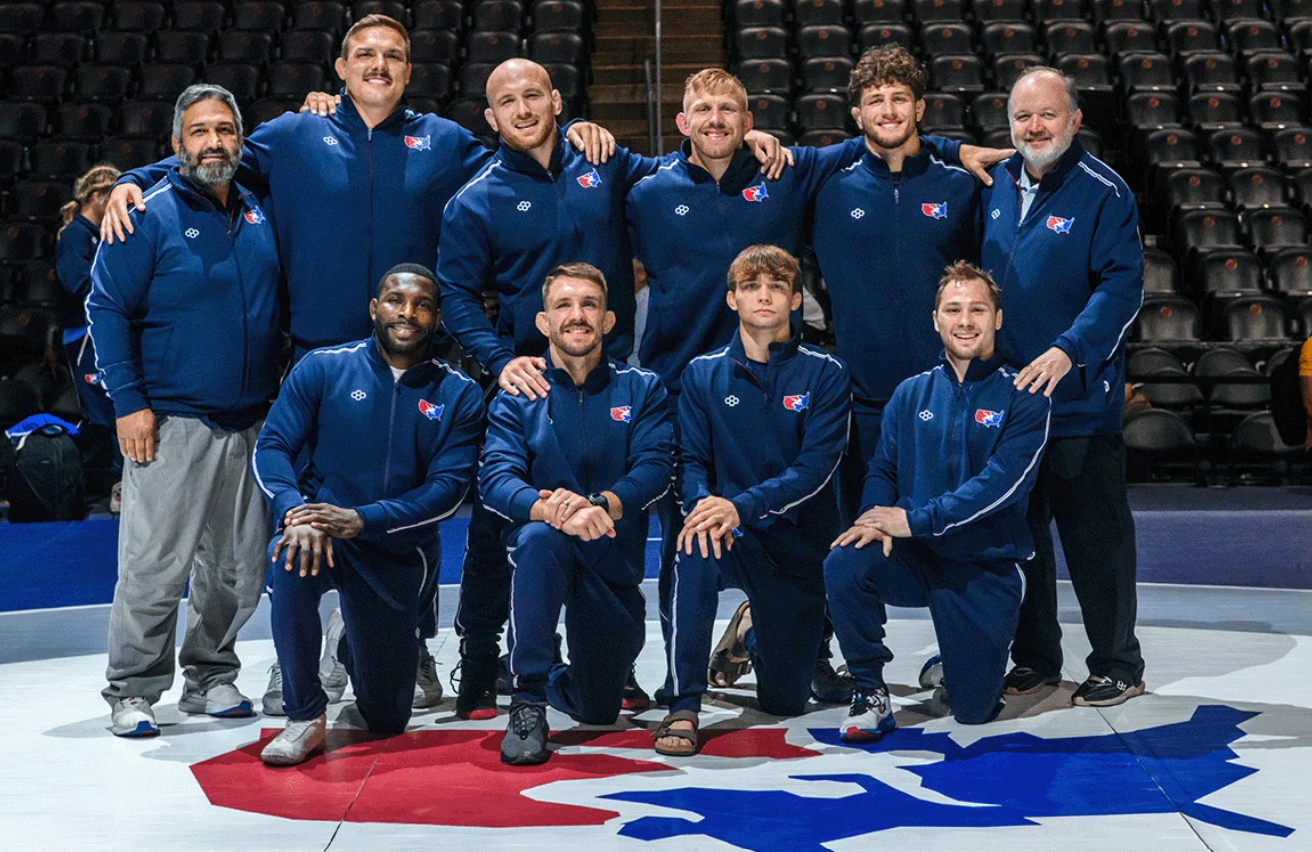 The eight winners of Final X on Friday. (Photo: USA Wrestling / Tony Rotundo)
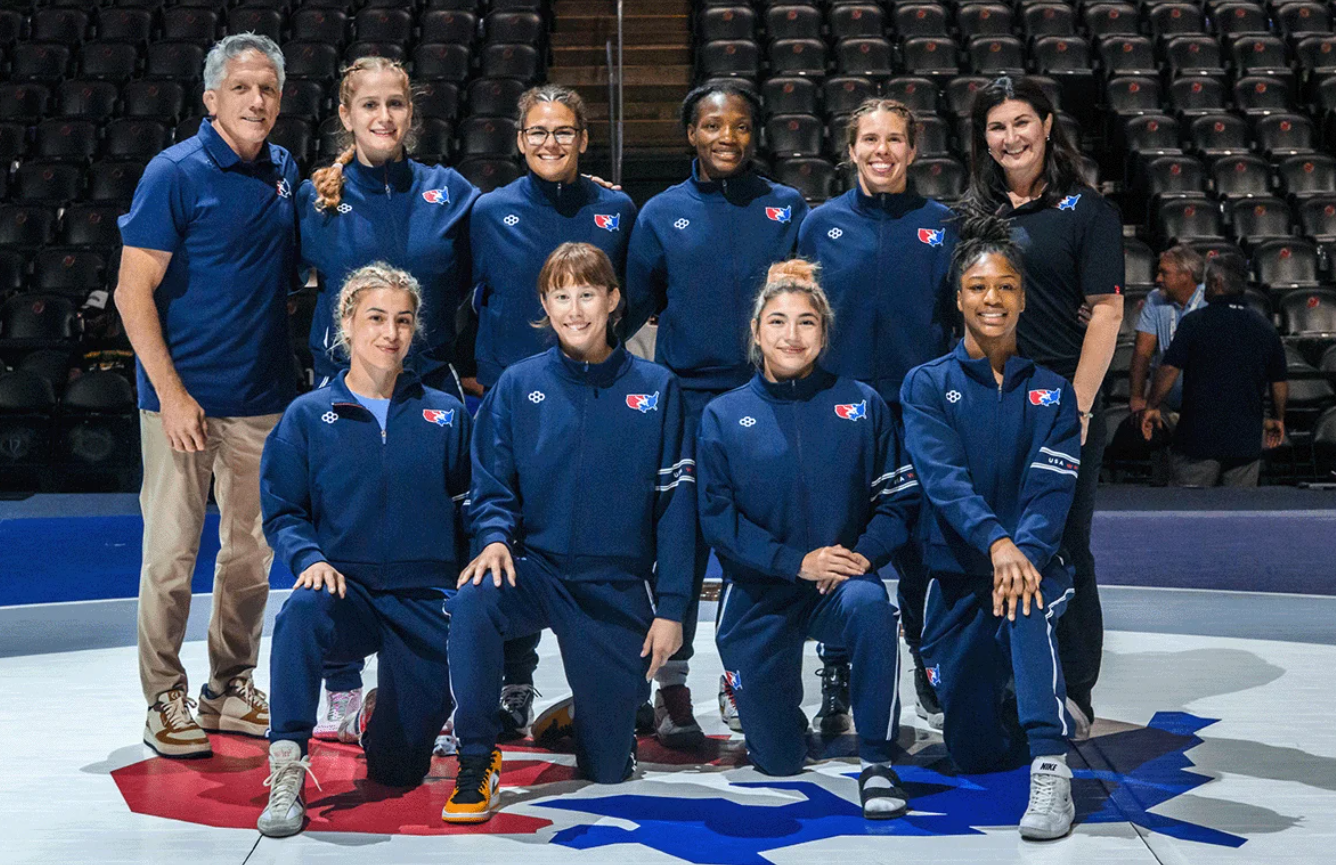 The eight Final X winners in Women's Wrestling on Friday. (Photo: USA Wrestling / Tony Rotundo)
Share your thoughts.
Comments