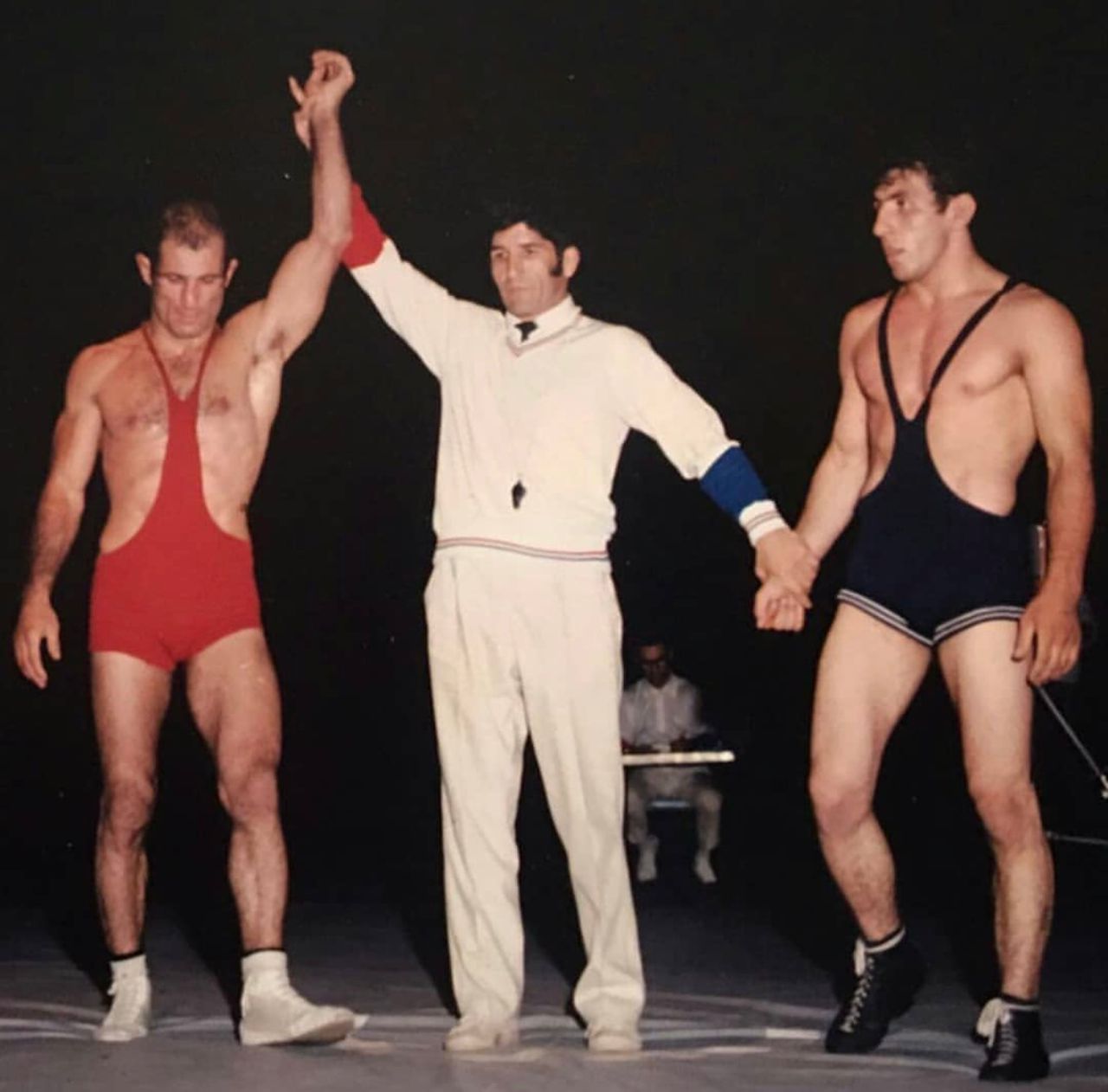
Top Stories of the Decade

Sushil Kumar Wins World Championship, Awakens Wrestling Powerhouse in India

By Vinay Siwach

CORSIER-SUR-VEVEY, Switzerland (December 24) -- India had never won a gold medal at a global wrestling event. The drought was such no one seemed to put money on any wrestler to even a medal, forget the top one. Indians weren't supposed to dominate world events in any sport.

That was about to change. On September 12, 2010, Sushil KUMAR (IND) broke all barriers to become India's first-ever gold medal winner at the World Championships in Moscow, Russia. In the 66kg weight category, Kumar would put up a commanding performance and beat Alan GOGAEV (RUS) 3-1 in the final in front of a hostile home crowd.

On the back of his bronze medal at the Beijing Olympics in 2008, Kumar arrived in Moscow as a dark-house, like he had in all global competitions. No one gave him a chance in India. But as the day progressed, the 36-year-old raised hopes.

He beat Anastasios AKRITIDIS (GRE), 6-2, in the opening round followed by Martin DAUM (GER), 4-1. Buyanjavyn BATZORIG (MGL) failed to challenge in quarter-final and lost 9-1 before Kumar eked out a close 4-3 win against Jabrayil HASANOV (AZE) in the semifinal.

"2010 was the best year," Kumar said. "Wherever I went, I won gold. Commonwealth Games, Asian Championships, World Championships. I beat a Russian wrestler in Russia."

These things were unheard of in India. Kumar's victory was hailed because no one had heard that an Indian wrestler can go to Russia and defeat their wrestler to win a gold medal. 

And if the world thought Kumar's bronze in Beijing was a fluke, he changed that and gave a new life to Indian wrestling which was struggling with doping scandals, nepotism and inter-federation politics. His medal put wrestling on India's sports map and perhaps the top one too.


Kids thronged to akhadas in villages in Haryana, Delhi and Uttar Pradesh. Not only boys, but parents were ready to break social stigmas and send their girls to akhadas, a place where girls are seldom seen. New wrestling pockets emerged and broke the dominance of traditional powerhouses like Haryana and Maharashtra.

The result was seen three years later when India won three medals at 2013 World Championships and this year in Nur-Sultan, it won five, the best-ever performance.

Kumar added a silver medal at London Olympics to become India's first-ever individual to win multiple medals at the Games. But it was before that India needed a sporting hero. It got one on that September evening in Moscow.
Obituary

Abdullah Movahed: Iranian Legend Who Elevated Wrestling to Art Form

By United World Wrestling Press

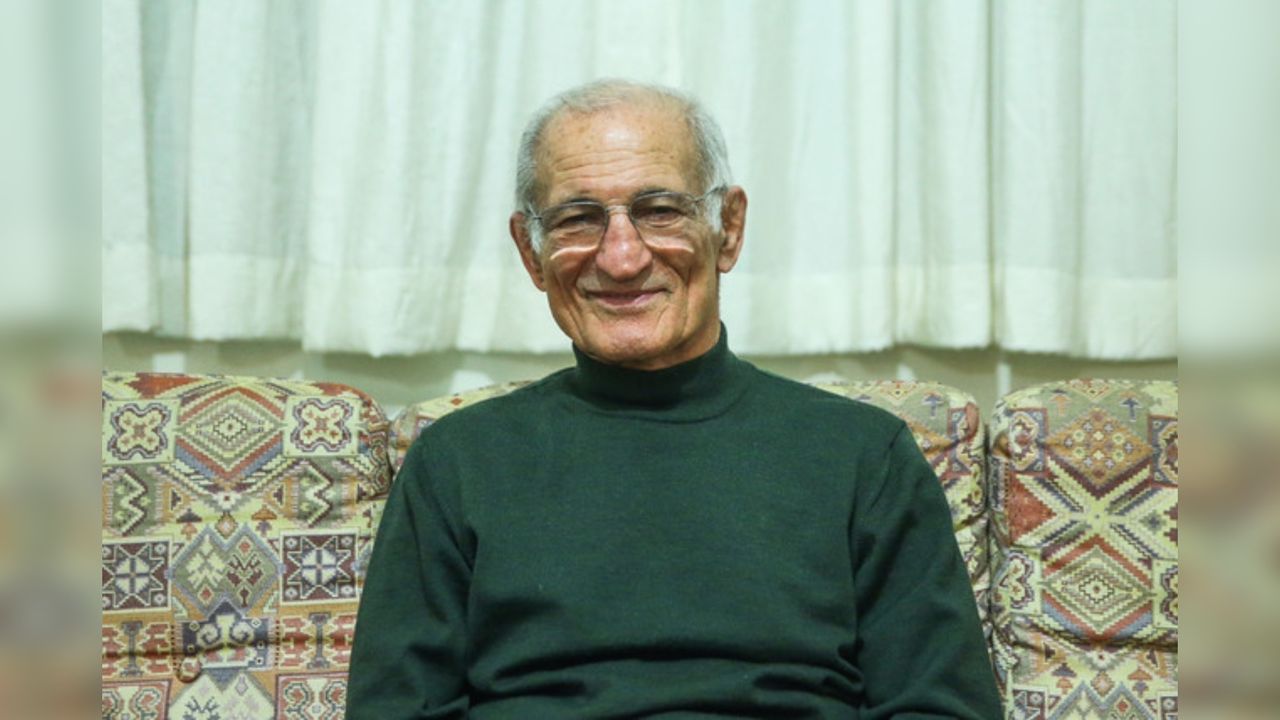
CORSIER-SUR-VEVEY, Switzerland, (May 1) -- Abdullah MOVAHED (IRI), one of the all-time greats of world wrestling and a dominant force in Freestyle during the 1960s, passed away in the United States on Thursday, April 30, after suffering a heart stroke. The Iranian legend was 86.

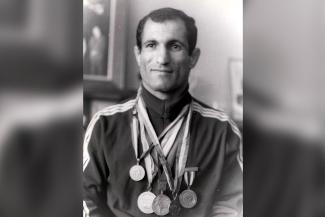
A member of the United World Wrestling Hall of Fame, Movahed’s name became synonymous with technical brilliance and relentless discipline. A five-time world champion, an Olympic gold medalist and twice Asian Games winner, Movahed was at the forefront of an era of Iranian excellence on the global stage. Competing in the 68kg and 70kg Freestyle weight classes, Movahed achieved a level of sustained dominance rarely seen in the sport.

Born in March 1940 in Babolsar, in Iran’s Mazandaran province, Movahed was introduced to volleyball as a young boy and was known locally for his exploits as a spiker. However, he quit the sport as he felt he wasn’t tall enough and didn’t believe he was suited for it. Ultimately, it was on the wrestling mat that he would carve out his legacy. 

He went on to join the Tehran Javan Sports Club, and as a youngster, Movahed didn’t have it easy. He frequently lost to established wrestlers like Mohammad SANATGARAN (IRI). However, he persevered, and coaches recognized his rare blend of agility, intelligence, and composure under pressure. These traits would define his career.

Movahed emerged during a time when Iranian wrestling was rich in talent. He shared the stage with wrestling legends such as Gholamreza TAKHTI (IRI), Mansour MEHDIZADEH (IRI), Ebrahim SEYFPOUR (IRI), and Emamali HABIBI (IRI). In such a company, greatness was neither guaranteed nor easily attained, but Movahed’s rise was swift.

His breakthrough came in 1962, when the erstwhile Soviet Union’s Freestyle champions travelled to Iran for a series of friendly bouts. His win over Zarbag BERYASHVILI made him an overnight sensation in Iran, and the following year, Movahed made his debut for the Iranian national team at the World Championships in Sofia, Bulgaria.

As a 23-year-old rookie, Movahed didn’t make much of an impact -- he shared sixth place with well-known Bulgarian wrestler Enyu VALCHEV (BUL). At the 1964 Olympics in Tokyo, he showed signs of improvement and finished fourth. A year later, at the World Championships in Manchester, he claimed his first world title, beginning an extraordinary run.

Abdullah MOVAHED (IRI)

From 1965 to 1970, Movahed was virtually untouchable. He won six consecutive major global titles at 68kg and 70kg, including World Championships in 1965, 1966, 1967, 1969, and 1970, along with Olympic gold at the 1968 Summer Olympics. That 1968 triumph, often cited as the pinnacle of his career, showcased his tactical mastery and unyielding determination. He also won the gold medal at the 1966 and 1970 Asian Games.

He returned for the 1972 Summer Olympics, but an unfortunate shoulder injury cut his campaign short, preventing a final chapter that might have further illuminated his already illustrious record. After the Games, Movahed, who had a master’s degree, moved to the USA, where he pursued a PhD at George Washington University. He continued to live there after earning his doctorate and worked as a mechanic.

Abdullah MOVAHED (IRI)

Beyond his medals, Movahed’s legacy lies in the standard he set. He helped define a golden generation of Iranian wrestling and inspired countless athletes who followed in his footsteps. His induction into the United World Wrestling's Hall of Fame secured his place among the all-time greats.

In mourning his passing, the wrestling world remembers not just a champion, but a craftsman whose sustained excellence elevated freestyle wrestling to an art form.