

Susaki Outlasts Rival Irie for Ticket to Olympic Qualifier; Otoguro Clinches Tokyo 2020 Spot
Sunday, December 22, 2019 - 15:48 By Ken Marantz

TOKYO (Dec. 22)—Given the stakes, it hardly produced the fireworks—and points—that were seen in their previous encounters. But a win is a win, and that was all that concerned Yui SUSAKI, who took a major step closer to the Tokyo 2020 Olympics.
Susaki kept her once-faded Olympic dream alive by beating nemesis Yuki IRIE in an intense but ultimately dull 2-1 victory in the women’s 50kg final on the fourth and final day of the All Japan Championships on Sunday at Tokyo’s Komazawa Olympic Park Gym.
All of the points came on the activity clock, and after Irie received her lone point with a minute to go, Susaki went into solid defense mode to preserve the victory and secure a ticket to the Asian Olympic qualifying tournament in Xi’an, China, in February.
“When she got a point, I kept believing I would win and didn’t panic,” said Susaki, who added to the lone national title she won in 2016. “I was able to wrestle to the end keeping a strong mind.”
Rio 2016 Olympic silver medalist Rei HIGUCHI will also be on the flight to China, after he successfully dropped two weight classes and knocked off former world champion Yuki TAKAHASHI in an enthralling freestyle 57kg final with a razor-thin 7-6 win.
Takuto OTOGURO, the 2018 world champion who secured Japan’s Olympic berth at freestyle 65kg with a fifth-place finish at this year’s World Championships in Nur-Sultan, filled that place himself by cruising to the title in that division.
Susaki’s victory avenged a devastating loss in a playoff to Irie in July for a place on the team to Nur-Sultan. That not only ended her two-year reign as world champion, but, given the history of success by Japanese women in the lightest weight class, seemed to end her Olympic prospects.
At Nur-Sultan, any Japanese winning a medal in an Olympic weight automatically filled the berth at Tokyo 2020. Five wrestlers fulfilled that criteria—Mayu MUKAIDA (53kg), Risako KAWAI (57kg), Yukako KAWAI (62kg) and Hiroe MINAGAWA (76kg) among the women, and Greco-Roman champion Kenichiro FUMITA (60kg).
Wrestlers who claimed berths for Japan but did not medal could fill the spot themselves with a victory at the All Japan, also known as the Emperor’s Cup, while a loss would put them in a playoff on Feb. 1 with the gold medalist. Of the three in that category, only Otoguro came out as a winner.
In Nur-Sultan, Asian champion Irie’s tournament ended with a quarterfinal loss to SUN Yanan (CHN), leaving 50kg as the only women’s weight class in which Japan did not qualify for Tokyo 2020.
That reopened the door for Susaki, who was determined to take advantage of this second and last chance.
“I’ve had this dream since I was little,” the 20-year-old Susaki said. “All I thought was to get stronger and definitely take advantage of this chance so I can win the gold medal at the Tokyo Olympics.”
Sasaki, who defeated Rio 2016 Olympic champion Eri TOSAKA in Saturday’s semifinals, scored on the activity clock in the first period, then again a minute into the second. Irie gained her point a minute later.
Neither wrestler was able to get in deep with anything resembling an effective attack, as both seemed to be exercising caution against making the kind of mistake that can proved fatal in such a high-level battle.
“I wanted to score a technical point, but my thoughts got out ahead of me,” Susaki said. “From an emotional viewpoint, it went well. But looking at the wrestling, there is room for improvement and I will work to fix that before the Asian qualifier.”
A tearful Irie, who remains the only wrestler on the planet to have beaten Susaki—she has done it three times—was at a loss for words, so deep was her disappointment.
“I was only thinking about not giving up points, and trying to get points,” said Irie, 27, who was the two-time defending champion.
Technically, Irie’s Olympic prospects are not zero. Should Susaki get injured, or fail to earn a Tokyo spot in China, Irie could be chosen to enter the final world qualifying tournament. Asked about her future, she said she had not thought about it.

Rei HIGUCHI, the Rio silver medalist, defeated Yuki TAKAHASHI, 7-6, and punched his ticket to the Asian Olympic Qualifier. (Photo: Sachiko Hotaka)
Higuchi makes big weight loss pay off
Should Higuchi ultimately make it to Tokyo 2020, it will have been via a quite circuitous route. After winning a silver at Rio 2016, he moved up to 61kg, then up to 65kg in a bid for a second trip to the Olympics.
He experienced some success, winning the world U-23 gold in 2018, but was ultimately unable to unseat Otoguro. Once Otoguro gained the Olympic berth for Japan in Nur-Sultan, Higuchi concluded it would be too difficult to beat him twice (at the All Japan and the playoff) and thus saw his only option as dropping down to 57kg to challenge Takahashi.
He started the process of cutting weight, having blown up to a lifetime heaviest of 68kg. “The temperance was really hard,” he said. “For three or four months, I had a diet of almost solely vegetables.”
In Sunday’s final against Takahashi, he showed no lack of energy, taking a 4-1 lead in the first period that he padded to 7-1 with a takedown and gut wrench early in the second.
But Takahashi has made a habit of putting on big comebacks, and in a 40-second span, put the pressure on and scored three step-outs. He then cut the gap to a single point with a takedown with :31 left.
At that point, Higuchi made a bold move and went for a single that, while ending in a stalemate, ate up precious time. That gave him some leeway to go into defensive mode and finish out the win for his first title since 2016 and third overall.
“I saw there was 30 seconds left on the clock, and I thought I had to go on the attack to keep him at bay and protect the lead, or he would get points,” Higuchi said. “In the end, it worked out.”
Takahashi had beaten Higuchi in two previous career meetings, but the last had been in 2014.
Otoguro kept on track to the Olympics by routing 2017 world U-23 champion Rinya NAKAMURA, finishing up a 10-0 technical fall with one second left in the first period.
Otoguro could be joined at Tokyo 2020 by older brother Keisuke, who won the 74kg gold to set up a playoff with Mao OKUI, who clinched the Olympic spot in Nur-Sultan but fell Saturday in the first round.
Keisuke Otoguro used counter lifts and spin-behinds to perfection to outlast spunky Daichi TAKATANI 14-8 in the most entertaining match of the day. Having moved up from 70kg, he landed his third career title in a third different weight class.
“If I don’t win the playoff [against Okui], this championship will not mean anything,” Otoguro said.
Takatani had also made a drastic shift in weight classes. He had been among the beaten challengers of Takuto Otoguro at 65kg, then moved all the way up to 74kg for this tournament. His fearless determination spurred him into the final, along with the hope of joining older brother Sosuke, the 86kg champion, at the Asian qualifier.

Miwa MORIKAWA will meet Rio 2016 champion Sara DOSHO for Japan's Tokyo Olympic spot at 68kg. (Photo: Sachiko Hotaka)
Morikawa takes title, gets 2nd shot at Dosho
In a showdown of reigning world junior champions, Miwa MORIKAWA edged Naruha MATSUYUKI 2-1 in the women’s 68kg final, earning her a place in the playoff for the Olympic spot in that weight class against Rio 2016 champion Sara DOSHO.
The playoff will be a rematch after Morikawa, the world 65kg junior champion, soundly defeated Dosho 9-2 in the semifinals on Friday.
In the final against world 68kg junior champion Matsuyuki, Morikawa scored the winning point with a step-out with 1:29 left to win her first title in a weight class (67-69kg) that Dosho had dominated for the past eight years.
Dosho secured the Olympic spot for Japan in Nur-Sultan, but failed to clinch it for herself when she lost in the bronze-medal match to Anna SCHELL (GER).
The two Greco-Roman tickets to Xi’an up for the grabs went to world team members. Defending champion Shogo TAKAHASHI defeated 2017 winner Tsuchika SHIMOYAMADA 5-3 in the 67kg final, while Shohei YABIKU blanked Kodai SAKURABA 4-0 at 77kg for his first title in two years and fourth overall.
Day 4 results
Freestyle
57kg (25 entries)
Final - Rei HIGUCHI df. Yuki TAKAHASHI, 7-6
3rd Place - Kotaro KIYOOKA df. Taiki ARINOBU, 8-4
3rd Place – Yudai FUJITA def. Kaiki YAMAGUCHI by Def.
65kg (21 entries)
Final - Takuto OTOGURO df. Rinya NAKAMURA by TF, 10-0, 2:59
3rd Place – Shoya SHIMAE df. Ryoma ANRAKU, 3-2
3rd Place – Masakazu KAMOI df. Takuma TANIYAMA, 2-2
74kg (26 entries)
Final - Keisuke OTOGURO df. Daichi TAKATANI, 14-8
3rd Place – Yuto MIWA df. Ken HOSAKA, 4-3
3rd Place - Jintaro MOTOYAMA df. Ranmaru AKAOGI by TF, 10-0, 2:42
Greco-Roman
67kg (21 entries)
Final - Shogo TAKAHASHI df. Tsuchika SHIMOYAMADA, 5-3
3rd Place - Katsuaki ENDO df. Daigo KOBAYASHI by TF, 9-1, 5:02
3rd Place - Yuji UEGAKI df. Ryo MATSUI, 6-1
77kg (17 entries)
Final - Shohei YABIKU df. Kodai SAKURABA, 4-0}
3rd Place - Tomohiro INOUE df. Yudai KOMURO by TF, 9-0, 2:01
3rd Place – So SAKABE def. Takeshi IZUMI by Def.
Women’s Wrestling
50kg (25 entries)
Final - Yui SUSAKI df. Yuki IRIE, 2-1
3rd Place – Miho IGARASHI df. Remina YOSHIMOTO, 4-2
3rd Place - Eri TOSAKA df. Umi ITO, 12-4
68kg (9 entries)
Final - Miwa MORIKAWA df. Naruha MATSUYUKI, 2-1
3rd Place – Rin MIYAJI df. Sara DOSHO by Def.
3rd Place - Masako FURUICHI df. Hikaru IDE by Fall, 1:53 (8-0)
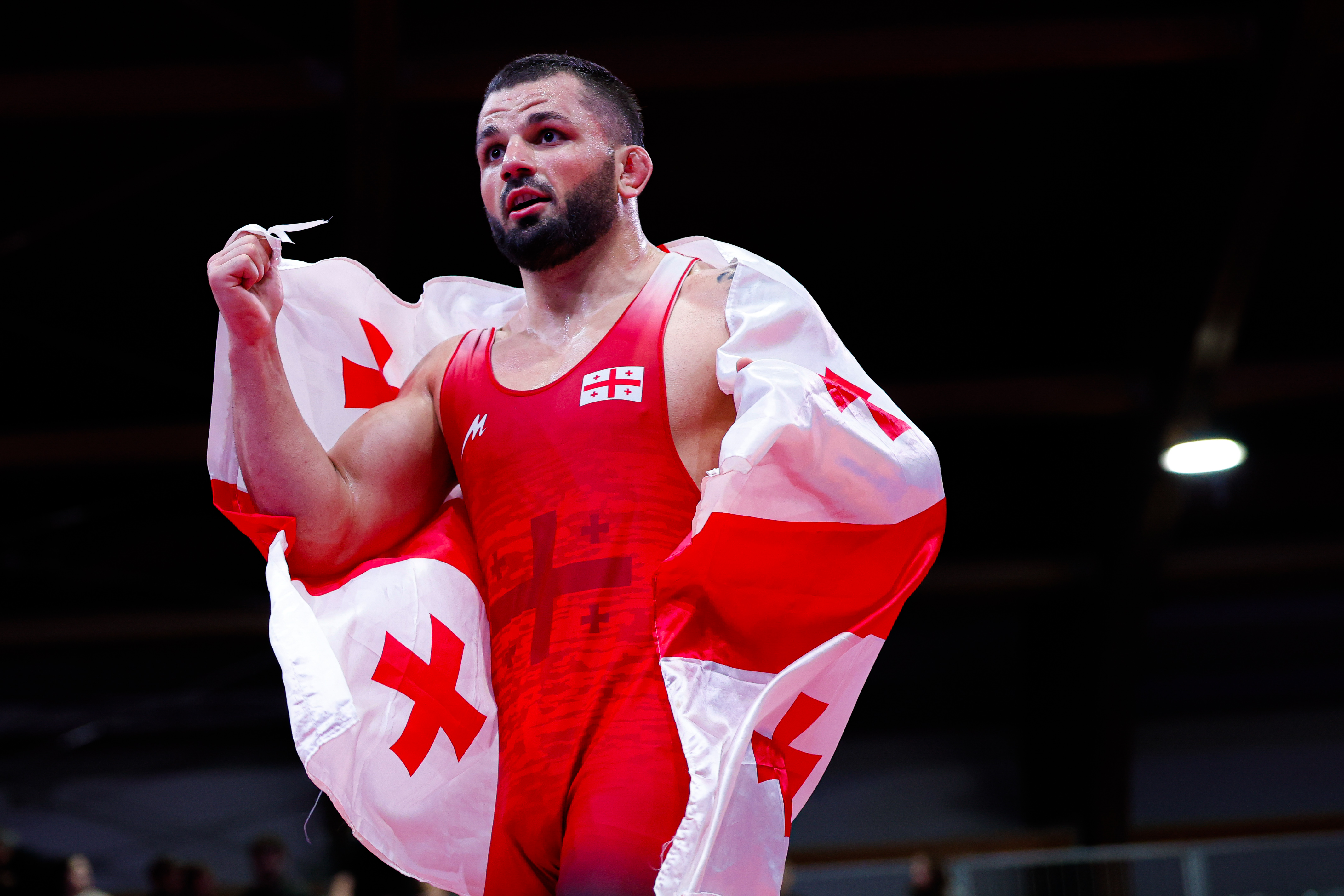 Givi MATCHARASHVILI (GEO) is a three-time European champion. (Photo: United World Wrestling / Kostadin Andonov)
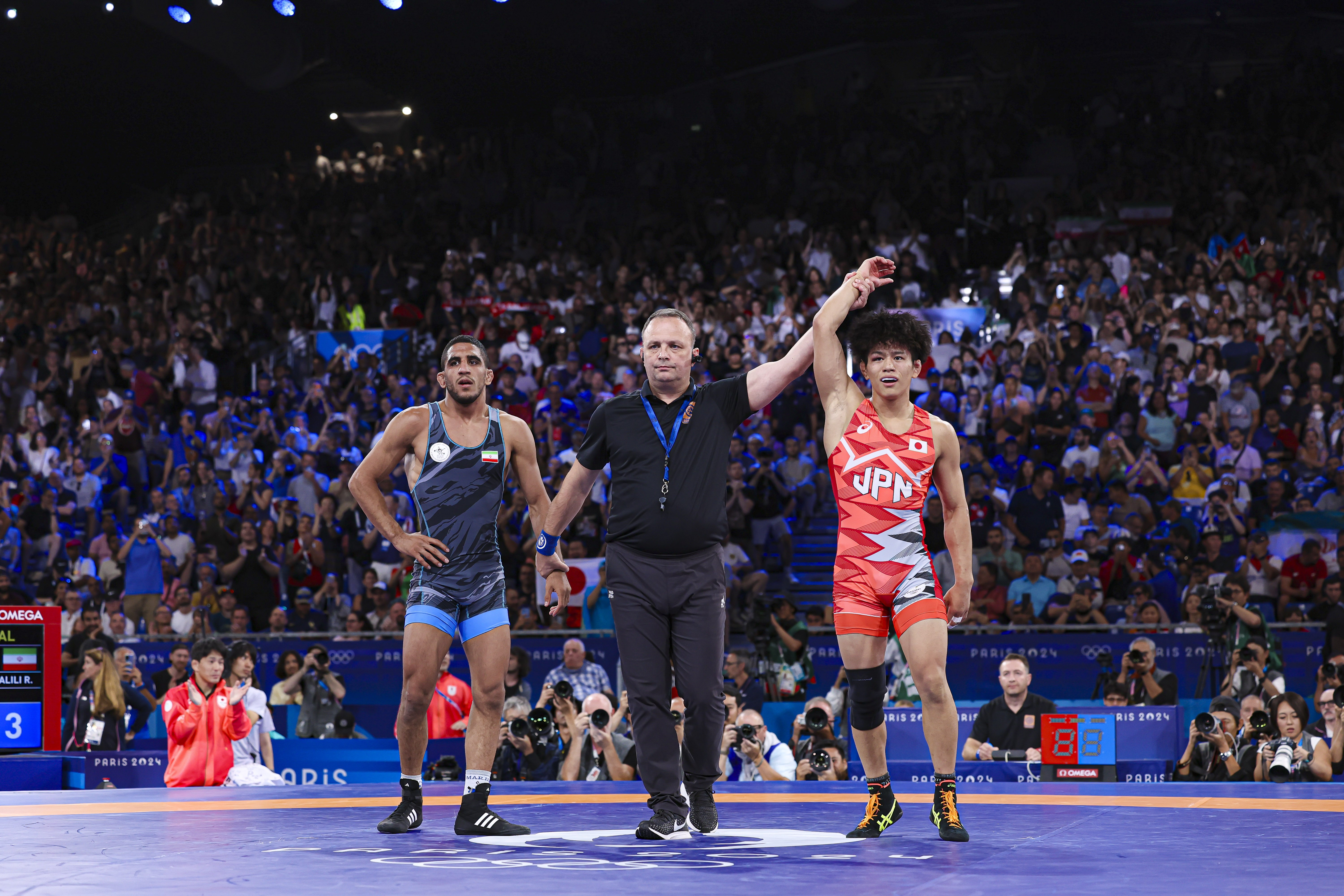 Kotaro KIYOOKA (JPN) defeated Rahman AMOUZAD (IRI) in the 65kg Olympic final. (Photo: United World Wrestling / Kadir Caliskan)
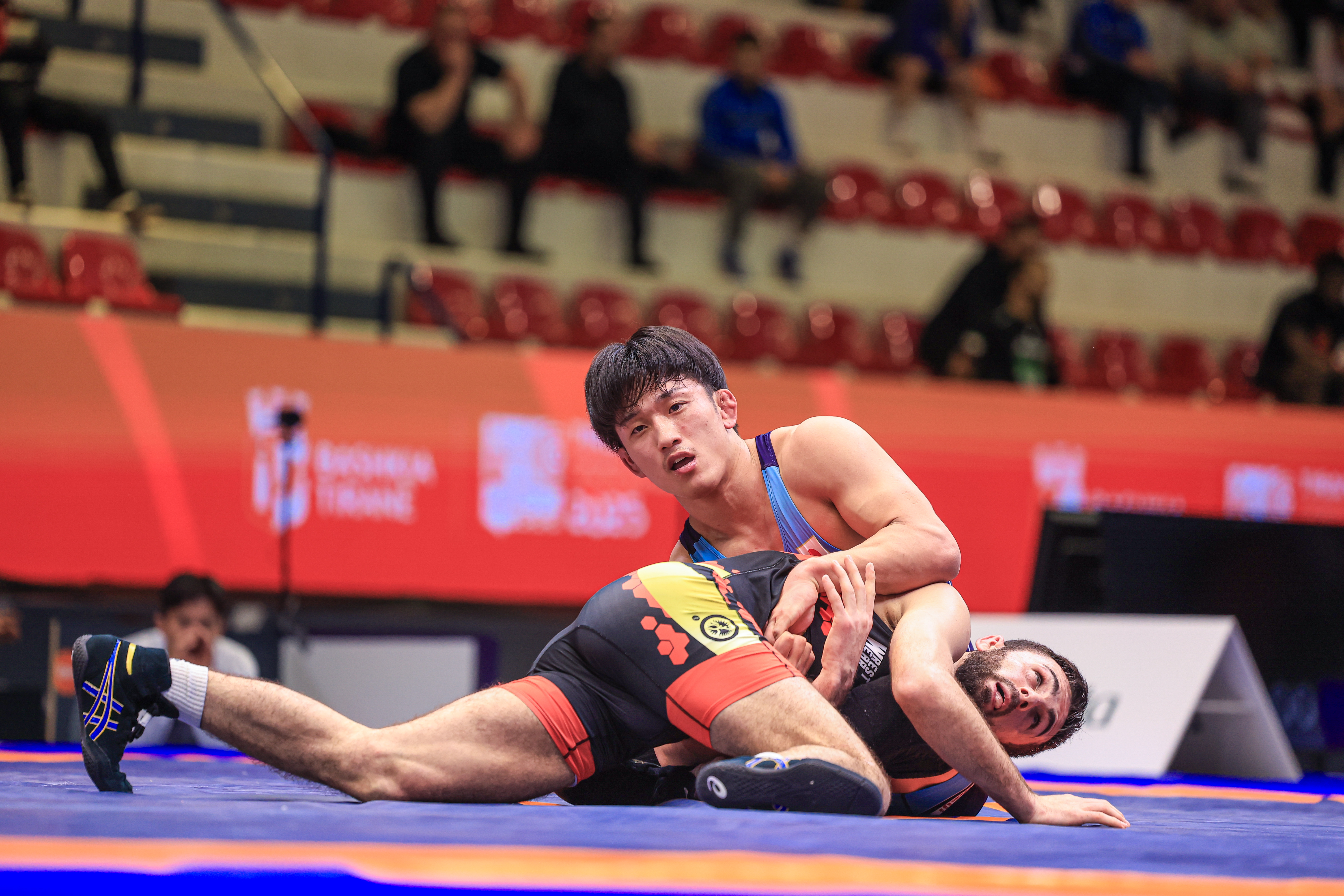 Takara SUDA (JPN) is the Asian champion at 61kg. (Photo: United World Wrestling / Amirreza Aliasgari)
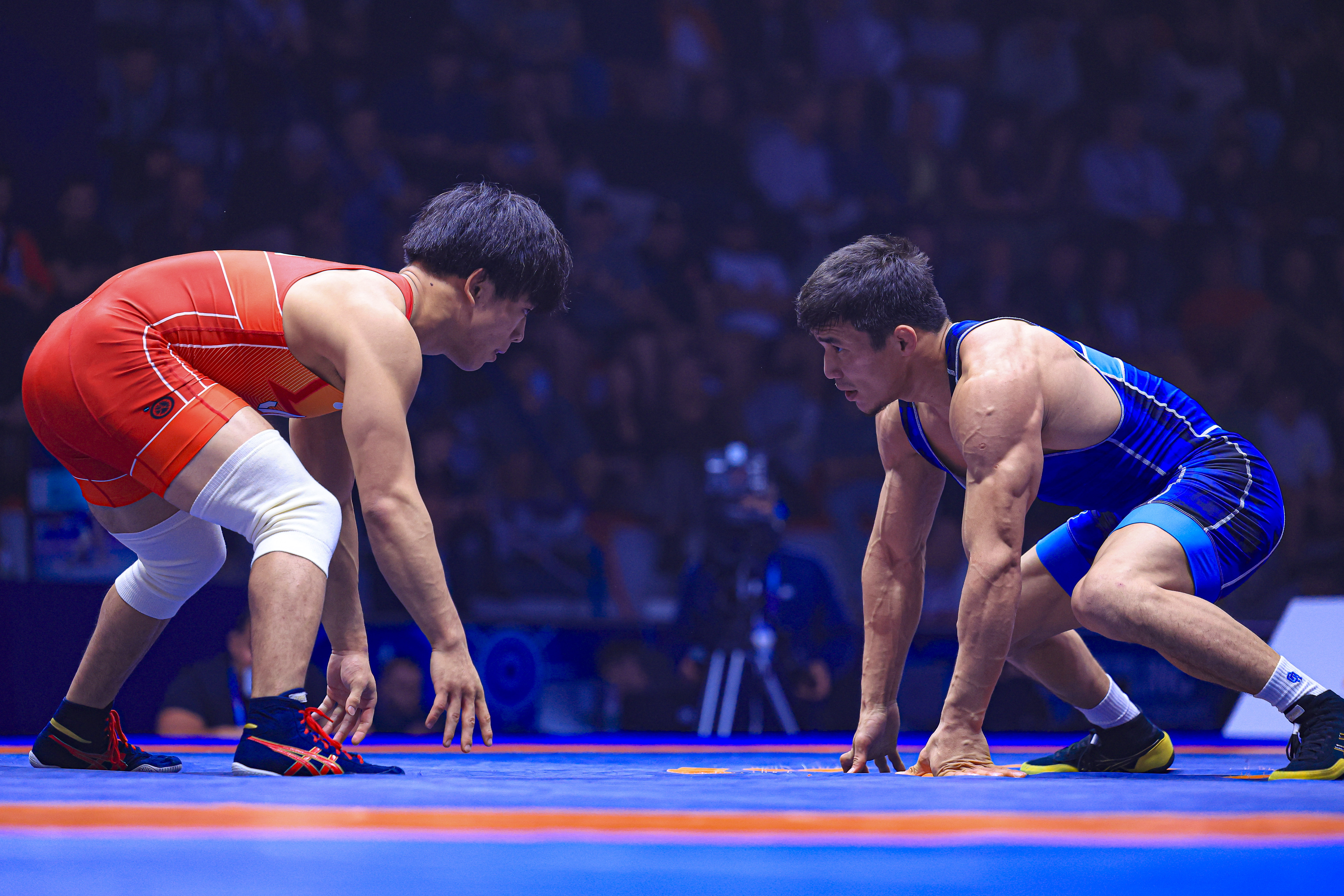 Nurkozha KAIPANOV (KAZ), blue, and Yoshinosuke AOYAGI (JPN) wrestled in the 70kg final at 2024 World Championships. Kaipanov won gold. (Photo: United World Wrestling / Kadir Caliskan)
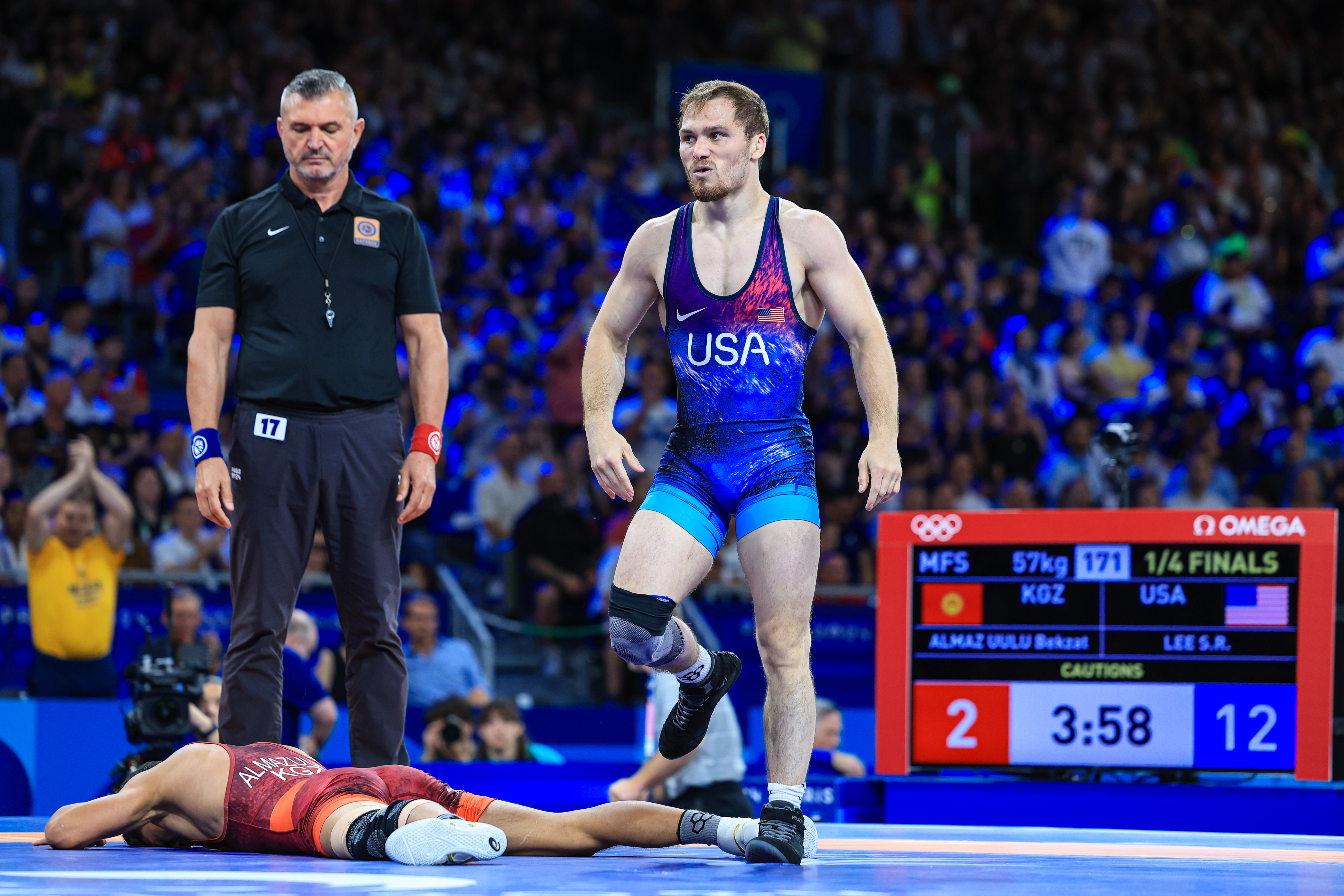 Olympic silver medalist Spencer LEE (USA) is chasing his first world title at 57kg. (Photo: United World Wrestling / Amirreza Aliasgari)
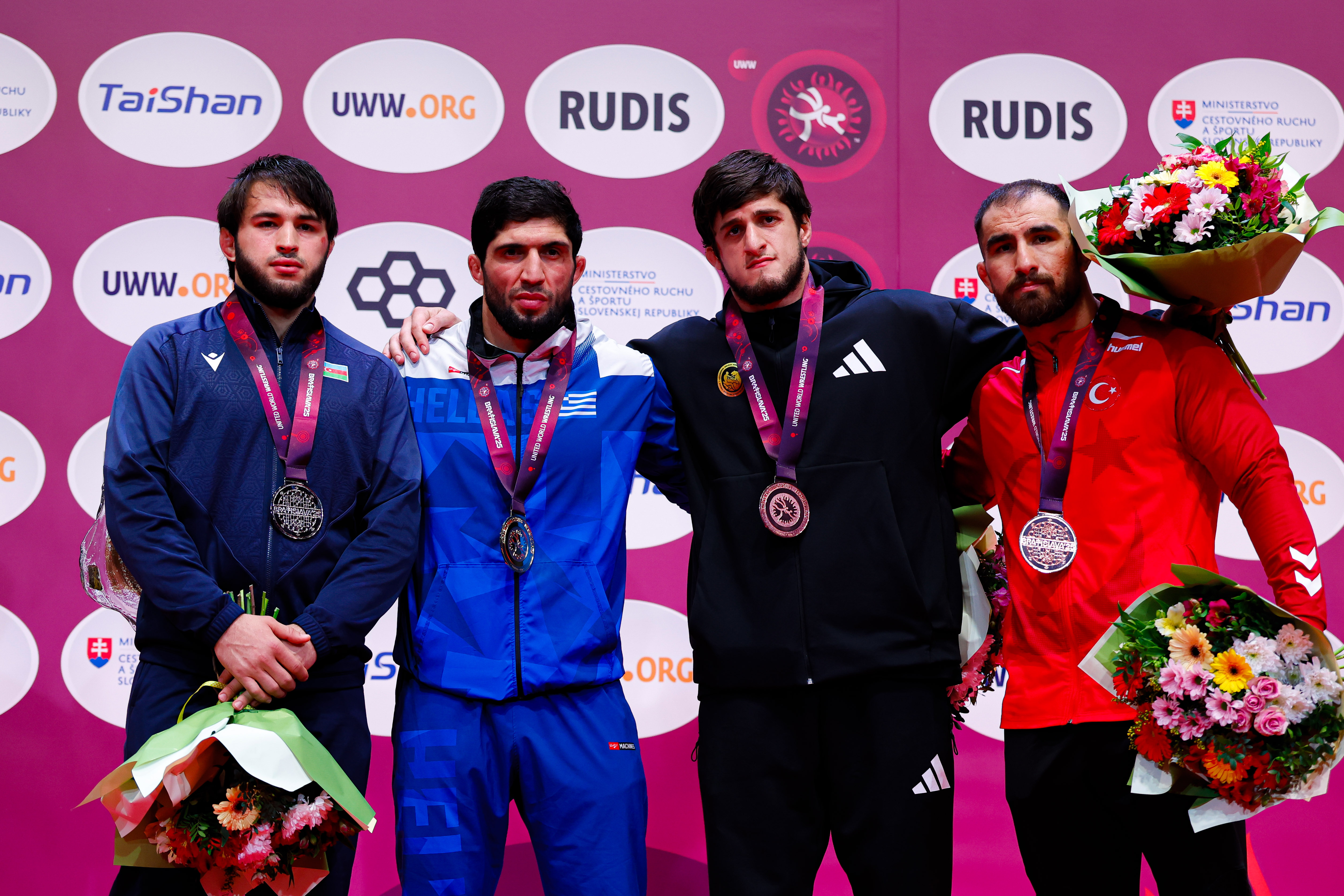 All four 2025 European Championships medalist Osman NURMAGOMEDOV (AZE), left, Dauren KURUGLIEV (GRE), second from left, Miriani MAISURADZE (GEO), third from left, and Feyzullah AKTURK (TUR) are medal threats in Zagreb. (Photo: United World Wrestling / Kostadin Andonov)
Share your thoughts.
Comments