

Safety, Small Numbers Mark Start of Japan's National Team Camps Amid Pandemic
Monday, July 6, 2020 - 14:49 By Ken Marantz

TOKYO―It was hardly a typical start to a Japan national team training camp. For one thing, there were only eight wrestlers.
But these are not typical times. In the midst of a global pandemic, the fact that Japan was finally able to return to the mat for the first time in 3 1/2 months was a major step forward as the host nation begins long-term preparation for the Tokyo Olympics postponed to the summer of 2021.

Yukako and Risako KAWAI use hand sanitizer upon entering the wrestling room at the National Training Center in Tokyo. (photo by Sachiko Hotaka/JWF)
"I'm really happy to see the national team members again after so long," said Yukako KAWAI, one of four Olympic team members participating in the women's camp that started July 2. "Up to now we had camps about once a month and while we are not back to usual, I'm happy that we can wrestle here again."
Adhering to voluminous and painstakingly prepared guidelines set down by the Japan federation's sports science committee, the training camps at the National Training Center in Tokyo will follow strict protocols to prevent the spread of the coronavirus that has dealt such a heavy blow to world sports.
Aside from the usual directives for wearing masks, washing hands and using disinfectants, the guidelines also call for the number of people in the wrestling room at one time to be limited. This is being achieved by having separate camps for the three styles with a minimum of overlap, and mainly inviting only those who have clinched Olympic spots or will be involved in the qualifiers.
"Each of the training camps―for women, Greco and freestyle―are not aimed at raising the level," national technical development director Shigeki NISHIGUCHI said. "These camps are specifically aimed at the Tokyo Olympics. So we limited the number, particularly for July. Depending on the circumstances, we hope to be able to increase the numbers in August and September. But the main point is not bringing in the coronavirus."
The wrestlers have kept a detailed record since June 16 of their daily body temperature, general health and any outside contact that they have had. Each took an antibody test prior to the camp and, aside from a quick run to the convenience store, are prohibited in principle from leaving the NTC.
The women are the first up. Their camp will run through July 8, followed by Greco-Roman (July 6-11) and freestyle (July 23-28). All three will then have one camp each in August and September, again almost all separately.

Yui SUSAKI goes for a leg during a takedown drill. (photo by Sachiko Hotaka/JWF)
Making their way into the six-mat wrestling room at the NTC on Thursday were four of the five Olympic women's team members―reigning Olympic champions Risako KAWAI (57kg) and Sara DOSHO (68kg) along with Kawai's younger sister Yukako (62kg) and Hiroe MINAGAWA (76kg)―as well as two-time former world champion Yui SUSAKI (50kg), who will aim to grab an Olympic ticket at the Asian qualifier scheduled for March next year. Three others were in attendance.
Missing from the Olympic quintet was world silver medalist Mayu MUKAIDA (53kg), who had recently graduated from powerhouse Shigakkan University. She has joined the high-tech engineering firm JTEKT as a sponsored athlete and had commitments to the company.
Outside of coaches, staff and federation officials, the only people allowed in the wrestling room were staff from the Japan federation website and a UWW correspondent. The Japanese media was able to observe practice through an online stream, and had a "press conference" with each wrestler after the session.
Every person entering the room had to disinfect their hands and have their temperature taken. The wrestlers also disinfected the bottom of their wrestling shoes. Everyone but the wrestlers during practice, even the coaches, wore masks at all times.
At this stage, the federation's policy is basically to start slow and build up to the Olympics, doing what it can to prevent injuries. As such, the practice session contained no live wrestling at all. The first hour was dedicated to stretching and building up the core muscles, followed by drills such as high single-leg takedowns and gut wrenches. The mood was light but focused on the task at hand.
"There is still one year and one month until the Olympics, so what we want to do is build a solid base and avoid injury," Nishiguchi said. "We're starting from the basics. The wrestlers might feel that it wasn't enough. But there is no reason to rush things."

Sara DOSHO works on a core-strengthening exercise. (photo by Sachiko Hotaka/JWF)
The Walking Wounded
While avoiding injury is a priority, ironically three of the Olympic wrestlers are currently nursing a variety of physical ailments. In fact, Minagawa used the layoff to have knee surgery, while Dosho, who says she has recovered fully from the shoulder surgery she had in early 2019, continues to rehab a bum knee of her own. Risako Kawai sprained her back recently.
"It's been a chronic condition for about a year," said Minagawa, the 2019 world silver medalist, said of her right knee, which had meniscus removed. "It was particularly bad in March. With the Olympics [originally] in August, there was no way I could have surgery. I thought I would go on just kind of ignoring it, then the postponement was decided."
Nishiguchi pointed out that for some like Minagawa, there is a silver lining to the postponement of the Olympics due to the pandemic, as it gives them a year to recover from injuries.
During the peak time of the pandemic in Japan, the government declared a state of emergency that lasted from early April to early May. That, however, did not give the government the power to enforce the closing of businesses or the use of masks and social distancing. Instead, it empowered the governors of the nation's prefectures to request such measures be implemented voluntarily, and the public largely went along with the "self-restraint."
Like the others, Minagawa was limited at this time to working out at home and going for runs. No wrestling rooms or gyms were open.
"During the time of self-restraint, I had to stay at home and mentally it left me down," she said. "Recently, the state of emergency was lifted, so I was able to go outside more and the national camp could be held, which helped from a mental point of view. I'm more apt to be looking ahead positively."
Dosho said she still feels some pain in her knee, although a thick supporter helps alleviate the discomfort. Having missed out on a medal at the World Championships, she remains determined to make amends by repeating at Olympic champion.
"My objective of winning a gold medal hasn't varied at all," she said. "I think I'll be fine if I stay patient and go slowly in practice."

Risako KAWAI lifts her partner's leg during a takedown drill. (photo by Sachiko Hotaka/JWF)
Now She's Cooking
For Risako Kawai, who won her fourth world title last September in Nur-Sultan, staying home gave her a chance to learn some lessons of the real world outside of sports―such as how to cook.
"From high school, I had always had my meals in the dorm, and even after I graduated from college, I still was able to eat there," Kawai said. "But during the period of self-restraint, we weren't allowed in or out of the dorm. It was the first time I had to prepare my own meals for such a long span, even at my age."
Saying she also gave Pilates a shot for the first time, Kawai found recipes online.
"I had never prepared fried foods, but I was able to give it a shot," she said. "More than coming up with a specialty, I tried different things."
Younger sister Yukako, like Risako a product of Shigakkan, also missed the somewhat pampered life of college. "I really gained an appreciation for the house mother who fixed our meals," she said.
Shigakkan had recently reopened its facilities, so the Kawais were able to actually get onto the mat prior to the national camp, although again without live wrestling.
"Naturally my strength has dropped compared to usual times," Risako said. "But I don't feel like there's any change in my feel for wrestling."
As for getting back on the mat, she added, "It's the first time in a while for the coaches to watch me and to work with a partner. It's a fresh feeling."
She said she is about 80 percent recovered from her back sprain and is taking care not to have a relapse. During the drills portion of the first workout, she did not do the ground wrestling.

Yukako KAWAI takes down her practice partner. (photo by Sachiko Hotaka/JWF)
Hair Today, Gone Tomorrow
Among the main non-wrestling topics of conversation at the camp was the new look of Yukako Kawai, who surprised many people by having her long hair cut to a short bob.
"It's the first time since junior high school that I have it this length," she said. "It's a new me."
Kawai said she had her locks lopped off just before the start of the self-restraint period in March, before the hair salons would be shut down.
"I've always wanted to have it cut, but I didn't have the courage," she said, adding she finally gained the necessary resolve after an incident in New Delhi in February. "At the Asian Championships, I had my hair pulled. That's when I decided I'm going to go through with it.
"At the time, the Olympics had not yet been postponed. I thought it would be a bold move to get me in the spirit in the lead-up to the Olympics."
The shorter tresses are not the only new aspect of Kawai's life. Like Mukaida, she graduated from Shigakkan, and joined a corporation with a deal that allows her to remain fully dedicated to wrestling. She joins Risako as an employee of Japan Beverage, which was also the company of now-retired multitime world champion and Olympic medalist Kyoko HAMAGUCHI.
"Up to now, I was on the wrestling team as part of being a student," Kawai said. "Now wrestling is my job. It's my job to produce results and repay the company. I feel more responsibility than before. I have to be more discerning about my performance. I'm thankful that they will provide the same wrestling environment that I have had before, and I want to do well and make the company happy."
While the world wrestling schedule remains in limbo, Kawai said she is not concerned at this point that there is no specific tournament for which she is preparing at the national camp.
"I haven't really thought about that," she said. "I set an objective each day in practice and I think how I can achieve that objective. More than a tournament, I'm working to overcome any issues I have."
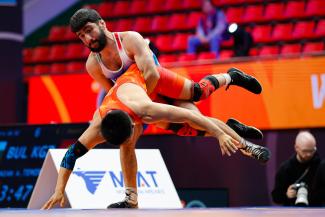
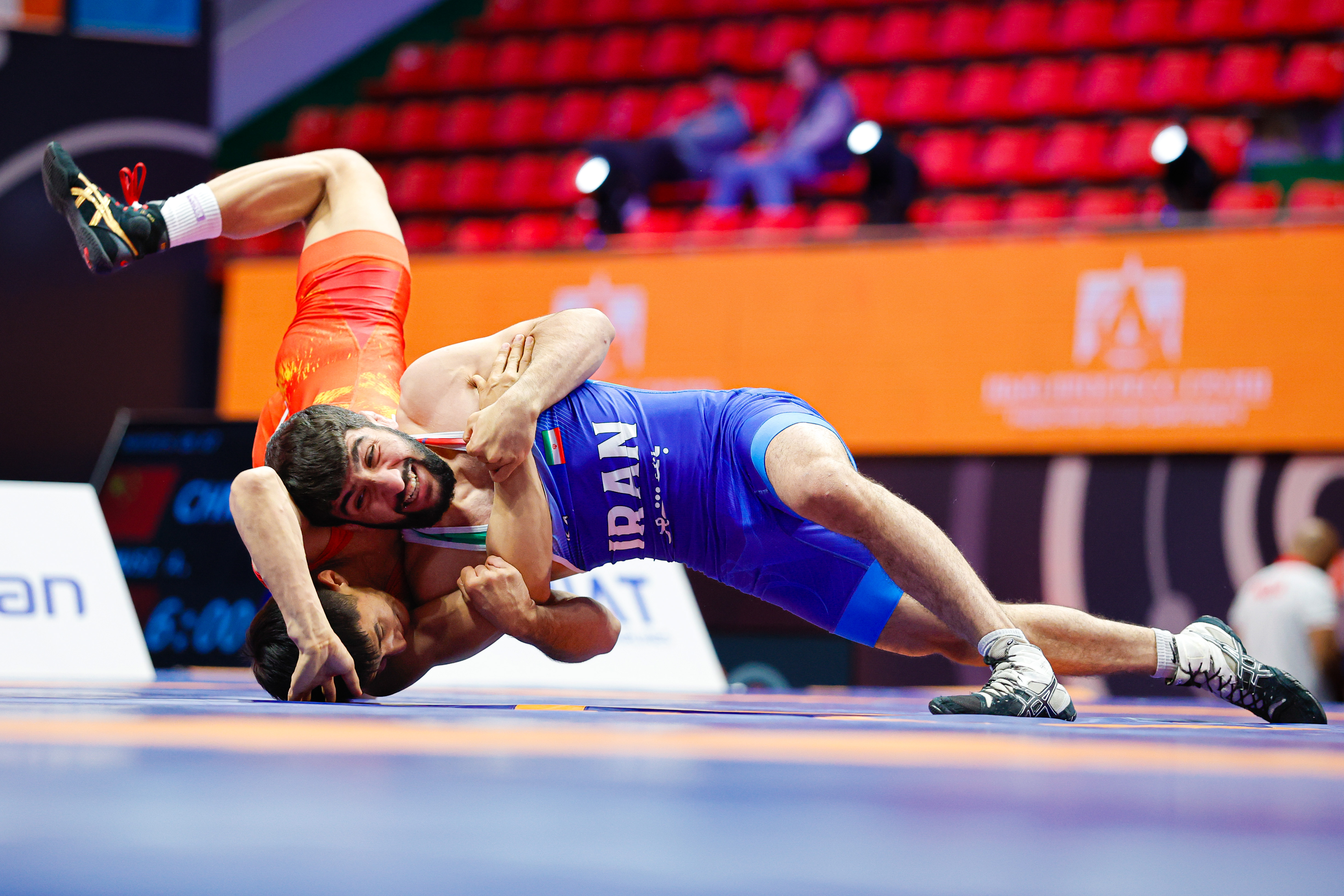 Payam AHMADI (IRI) blanked his opponents 33-0 in four bouts in Ulaanbaatar. (Photo: United World Wrestling / Kostadin Andonov)
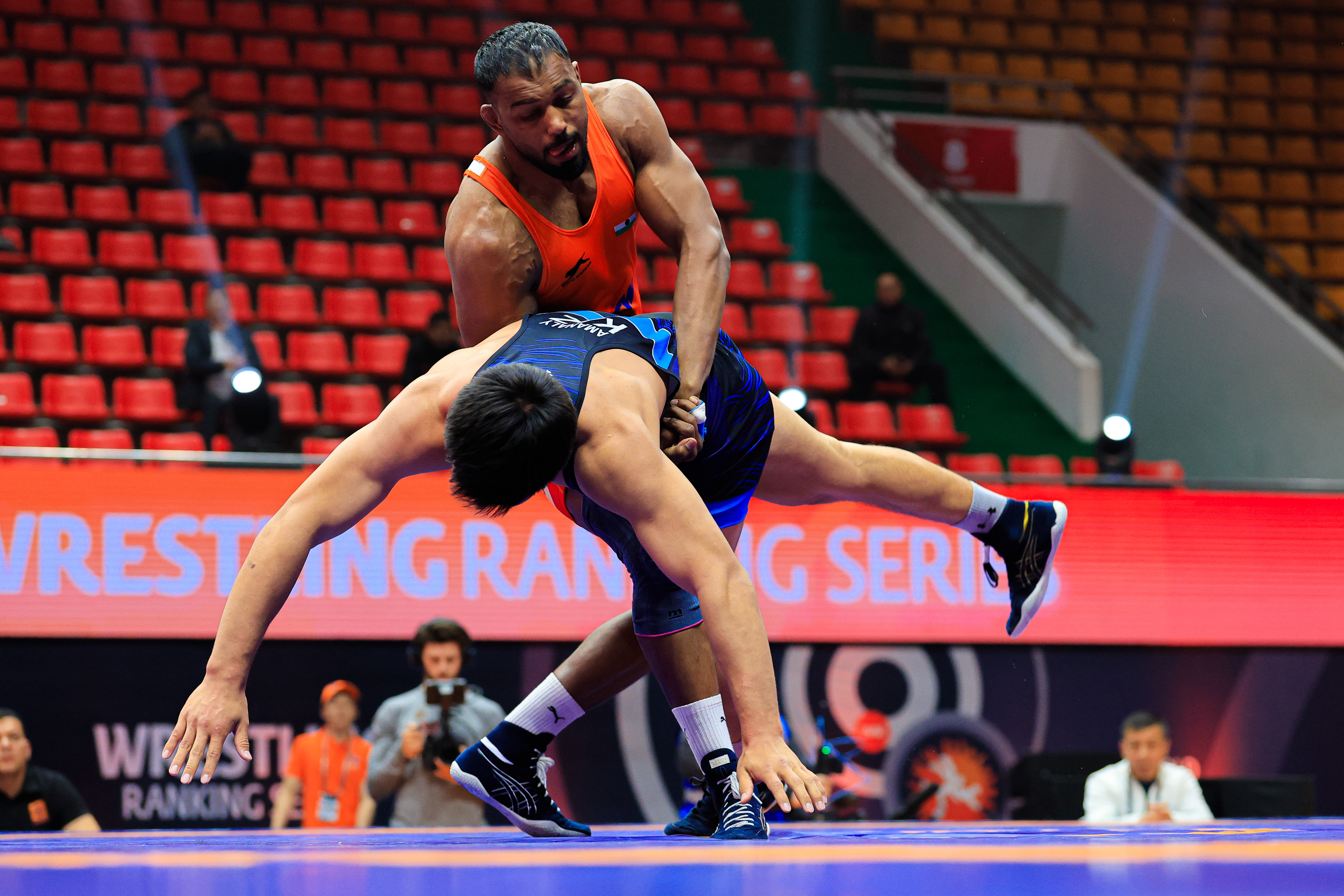 NITESH (IND) throws Nurassyl AMANALY (KAZ) during the 97kg final in Ulaanbaatar. (Photo: United World Wrestling / Kostadin Andonov)
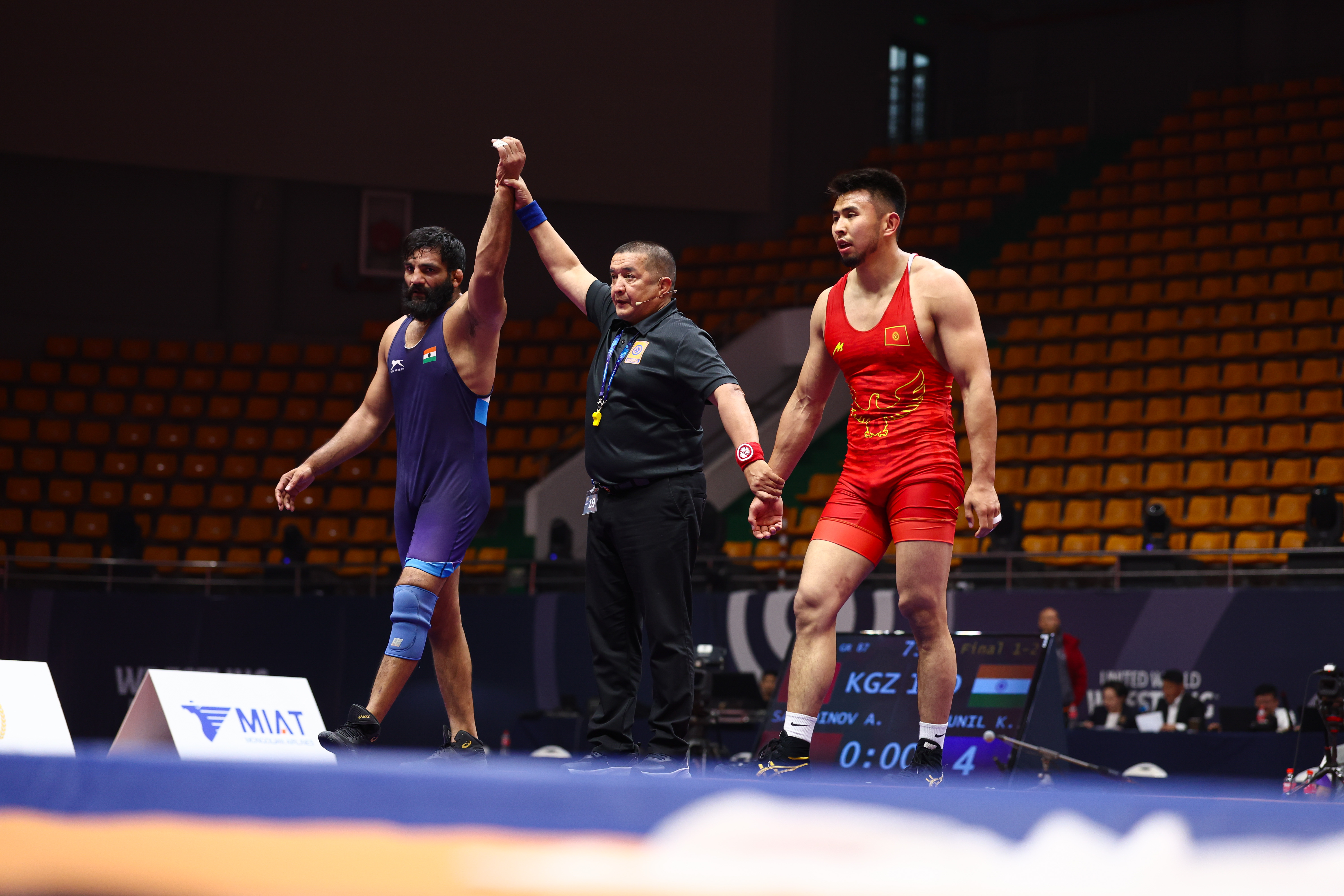 Sunil KUMAR (IND), blue, won the 87kg gold medal at the Ulaanbaatar Open. (Photo: United World Wrestling / Jake Kirkman)
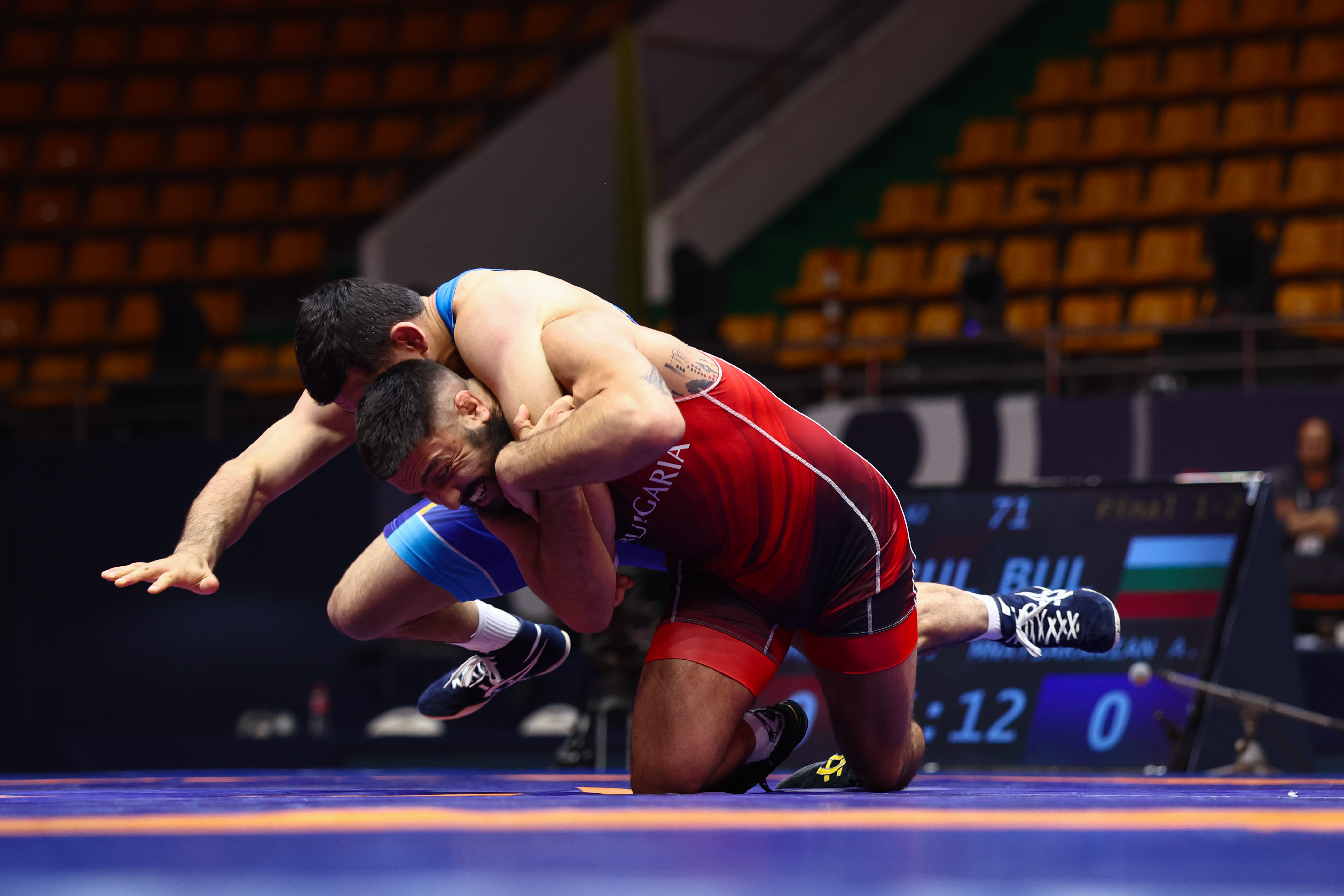 Deyvid DIMITROV (BUL) scores four points on Aik MNATSAKANIAN (BUL) using an arm throw during the 82kg final. (Photo: United World Wrestling / Jake Kirkman)
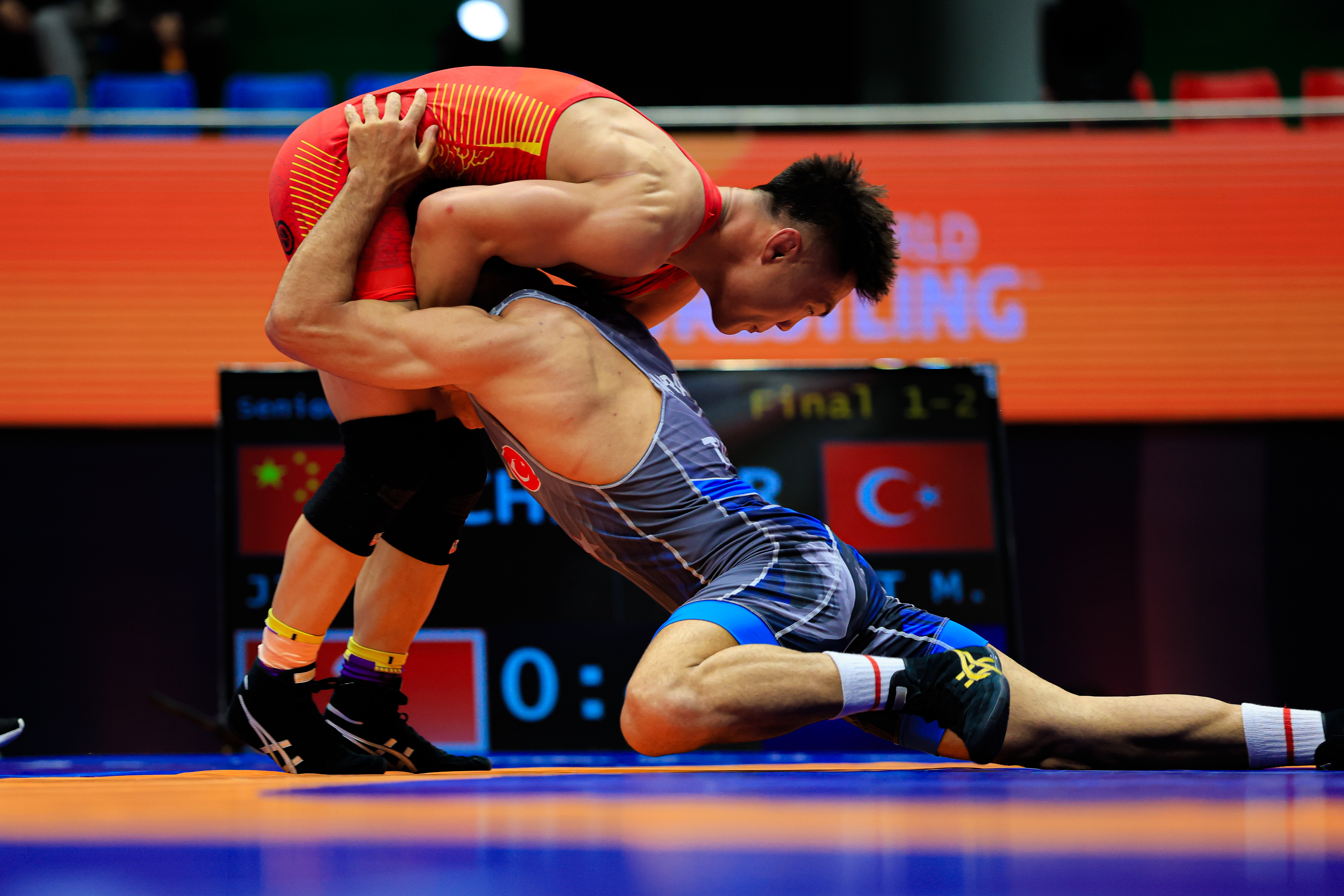 Xinxin JIN (CHN) sets up a counter throw from the edge against Murat FIRAT (TUR) during the 67kg final at the Ulaanbaatar Open. (Photo: United World Wrestling / Kostadin Andonov)
Share your thoughts.
Comments