

Russia Sweeps U17 European Grappling Despite Armenia Challenge
Tuesday, May 26, 2026 - 07:35 By United World Wrestling Press
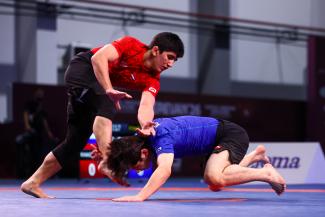
YEREVAN, Armenia (May 20) -- Armenia’s emerging grapplers showcased remarkable depth while Russia dominated the heavier divisions at the U17 Men’s European Grappling Championships here on Monday, with the three traditional regional powers — Armenia, Russia and Ukraine — sweeping podium places across the men’s categories.
Armenia’s strength was most visible in the lighter weights. In the 39-42kg category, Yura MELKONYAN led an Armenian one-two finish ahead of Emanuel GHULYAN, winning the bout 2-1. The trend continued at 50kg where Aram HOVSEPYAN (ARM) clinched gold while compatriot Arshak GALSTYAN (ARM) secured bronze. In the 63kg division, Avet BARSEGHYAN (ARM) added a bronze to the home country’s tally.
The hosts consistently placed multiple wrestlers on the podium, underlining the depth of their youth programme. Armenia added further medals through Marat KARAPETYAN and Hovhannes MRKTCHYAN at 46kg, Gor KHACHATRYAN at 54kg, Garush VARDANYAN at 76kg and Martin DAVTYAN at 85kg.
Russia, meanwhile, stamped its authority in the middle and upper weights. Albert PAREMUZIAN won (RUS) the 46kg title before Azizdzhon SOTVOLDIEV (RUS) took gold at 58kg, beating Davyd KHOMANETS (UKR) 5-0 in the final.
The Russians continued their dominance in the 63 and 69kg categories, recording a gold-silver finish in both. In 63kg, Kurbanali MAKHMUDOV (RUS) defeated Boris BAIRAMUKOV (RUS) to win the gold medal, whereas Ramil ZHIROV (RUS) claimed the 69kg title, beating Iaroslav BALAKIREV (RUS) 7-2 in the final.
The Russians were especially dominant at 76kg where Gusein KHASAEV defeated compatriot Muslim MAMMAEV 2-1 in an all-Russian final.
Ibragim KUMYSHEV (RUS) added another gold at 85kg while Russia also collected silver and bronze in the heavyweight 110kg division through Dzhamal ALKHASOV and Ramazan ESEDOV, respectively.
Ukraine produced fewer overall medallists but impressed with quality performances. Roman SHOSTAK led a Ukrainian one-two finish at 54kg ahead of Illia ZHOLOBOV, while Yaroslav FEDYNA emerged heavyweight champion at 110kg. Ukraine also secured double podium finishes at 58kg through Khomanets and Artem ZAIETS.
Poland’s Marcel Jan BIALEK was the only medallist outside the dominant trio, taking silver at 85kg.
While Russia won the team title with a total of 190 points, hosts Armenia were second with 164, and Ukraine finished third, amassing 85 points.
Russia Dominates in Women`s
Russia reinforced its status as the tournament’s powerhouse by capturing the women’s team title as well, after a commanding series of performances across all categories. Echoing the dominance of the men, Russian grapplers reached the podium in all five weight categories and ultimately finished ahead of Ukraine in the overall standings, with 105 points.
Olesia YATSKO (UKR) beat Ailina GALIEVA (RUS) 7-4 to reign supreme in the 46kg category. It was a Russian 1-2 in the 49kg division, with Vasilisa SHUTOVA (RUS) defeating compatriot Elena KHISMATULLINA (RUS) to take the gold, while Karolina HYRIA (UKR) won the bronze medal.
The strongest statement came in the 56kg category, where Russia completed a remarkable clean sweep of the podium. Sofia ZASLAVSKAIA secured the gold medal after an outstanding performance, while Veronika ZIIAEVA added silver and Eva Sergeevna USHAKOVA claimed bronze, underlining the nation’s depth and control in the weight class.
Russia continued to collect crucial team points in the 60kg division, where Viktoria MOKSUNOVA earned silver. Nadia Bozena PLEWINSKA (POL) took the gold medal with an impressive display while Yana PAVLIUK (UKR) finished third to keep Ukraine firmly in contention for second place in the team rankings.
In the 65kg division, Ukraine celebrated gold through Sofia GOLOVACH, who delivered one of the country’s standout performances of the tournament. Matylda ULEWICZ (POL) earned silver, while Angelina IARKINA (RUS) added another bronze medal to the Russian tally.
Despite strong competition from both Ukraine and Poland, Russia’s consistency across all categories proved decisive, with the multiple podium finishes allowing them to comfortably secure the overall women’s title.
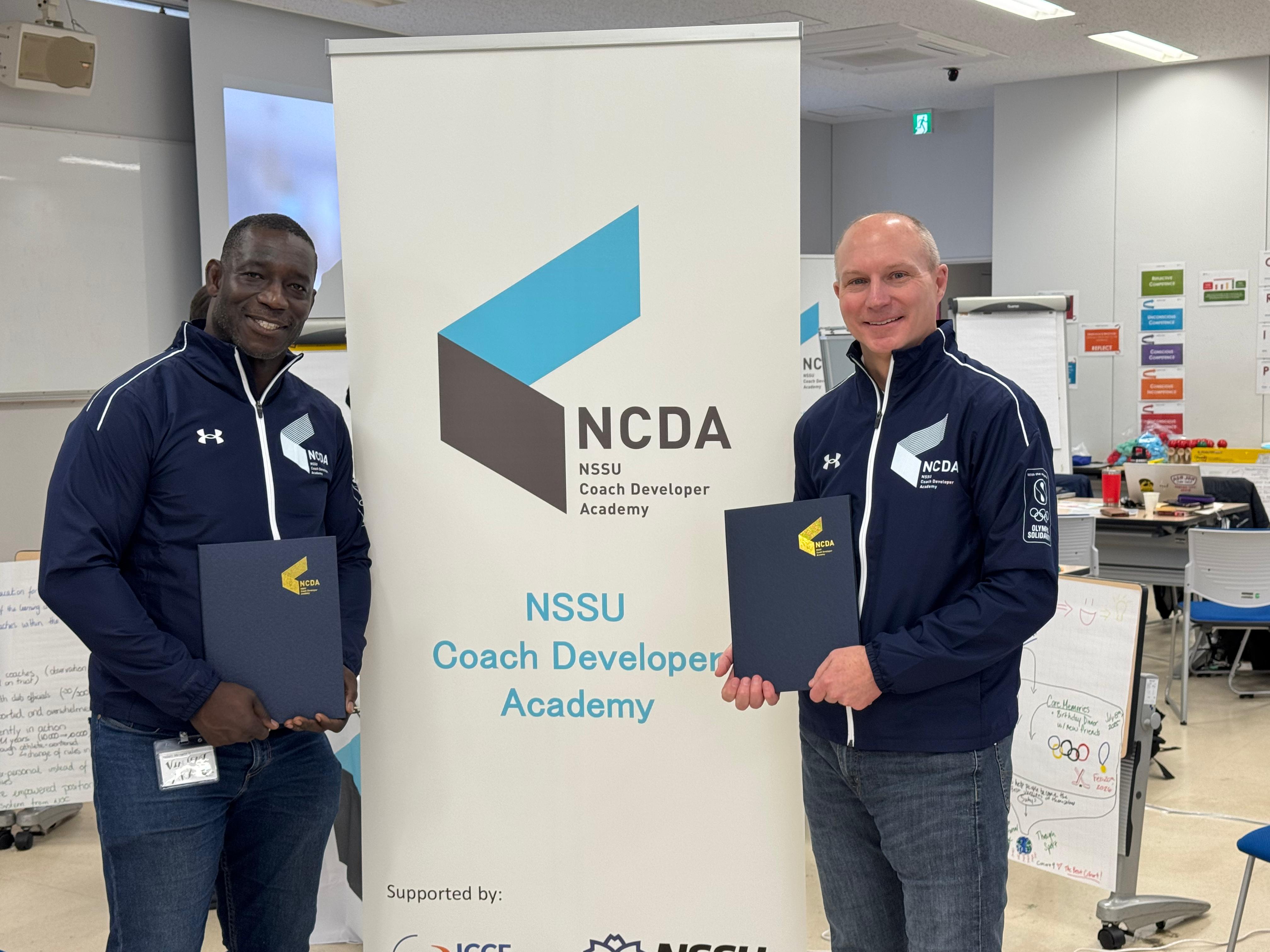 UWW Educators Vincent AKA, left, and Zach ERRETT.
Share your thoughts.
Comments