

Poland shines with six Grappling Gi golds at World Championships
Thursday, August 24, 2023 - 22:31 By Vinay Siwach

WARSAW, Poland (August 24) — Host nation Poland, after podium finishes in Grappling, took more silverware home as it won the women’s Grappling Gi team title and finished second in the men’s division.
Poland won six gold medals, three men’s and three women’s, to emerge as a top team as the Grappling World Championships came to an end in Warsaw after four days of intense action.
Adrianna WOJARSKA (POL), Magdalena LOSKA (POL) and Justyna SITKO (POL) were the three gold medalists for Poland in the women’s division as the country finished with 110 points at the top. Kazakhstan was a distant second with 56 points while Ukraine finished with 42 points. Both countries did not crown any champions.
The top two positions were interchanged in the men’s division as Kazakhstan finished at the top with 130 points while Poland was a close second with 107 points. Ukraine was third with 99 points.
Wokarska, a bronze medalist from last year, dominated the 58kg weight class winning two of three bouts before the final via submission. Up against fellow Polish wrestler Magdalena GIEC (POL) in the final, Wokarska was down on the first move but pushed herself out of Giec’s grip before hitting a double leg to take control on top.
Giec led 3-2 after the exchange but landed in trouble as Wokarska caught her leg with both hands. Wokarska rolled to put Giec in a cradle with the leg still gripped and got a submission with a minute left in the bout.
 Magdalena LOSKA (POL) won the gold at 71kg after a thrilling final against Alycia QUEENE (FRA). (Photo: UWW / Dominik Borowczyk)
European champion Magdalena LOSKA (POL) added further glory for Poland and herself, winning a second world title in as many days. In a thrilling final at 71kg, Loska captured the gold medal after beating Alycia QUENEE (FRA), 3-3, in overtime.
Quenee got the first control and scored two points but as was trying to go for a leg lock, Loska got out of the grip and moved on top to score two points. Loska was called for stalling from the top which gave Quenee the point and a 3-2 lead. With less than a minute left, Loska sprung into action which Quenee tried to stall. That cost her a point but since both wrestlers had similar technique points and a caution each, a minute of overtime was added.
Quenee got the back mount position but she failed to score or submit in the minute and Loska won the gold in front of a small but loud home crowd. Loska had defeated Quenee in the semifinals of the No Gi competition on Wednesday.
The third gold for Poland was won by Justyna SITKO (POL) who defeated Tammy GRIEGO (USA), 5-3, in the 90kg final. Sitko got the first control to lead 2-0 before she put Griego on her back with second control to lead 5-0.
Griego reversed the positions but Sitko was too powerful to give up control. She did get penalized three times in the last 50 seconds for stalling but that did not stop her from winning 5-3, the three points for Griego being caution points.
Canada won its first gold medal in women’s Grappling Gi after 14 years as Jamie MUTTON (CAN) was crowned the champion at 64kg. She ended the drought of gold for Canada which last crowned a woman champion in 2009 — Sheila BIRD (CAN) at 63kg.
Mutton did it in style, by submitting home favorite Sandra PNIAK (POL) in 4:15, locking her with legs and extending Pniak’s arm which left the Polish grappler with no option but to submit.
At 53kg, Pnina ARONOV (ISR) captured the gold medal a day after winning silver in the No Gi competition. She submitted Diana LOMEI (UKR) in the final using a headlock.
 Iker CAMARA (ESP) won the gold medal in men's 71kg final. (Photo: UWW / Dominik Borowczyk)
Men’s Grappling Gi
Jakub NAJDEK (POL), who finished fifth at last year’s World Championships, gave Poland its first gold medal as he caught Pierre MANZO (FRA) in a strong leg-lock and forced a submission in a minute and 10 seconds to win the 77kg final.
Like Najdek, Pawel JAWORSKI (POL) also used a powerful leg lock forcing Jeremie BLAIN (CAN) to tap out in just a minute in the 84kg final and win the second gold for Poland.
Andrzej IWAT (POL) continued his unbeaten run at the World Championships since finishing ninth last year as he won the 100kg gold, a day after winning the same in No Gi.
Taking on the defending world champion Ivan MALIN (UKR) in the final, Iwat, like the other Polish gold winners, won the gold via submission in 43 seconds.
A brilliant arm-trap gave Iwat his second world title in two days. Iwat had also beaten Malin at the European Championships finals in both Gi and No Gi Grappling.
Ukraine did crown a champion as Roman KIZIUK (UKR) defeated Claudiu PATRU (ROU), 5-3, in the 92kg final. Kiziuk scored the first two points but Patru was awarded one point on two occasions as Kiziuk was called for no action.
But Kiziuk got clear control on top of Patru as he jumped over Patru to score three points. He was penalized again for stalling but it did not matter in the end as he held on for a 5-3 win.
At 62kg, Samat AITPANBET (KAZ) won the gold medal, the only one for the team champions. He faced Loris ZANOLINI (ITA) in the final and came out on top 3-2 after a last-minute effort saw him control Zanolini from behind the chest, confirming two points.
Zanolini had opened the scoring 2-0 before being called for stalling and a point was awarded to Aitpanbet. The two remained in a scramble for the rest of the four minutes but the Kazakhstan wrestler scored a late grip to win.
Iker CAMARA (ESP) denied Kazakhstan a second gold medal as he defeated Nurbek TALBUDIN (KAZ), 5-2, in the 71kg final. Camara’s win gave him the world title in both Gi and No Gi which he won Wednesday.
Camara decided to be on the mat which allowed Talbudin to score two points but the Spaniard easily defended from there and even got a point for Talbudin’s passivity. Another point was added to Camara’s score as Talbudin struggled with ideas.
A third point was added when Talbudin failed to score or get out of Camara’s grip of his hand and leg. The two continued to hold on to each other but Camara went behind and scored stalling the match in the final 30 seconds.
Kazakhstan challenged but the review showed no reason to change the result as Camara won 5-2.
John HANSEN (USA) put behind the disappointment of not defending his No Gi title and returned to win the Gi gold at 130kg. He defeated Talgat ZHIYENTAYEV (KAZ), 12-2 in the final.
After beginning from the bottom, Hansen got passivity points twice as Zhiyentayev failed to score after the initial control for two points. Hansen then broke the Kazakh going behind with a grip below the shoulders to get two more points.
With no defense, Hansen kept the control for three points and then five points to win 12-2 and win the gold.
Giorgi RAZMADZE (GEO) won his second gold in two days after Anthony DE OLIVEIRA (FRA) forfeited the 66kg final.
RESULTS
Women’s Grappling Gi
53kg
GOLD: Pnina ARONOV (ISR) df. Diana LOMEI (UKR), via submission (9-0)
BRONZE: Alicja STYPULKOWSKA (POL) df. Zhanna KASKINOVA (KAZ), via submission (6-0)
BRONZE: Tetiana ASTAKHOVA (UKR) df. Martyna IWAT (POL), 6-3
58kg
GOLD: Adrianna WOJARSKA (POL) df. Magdalena GIEC (POL), via submission (2-3)
BRONZE: Janette GLOGER (GER) df. Tina BARANTAR (GRE), 0-0
BRONZE: Botakoz YELDOSKYZY (KAZ) df. Minerva MONTERO (ESP), via submission (3-2)
64kg
GOLD: Janine MUTTON (CAN) df. Sandra PNIAK (POL), via submission (2-2)
BRONZE: Antonia KANEW (GER) df. Fariza KULYNTAY (KAZ), 8-1
BRONZE: Julija STOLIARENKO (LTU) df. Florika LUCHYCH (UKR), via submission (0-2)
71kg
GOLD: Magdalena LOSKA (POL) df. Alycia QUENEE (FRA), 3-3
BRONZE: Shynar UZBEKOVA (KAZ) df. Christina HANSEN (USA), 2-0
90kg
GOLD: Justyna SITKO (POL) df. Tammy GRIEGO (USA), 5-3
BRONZE: Lolita OBOLEVICA (LAT) df. Sarshti CHOUDHARY (IND), via submission (6-0)
BRONZE: Janina CZYCZYN (POL) df. Halyna KOVALSKA (UKR), via submission (1-2)
Men’s Grappling Gi
62kg
GOLD: Samat AITPANBET (KAZ) df. Loris ZANOLINI (ITA), 3-2
BRONZE: Razmik MISAKYAN (ARM) df. Farhad BAGIROV (AZE), 5-1
BRONZE: Mayis NERSESYAN (ARM) df. Tal PISTINER (ISR), 2-2
66kg
GOLD: Giorgi RAZMADZE (GEO) df. Anthony DE OLIVEIRA (FRA), 0-0
BRONZE: Saveliy KAZAKOV (KAZ) df. Wojciech PAJAK (POL), 2-2
BRONZE: Yurii CHERKALIUK (UKR) df. Omri HAVIV (ISR), 2-2
71kg
GOLD: Iker CAMARA (ESP) df. Nurbek TALBUDIN (KAZ), 5-2
BRONZE: Zoltan TOTH (HUN) df. Ousmane NASSUR (FRA), 4-2
BRONZE: Magomed DJABRAILOV (FRA) df. Yarin CHRIKI (ISR), 9-4
77kg
GOLD: Jakub NAJDEK (POL) df. Pierre MANZO (FRA), via submission (0-2)
BRONZE: Natan SAP (POL) df. Shamil BALAYEV (KAZ), via submission (1-2)
BRONZE: Nikolaos POLYDOROS (GRE) df. Evyatar PAPERNI (ISR), 5-2
84kg
GOLD: Pawel JAWORSKI (POL) df. Jeremie BLAIN (CAN), via submission (0-2)
BRONZE: Bekarys SHYNGGYSBEK (KAZ) df. Mate GALIK (HUN), 5-2
BRONZE: Andrii BARKAR (UKR) df. Mateusz MAZUR (POL), 0-0
92kg
GOLD: Roman KIZIUK (UKR) df. Claudiu PATRU (ROU), 5-3
BRONZE: Mykhailo MUZYCHENKO (UKR) df. Ravshan URAZOV (KAZ), via submission (5-0)
BRONZE: Joris ROOKHUIJZEN (NED) df. Zhandos KUANYSHBEKOV (KAZ), via submission (2-0)
100kg
GOLD: Andrzej IWAT (POL) df. Ivan MALIN (UKR), via submission (0-2)
BRONZE: Bakdaulet ABYZOV (KAZ) df. Jeffery E ANDERSON (USA), via forfeit
BRONZE: Konstantin LI (KGZ) df. Mourad BENGHOUNE (FRA), 5-1
130kg
GOLD: John HANSEN (USA) df. Talgat ZHIYENTAYEV (KAZ), 12-2
BRONZE: Saulet ABUSSALIKHOV (KAZ) df. Konrad VANSELOW (GER), 3-1
BRONZE: Eldar RAFIGAEV (MDA) df. Ivan SNIHUR (UKR), via submission (0-2)
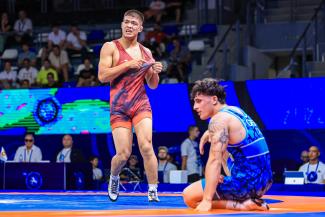
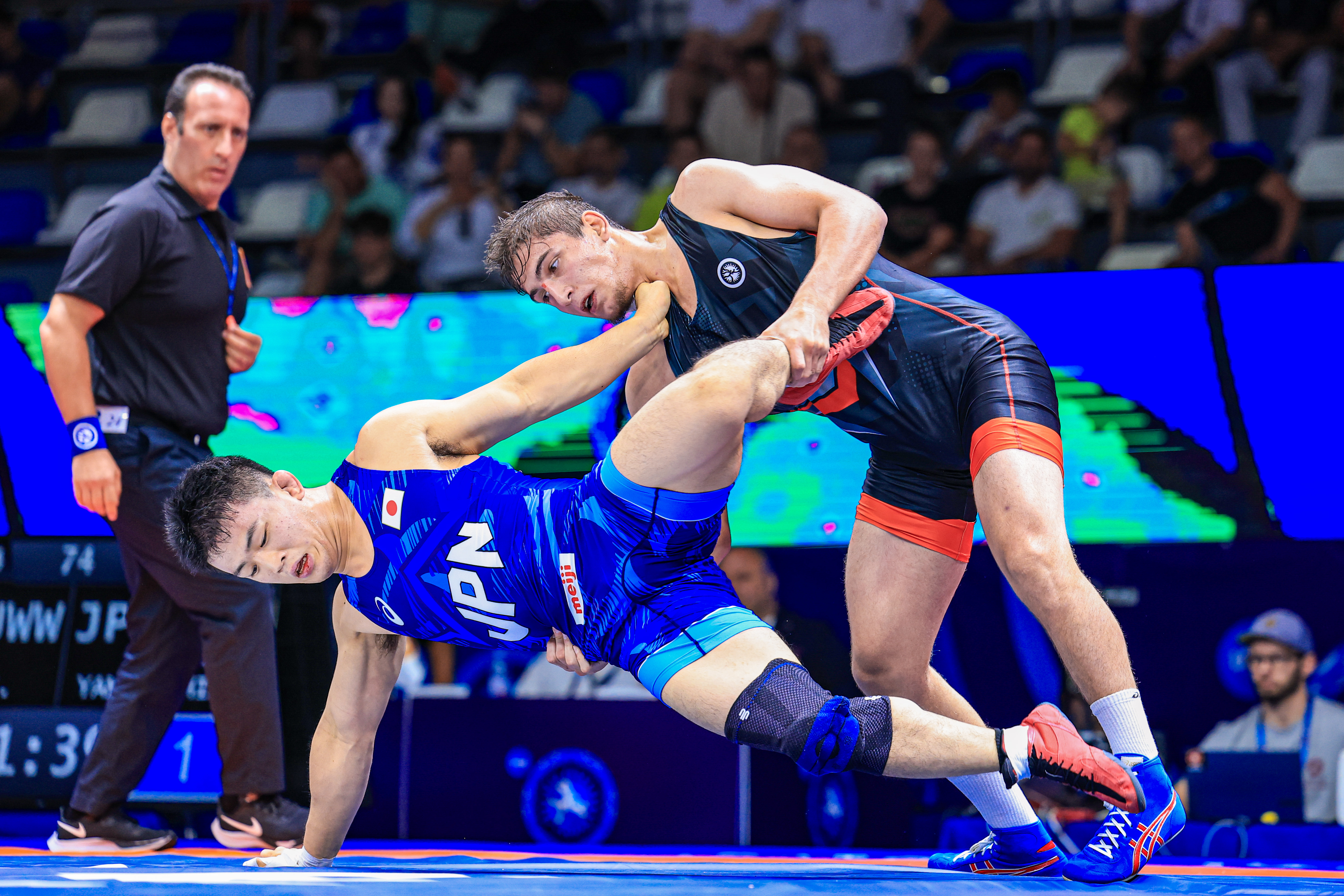 Ismail KHANIEV (UWW) defeated Kanata YAMAGUCHI (JPN), 7-3, in the semifinal. (Photo: United World Wrestling / Amirreza Aliasgari)
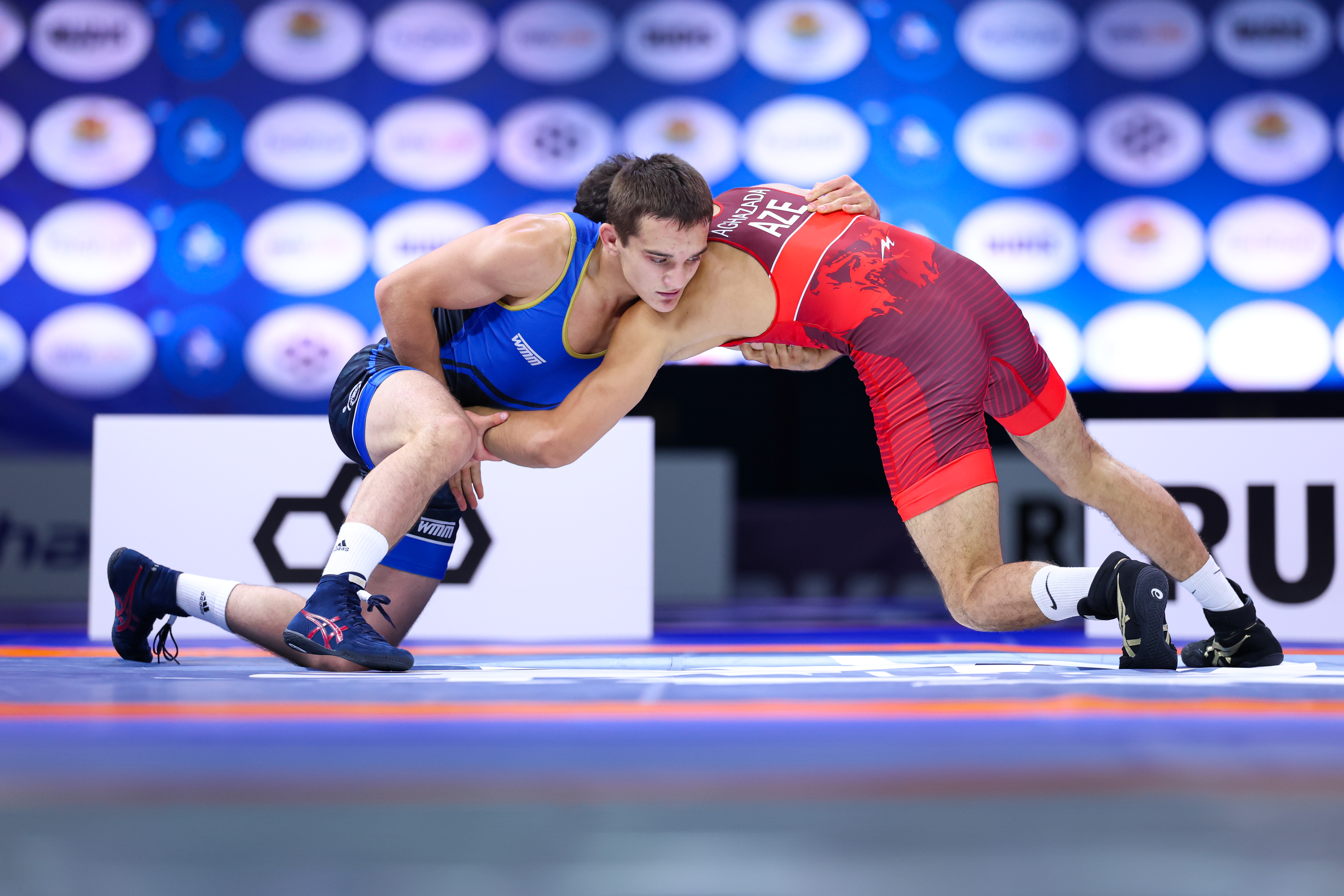 Alexandr GAIDARLI (MDA) reached the 70kg final in Samokov. (Photo: United World Wrestling / Kadir Caliskan)
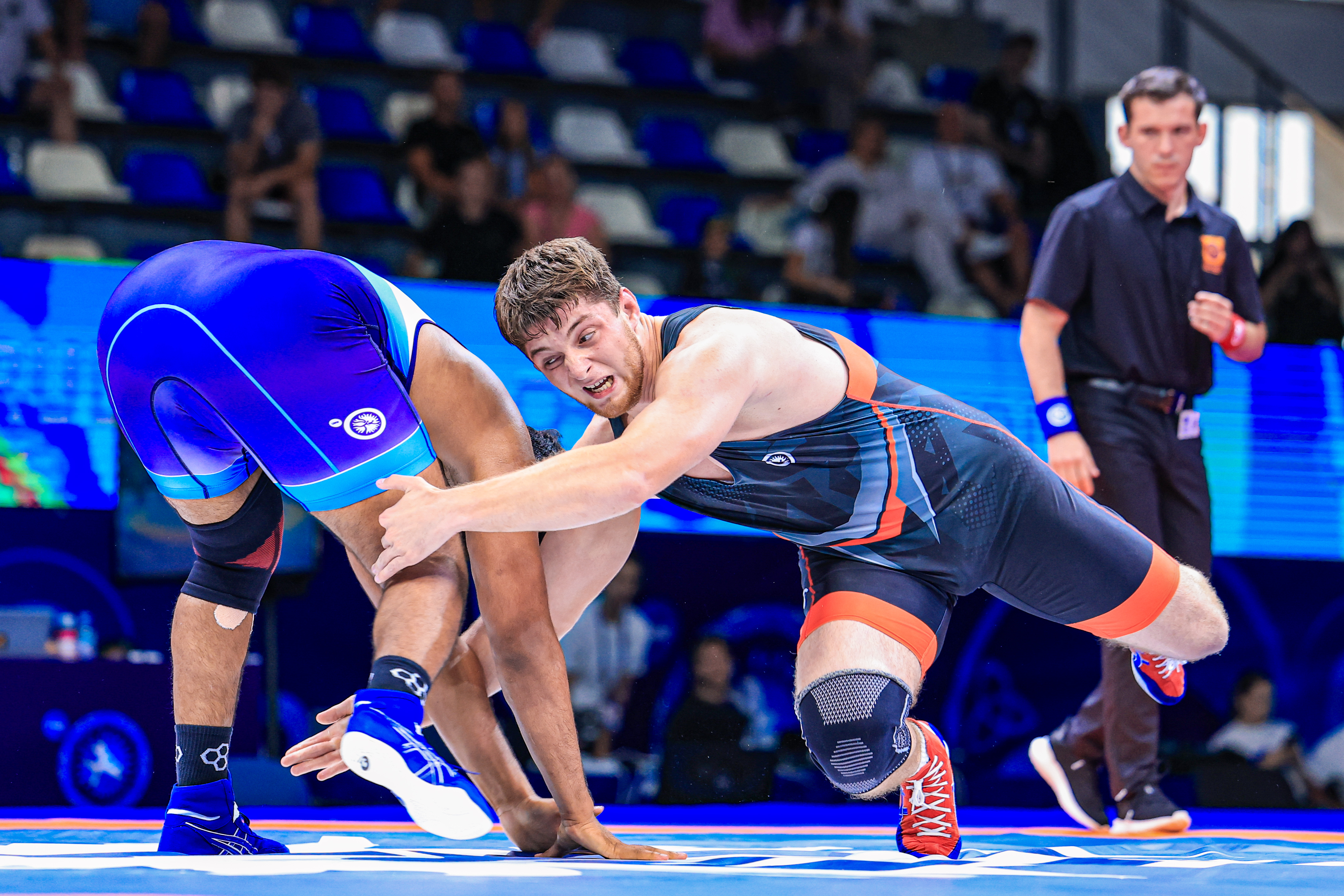 Magomedgadzhi MAGOMEDOV (UWW) survived to win 11-9 against VISHAL (IND) in the 97kg semifinal. (Photo: United World Wrestling / Amirreza Aliasgari)
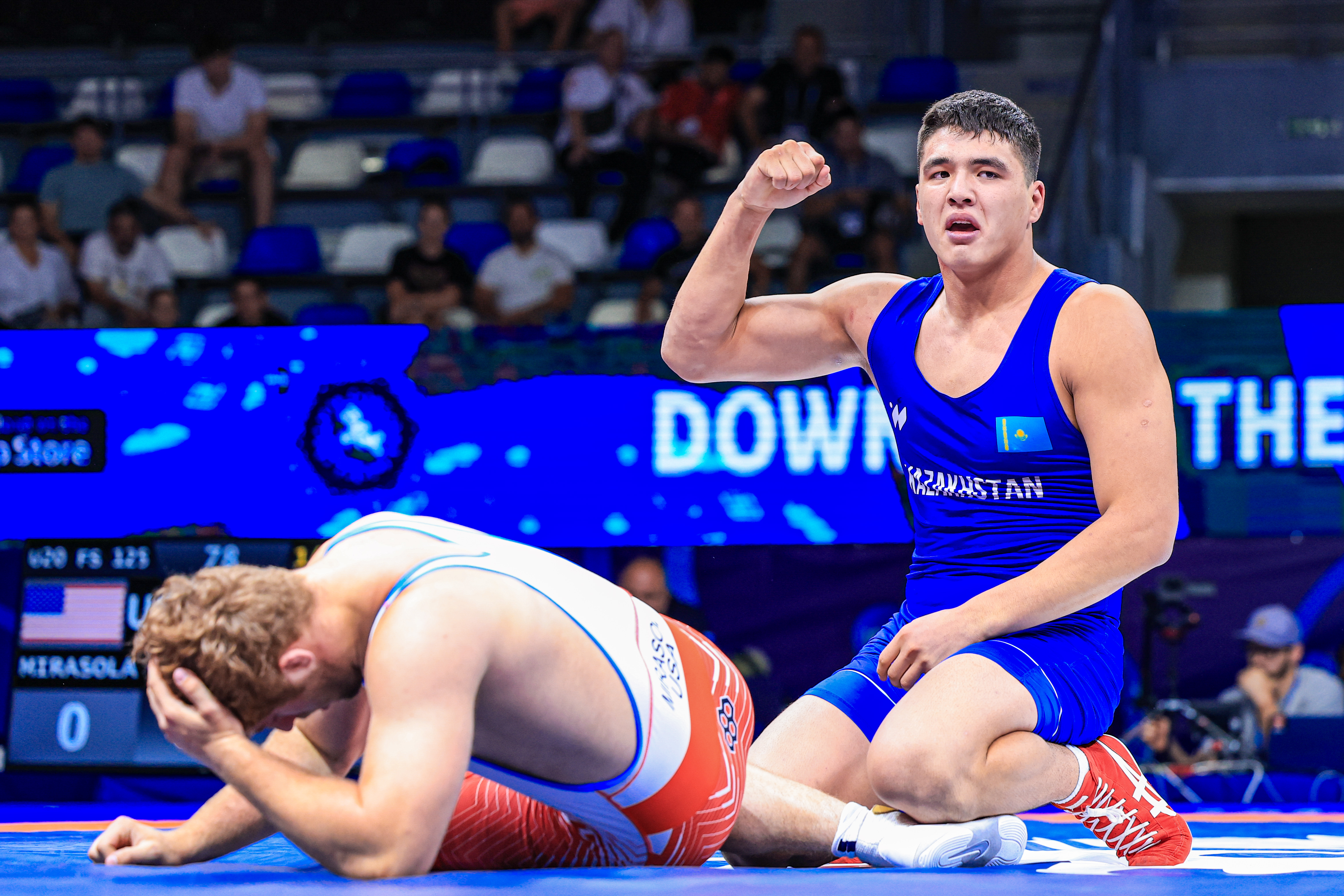 Yedige KASSIMBEK (KAZ) celebrates after winning his 125kg semifinal against Cole MIRASOLA (USA). (Photo: United World Wrestling / Amirreza Aliasgari)
Share your thoughts.
Comments