PATTAYA, Thailand (July 6) -- Even Yuanchong YANG (CHN) could not help but appreciate the irony.
Yang was introduced to wrestling because he was overweight. His parents simply wanted their youngest son to lose a few kilos. Instead, he created history for China, becoming the country's heaviest-ever Asian Freestyle champion.
China won only one Freestyle medal at the 2026 U20 Asian Wrestling Championships in Pattaya, Thailand but Yang made sure it was a historic one.
The 97kg wrestler claimed the gold medal to become China's first-ever U20 Asian champion in Freestyle and only the sixth Chinese to win an Asian Freestyle title at any level. He also surpassed Ying WANG (CHN), who won the 84kg title at the 2008 Senior Asian Championships, as the heaviest Chinese Freestyle wrestler to capture an Asian gold medal.
"I was extremely fat in elementary school, so my parents sent me to a sports school [later] to exercise and become thinner and healthier," Yang told United World Wrestling. "My parents thought wrestling would help me lose weight faster."
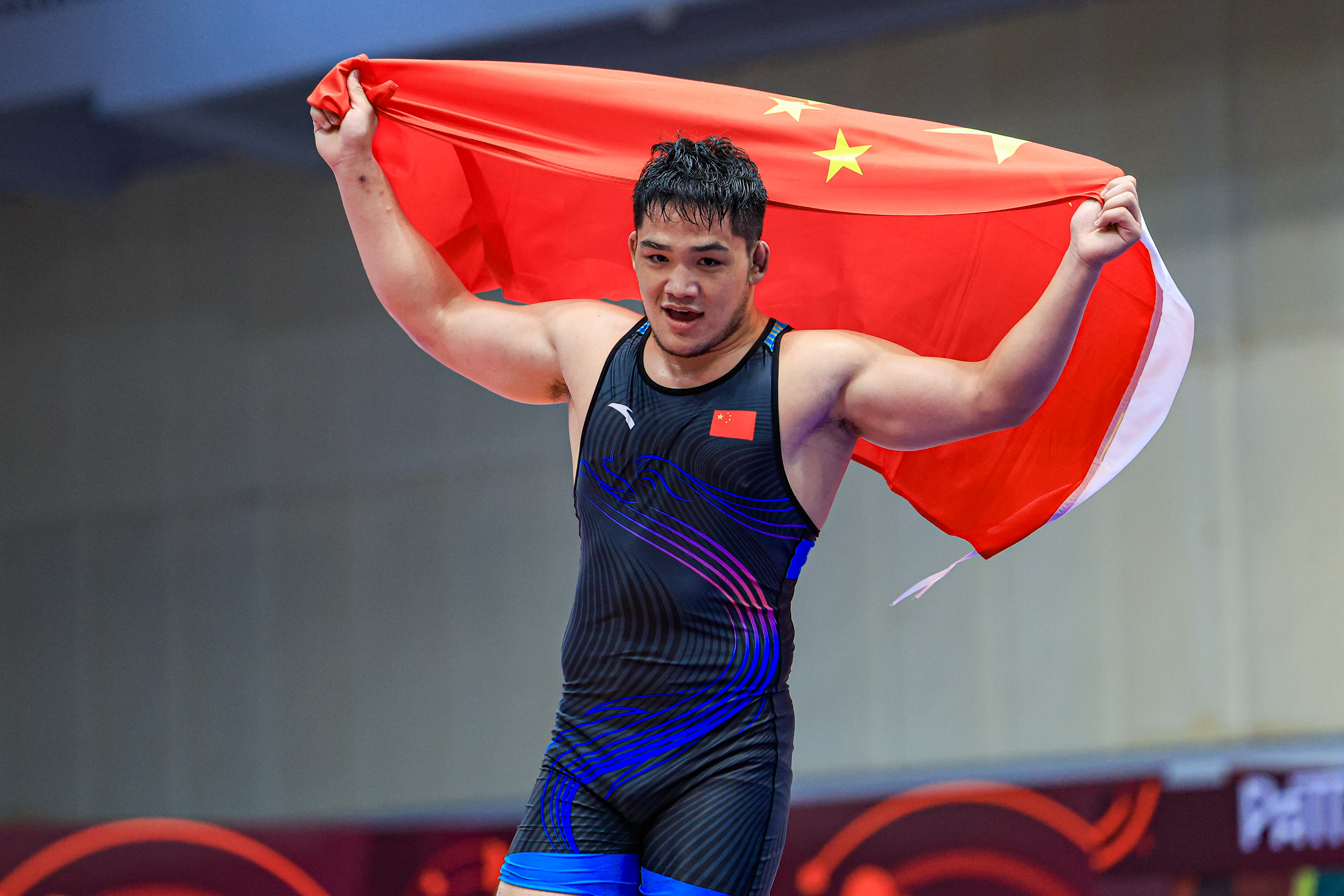 Yuanchong YANG (CHN) celebrates after winning the gold medal in 97kg at the U20 Asian Championships in Pattaya, Thailand. (Photo: United World Wrestling / Amirreza Aliasgari)
When he first stepped onto the mat as a 12-year-old, Yang never imagined he would one day represent China. Wrestling was simply a way to shed the extra kilos.
"Following my training, I was deeply touched by the passion of my team, the teamwork and the charm of wrestling," he said.
Yang's first major breakthrough came in 2023 when he captured the U17 National Championships title. Later that year, he represented China at the East Asian Youth Games but returned home without a medal.
"I saw my older teammates winning medals consistently, so I set myself the goal of winning my own gold medal," he said. "After five years of training, I finally won the U17 title in 2023."
Yang competed at both the 2025 U20 and U23 World Championships but came up short in both after losing close bouts. When he returned home to Jinan, Shandong Province, he shifted his focus to the 2026 season.
Last week in Pattaya, Yang produced a dominant 11-0 technical superiority win over LACKY (IND) in the semifinals before defeating Samir DURSUNOV (KAZ), 8-2, in the final to complete his historic run.
Yang relied on strong underhooks to force pushouts and controlled the par terre exchanges with an effective gut wrench, leaving little room for his opponents to recover.
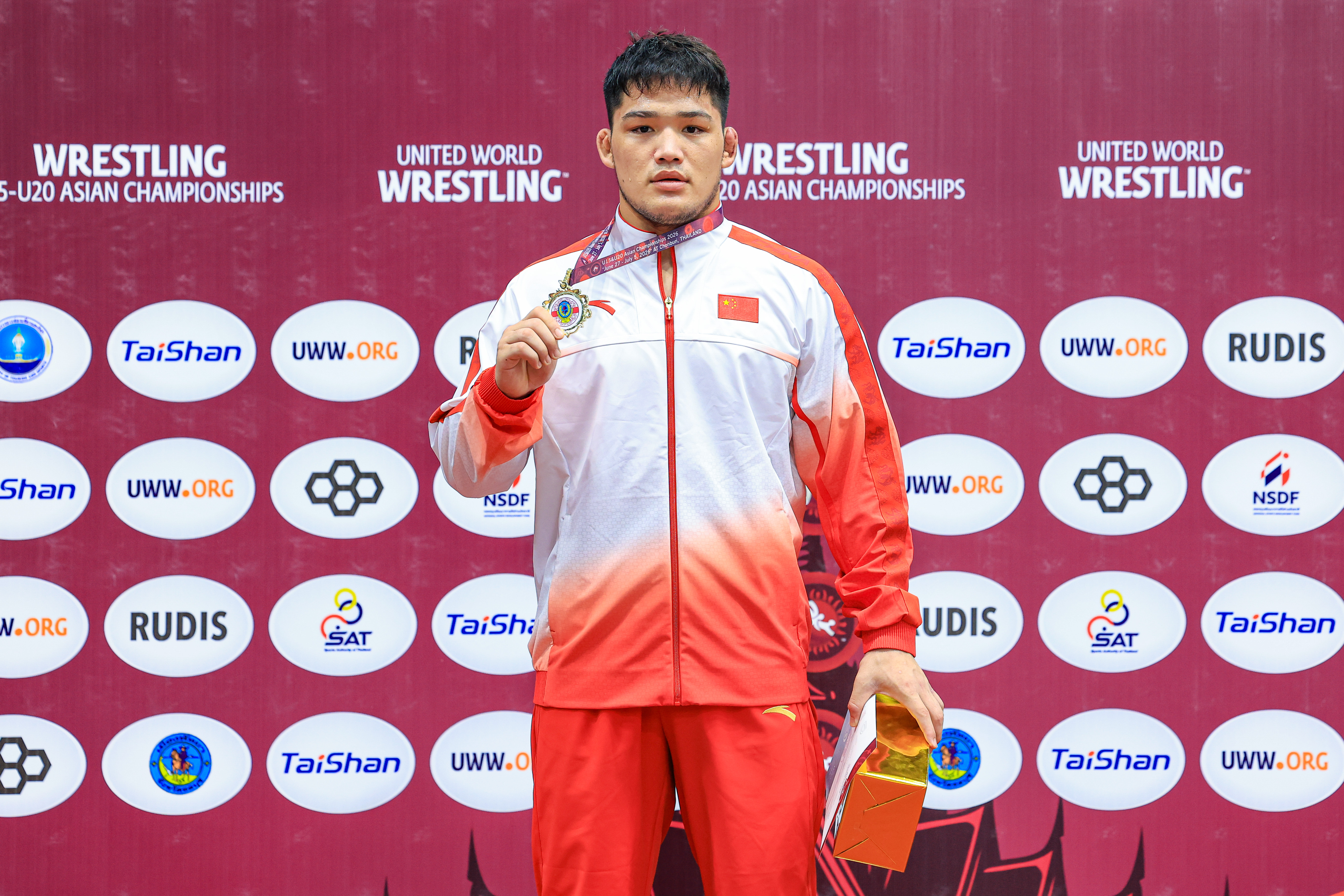 Yuanchong YANG (CHN) at the podium with the 97kg gold medal. (Photo: United World Wrestling / Amirreza Aliasgari)
As he stood atop the podium, Yang was emotional but he soon realised that this is just the beginning.
"When I received the gold medal, I was really happy," he said. "But while I was walking down from the podium, I realised there are higher goals waiting for me. I can't be satisfied with this. My next target is to win a medal at the Senior Asian Championships."




Share your thoughts.
Comments