

Paris Olympics in Photos: Japan show, Lopez retirement and shockers
Wednesday, December 18, 2024 - 12:55 By Vinay Siwach

PARIS (December 18) -- The 2024 Paris Olympic Games turned out to be history in wrestling. From surprise winners to retirements, there was a lot. The legend of Mijain LOPEZ (CUB) grew, first-time Olympians made it to the podium and a few medal hopefuls went empty-handed.
Here's a trip down the memory lane with photos:

In the 128-year history of the Summer Olympics, no athlete had ever won five gold medals in the same event in any sport. Until Mijain LOPEZ (CUB) did it in Paris. The Greco-Roman legend put on a show in Paris and won four bouts to win the gold medal.
The 41-year-old went around the Champs de Mars Arena celebrating with anyone and everyone. There will be no sixth gold as Lopez took off his wrestling shoes and left them in the middle of the mat, the universal sign of a wrestler's decision to end his career. Lopez was at his best at describing his five gold medals: "Beijing: youth. London: transcendence. Rio: effort. Tokyo: sacrifice. Paris: joy."
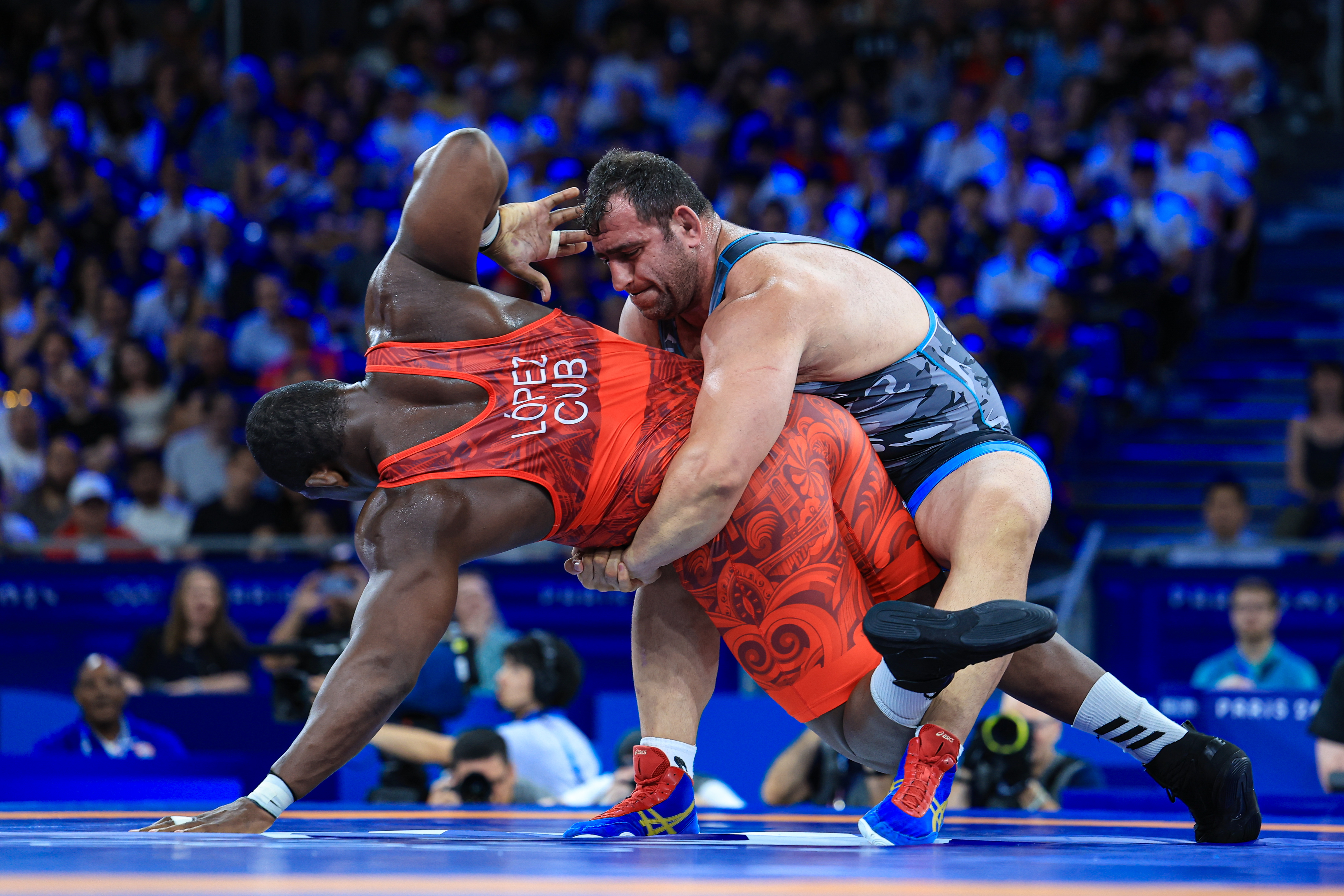
The only time Mijain LOPEZ (CUB) looked troubled in Paris was when Sahab SHARIATI (AZE), a veteran himself at 35, managed to lift the Cuban off the mat. No one else managed to do this. Even world champion Amin MIRZAZADEH (IRI), who lost to Lopez in the quarterfinals, decided not to force the par terre and resume the bout in standing. Shariati, however, could not score. Lopez put on a stiff resistance and when Shariati tried to force a roll, Lopez nimbly stepped over and gained control for a one-point reversal.
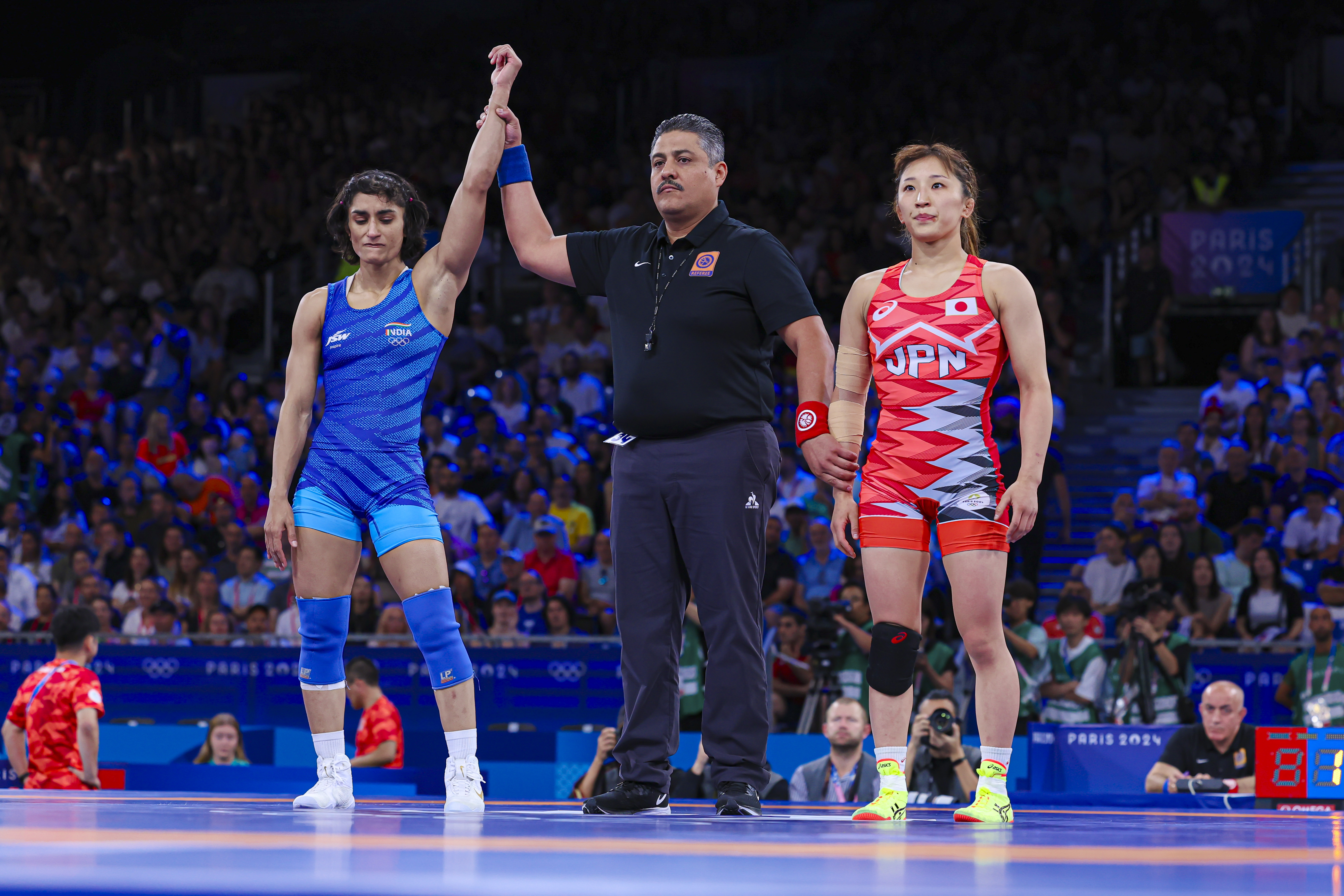
The Paris Olympics had not thrown any big surprises on day one. However, day two could not have had a more chaotic start. Yui SUSAKI (JPN), unbeaten internationally and going for her second straight Olympic gold, was stunned in the opening round itself. Susaki had not given up a single point in Tokyo. However, VINESH (IND) secured a 3-2 win in 50kg. The shock in Susaki's eyes and Vinesh's disbelief tell the story of the match, Susaki's first-ever loss.
Susaki would come back to win a bronze medal but the situation changed dramatically for Vinesh as she failed to make the 50kg weight on second day and was disqualified.
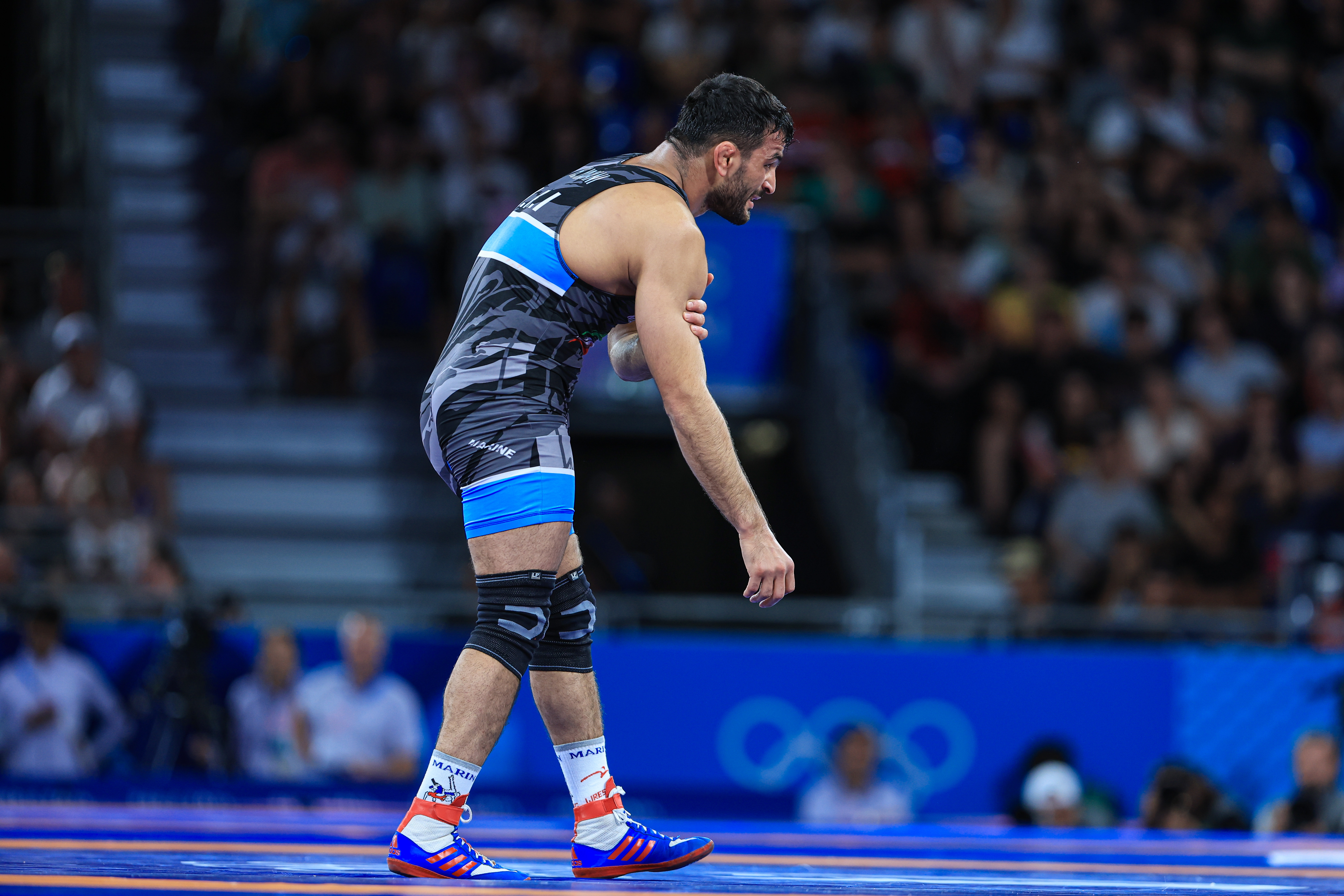
As far as heartbreaks go, Hassan YAZDANI (IRI) and Iran suffered a big one. For long, Yazdani was troubled by his shoulder, and he got it operated three months before the Olympics. He seemed well at the Budapest Ranking Series and was the favorite to win gold in Paris. All seemed well for Yazdani as he reached the final. But that was it.
Wrestling Magomed RAMAZANOV (BUL) in the 86kg final, Yazdani dislocated his shoulder moments after the start of the final. Throughout the final, Yazdani took several medical timeouts and could not wrestle to his potential. He ended up with another silver, his second in two successive Olympics.

Yui SUSAKI (JPN) could not but Paris was Japan's Olympics in wrestling. One of its biggest stars was Akari FUJINAMI (JPN), who won the gold medal at 53kg at the age of 20 years. When she won the final, she had a 137-bout winning streak. She gave up only two points in the tournament. Fujinami is the phenom.

Japan won eight gold medals at the Paris Olympics. Kiyooka KIYOOKA (JPN), who won gold at 65kg, started wrestling at age three at a kids wrestling club in Kochi City on the central island of Shikoku. It was there he first met the two-year-old daughter of the club's coach. Her name is Tsugumi SAKURAI (JPN), and she won the women's 57kg gold the previous day.
Japan finished its best-ever tournament with a total of eight golds, one silver and two bronzes from the 13 weight classes in which the country had qualified. With Kiyooka's victory, Nippon Sports Science University students and alumni combined for five golds, more than double any other country.

Sakura MOTOKI (JPN) also won gold. But at one point she was in trouble of losing her semifinal. Trailing against Grace BULLEN (NOR), Motoki was stuck in a trip from outside. A throw would have ended her dream of winning gold. Bullen was ready to create history...

... But Sakura MOTOKI (JPN) countered it. And did it in a way that stunned the arena. As Grace BULLEN (NOR) was putting forward pressure, Motoki locked her arms and threw her over. Bullen landed on her back and Motoki kept her on the mat to secure a fall. When all was looking good for Bullen, Motoki found a way to upset her.
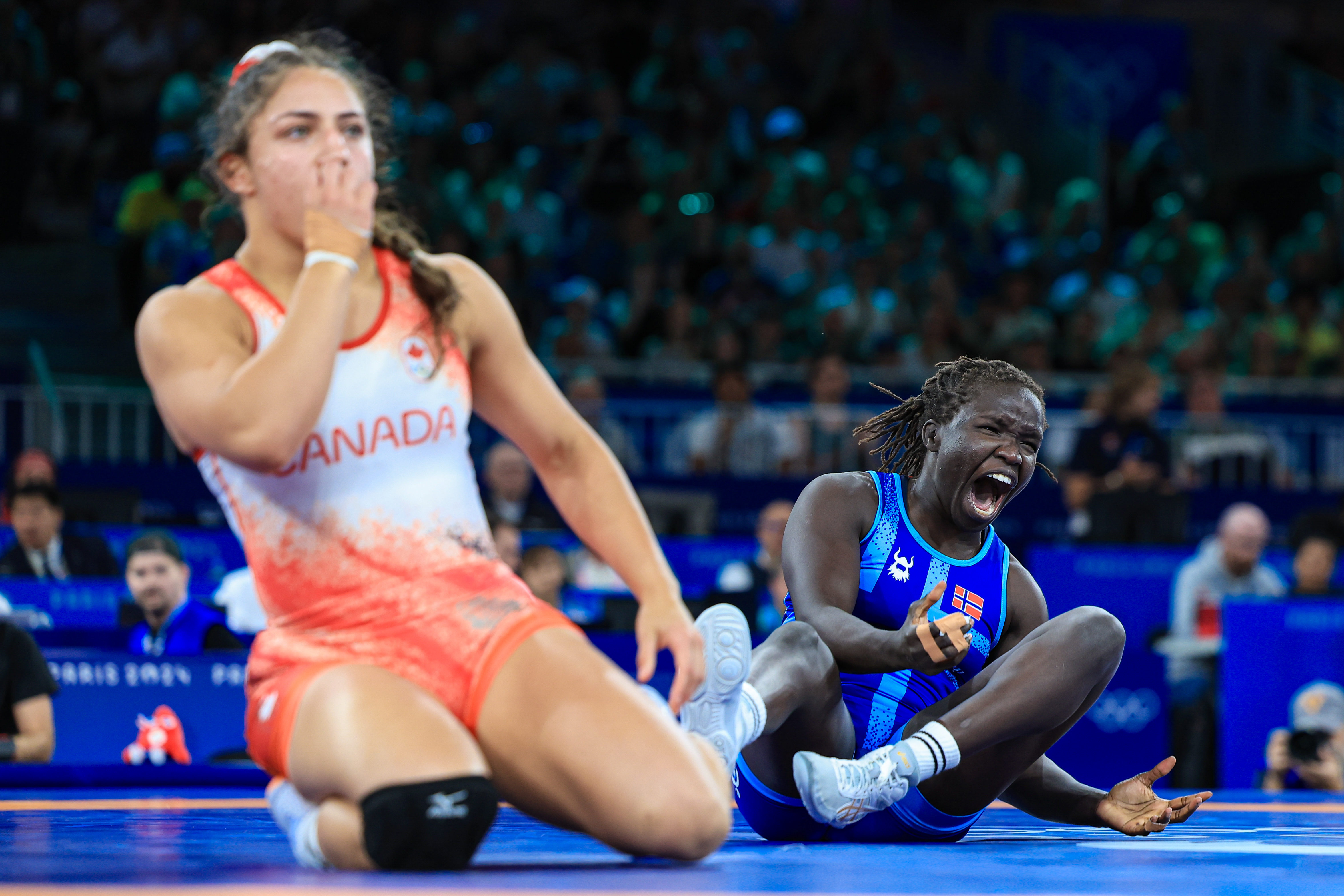
Grace BULLEN (NOR) did create history eventually. She defeated Ana GODINEZ (CAN) in the 62kg bronze medal and became Norway's first Olympic medalist in women's wrestling. Bullen always had the potential to be an Olympic medalist, but it took a change of environment, coaches, and weight classes to finally be one.

Moldova also had some Olympic history in wrestling. Anastasia NICHITA (MDA) was all but out of her semifinal against Kexin HONG (CHN) who was gut-wrenching Nichita and led 7-0. But Nichita stepped over and stopped another attempt of Hong's turn. And that's when she pinned Hong and entered the 57kg final, becoming Moldova's first-ever Olympic medalist.

In Freestyle, there was more history. Islam DUDAEV (ALB) won a bronze medal at 65kg a day after Cherman VALIEV (ALB) won the same medal at 74kg. While Valiev was the first-ever Olympic medalist for Albania in any sport, Valiev too was part of this history. And he won the bronze medal with a stunning last-second win over world champion Iszmail MUSZUKAJEV (HUN).
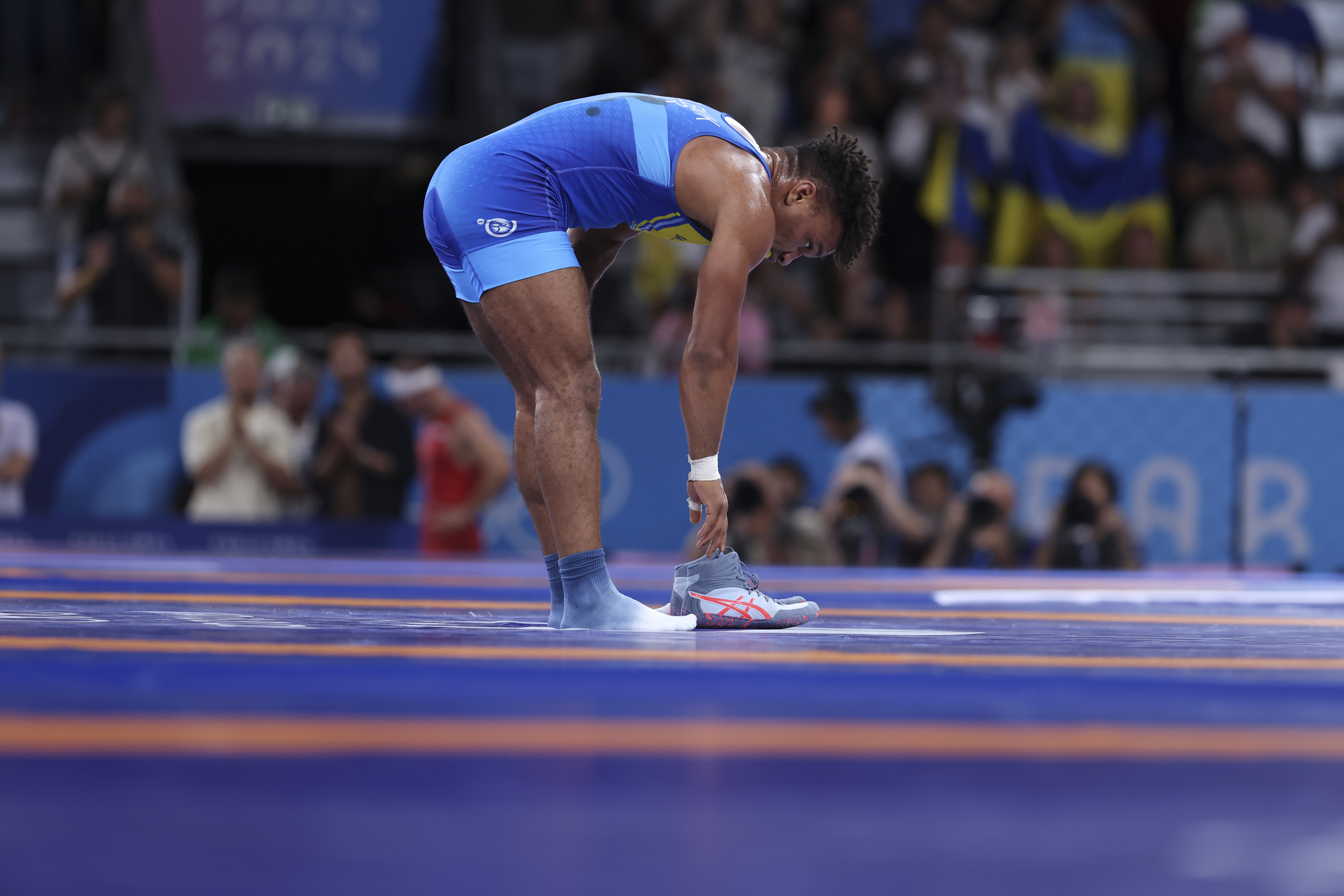
There were a slew of retirements as well in Paris. Apart from the aforementioned Lopez's retirement, another major one was that of Zhan BELENUIK (UKR). He won a bronze medal at 87kg in Greco-Roman, completing his set of medals. Beleniuk won a silver medal in 2016 Rio Games, improved to gold medal in Tokyo 2020 and capped off his career with bronze. His name will forever be etched in the Ukrainian history.
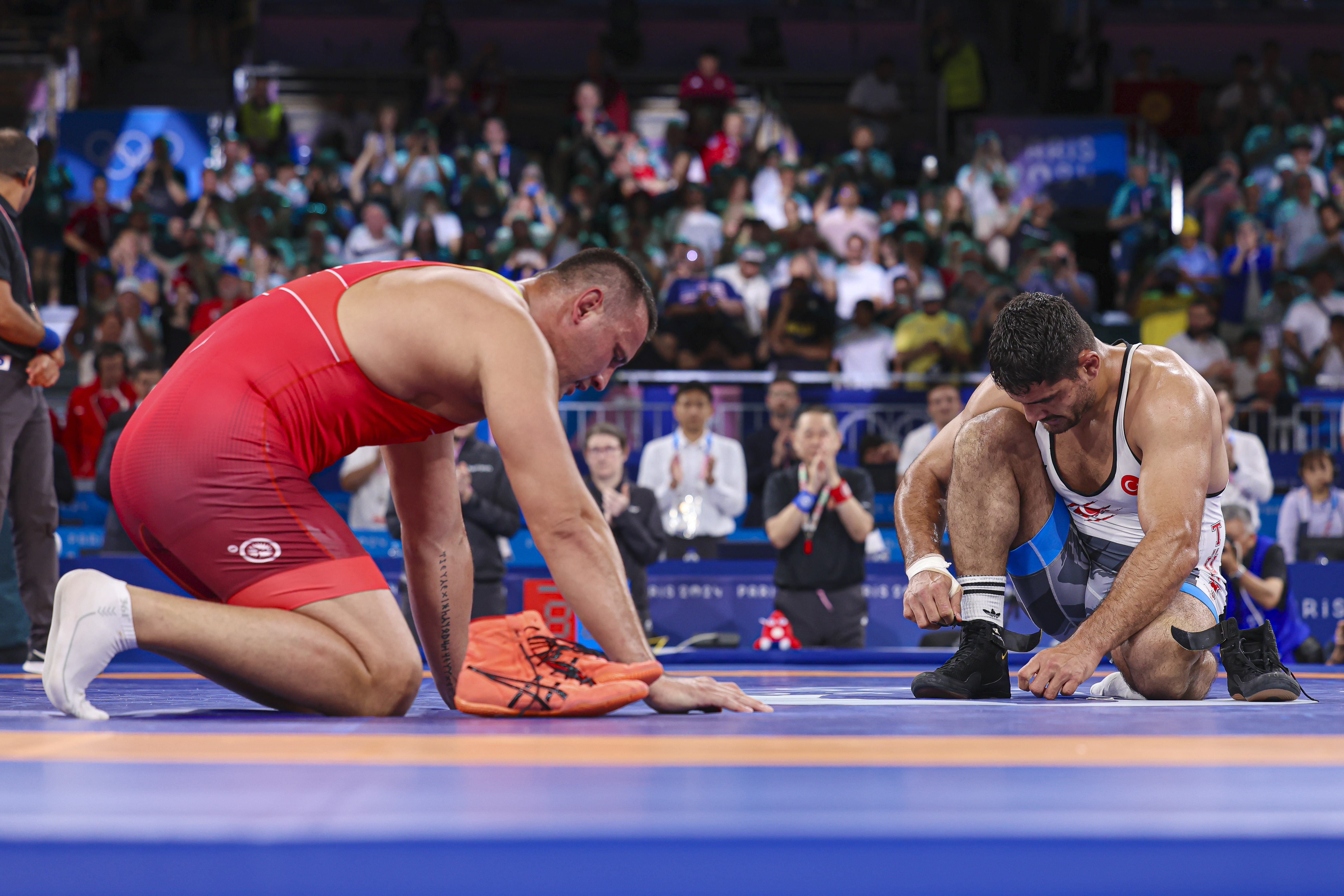
Taha AKGUL (TUR) also retired. The 2016 Rio Olympic champion in Freestyle 125kg added bronze in Tokyo and Paris before leaving his shoes on the mat. In a rare event, Aiaal LAZAREV (KGZ), Akgul's opponent in the bronze medal bout, also removed his shoes. A double retirement at Olympics.
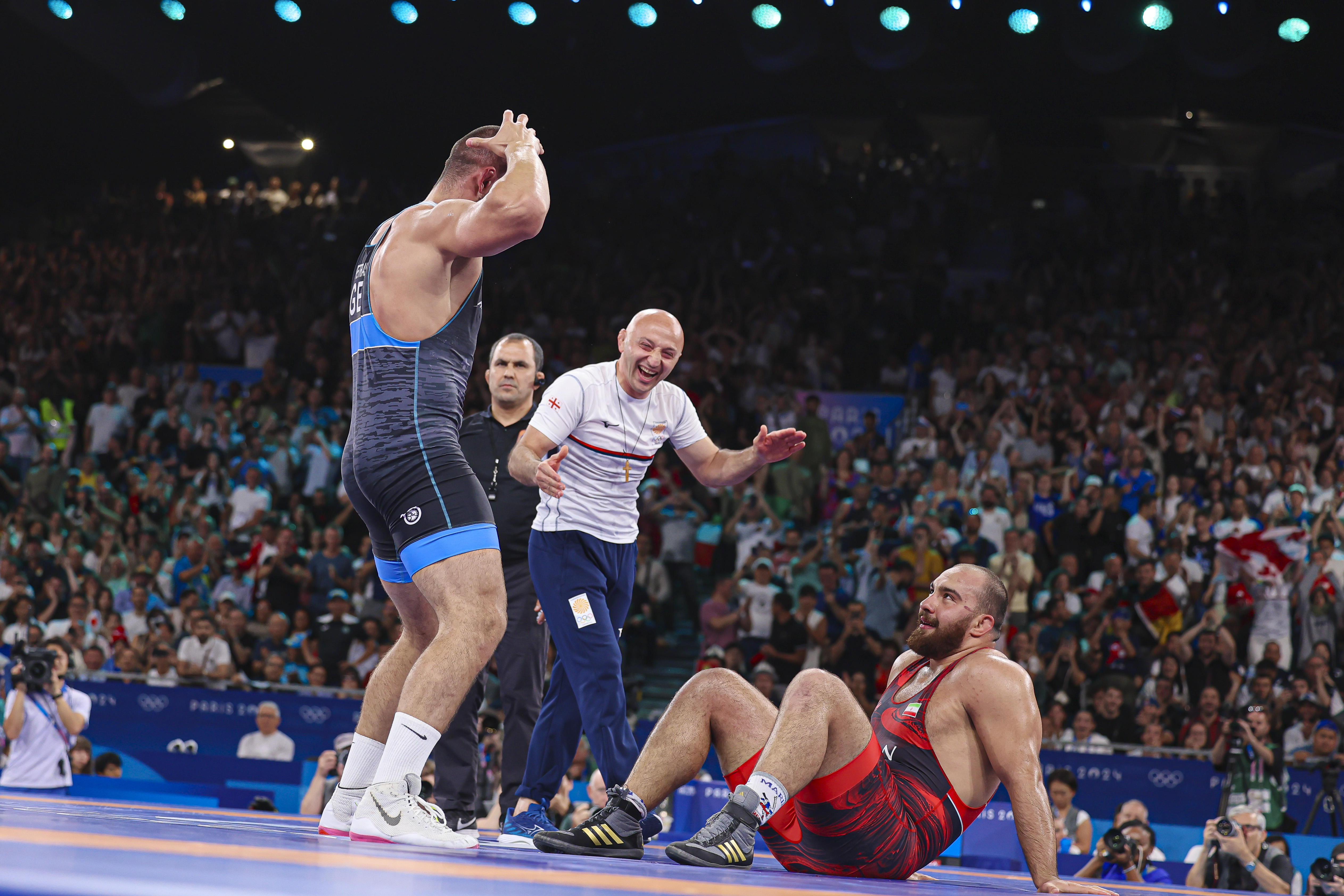
A few moments after the double retirement at 125kg, the final of the weight class was pure drama and thrill. Geno PETRIASHVILI (GEO) was up against world champion Amir Hossein ZARE (IRI) for the gold medal. Petriasvhili had lost the Tokyo final to Gable STEVESON (USA) in the final second when the American scored a takedown to beat the Georgian.
Petriashvili was so determined this time that he came out all guns blazing. He scored a takedown and got Zare in par terre and rolled him for a 10-0 superiority win. Zare was stunned and so was everyone in the arena. Iran challenged the final turn and as it turned out, Zare's head was indeed outside the zone before the final turn. The score was changed to 8-0 and now Petriashvili had to do it again.
Zare, with his high-paced wrestler, troubled Petriashvili who was warned for fleeing and passivity. But call it destiny if you may, Petriashvili won the final 10-9 and the gold medal which eluded him and left a giant like Petriashvili crying at the podium in Tokyo.
He celebrated, as seen in the photo, gesturing towards Zare as if he is wearing the crown, a celebration made popular by Zare himself.

Geno PETRIASHVILI (GEO) had long been one-half of an elite duo in the 125kg class with rival Taha AKGUL (TUR). The two had a stranglehold on the global title from 2014 to 2019, until Gable STEVESON (USA) broke the streak at the Tokyo Olympics and Amir Hossein ZARE (IRI) won the world title in 2021. There will be no more battles between the two. Akgul retired after winning the bronze medal at the Paris Olympics in August. Akgul celebrated his 15-year rivalry with Petriashvili and said that both of them are 'legends'. Here's Petriashvili giving a send off to Akgul on the podium.
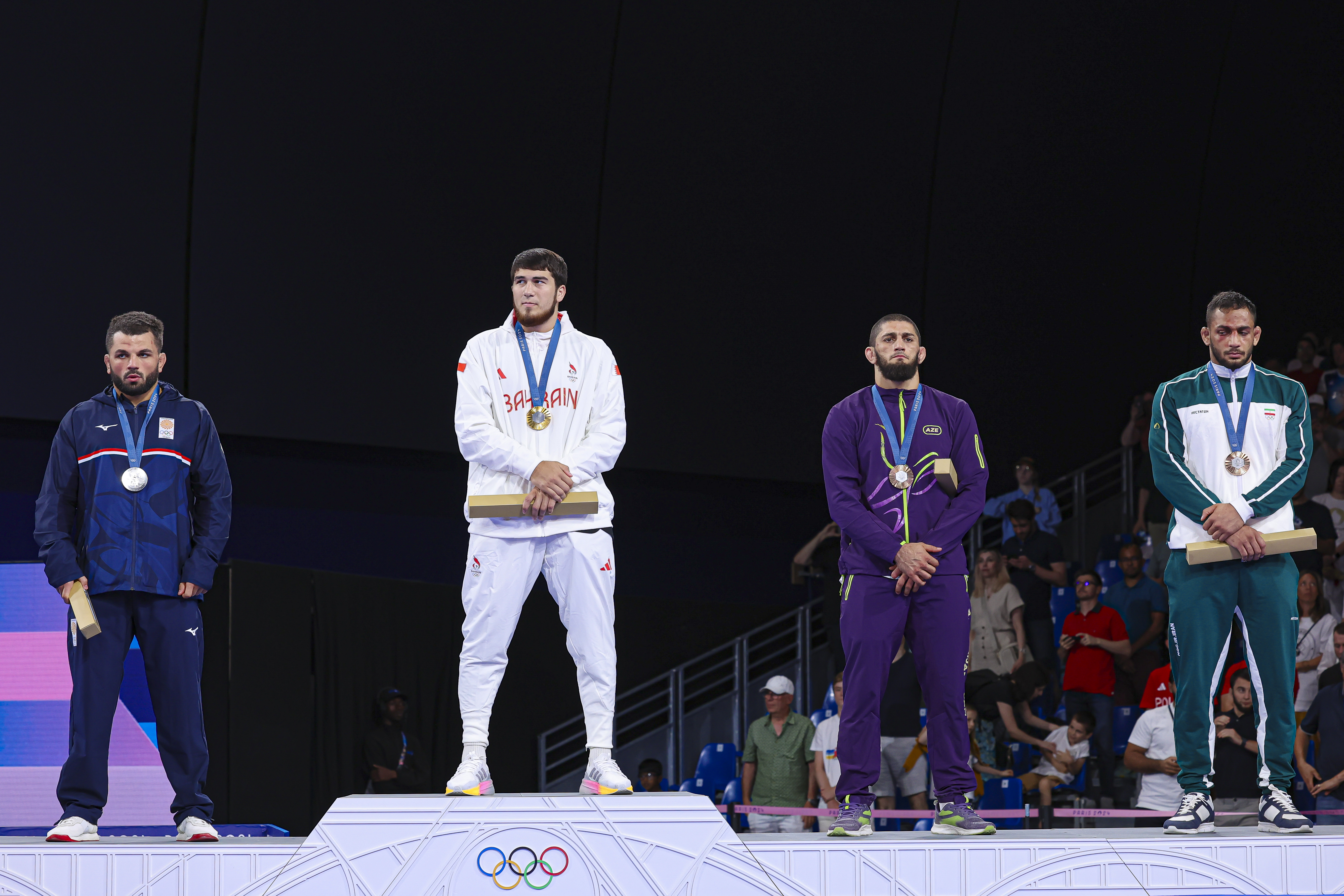
More podium stories from Paris. Akhmed TAZHUDINOV (BRN), Bahrain's first-ever wrestling champion, proudly stands on top after winning gold at 97kg. Two of the biggest names at 97kg are missing from this. We will let you take a guess.

That's Mohammadhadi SARAVI (IRI) after winning the gold medal in Greco-Roman 97kg. But his coach Hassan HOSSEIN ZADEH sneaked past the security and joined him on the podium.

Parviz NASIBOV (UKR), with one open eye, won silver in GR 67kg weight class and at the podium, he brought the cutest singlet. He dedicated his medal to his newborn son. Things that matter!
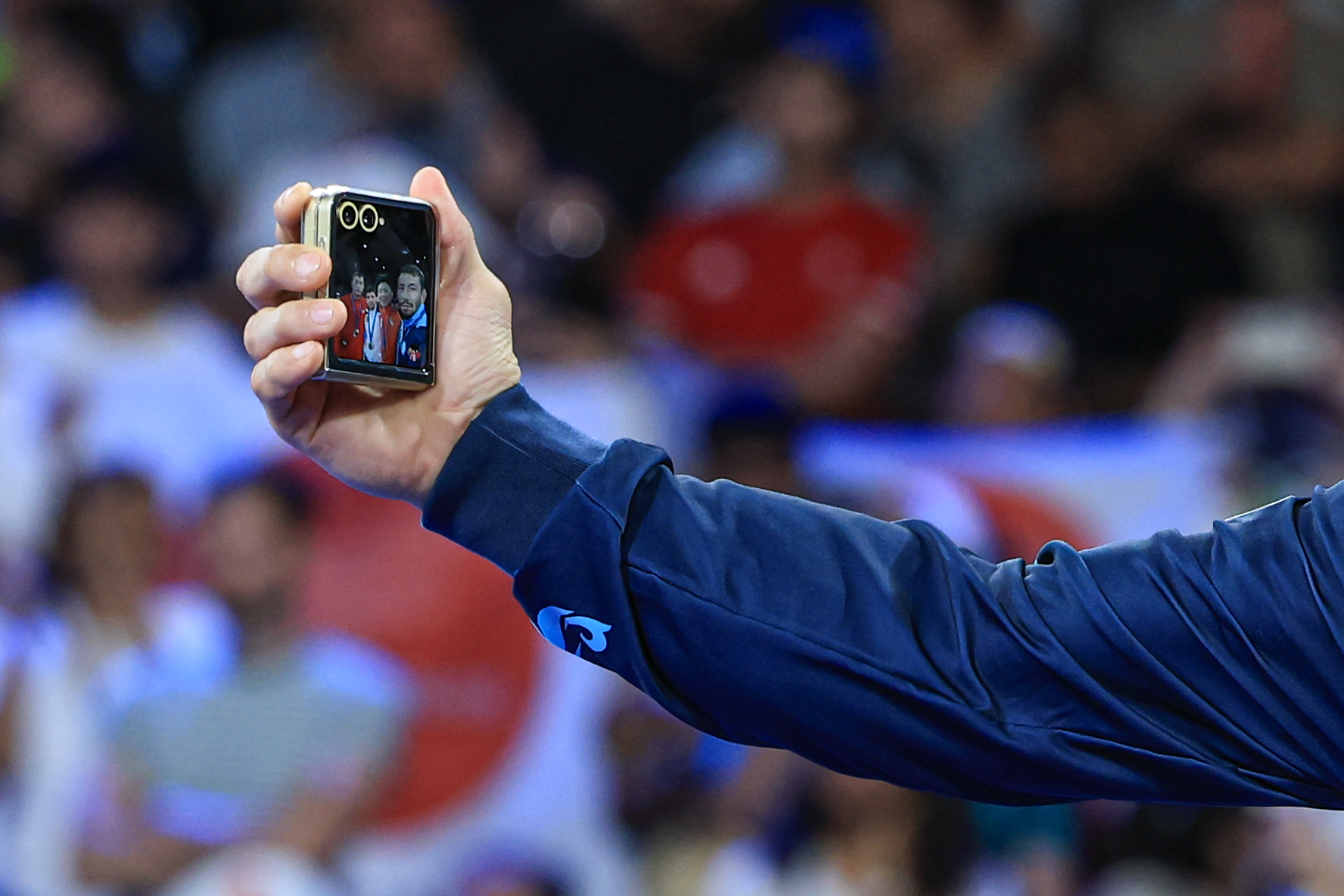
That's a selfie from the Greco-Roman 77kg podium. Maybe a retake?
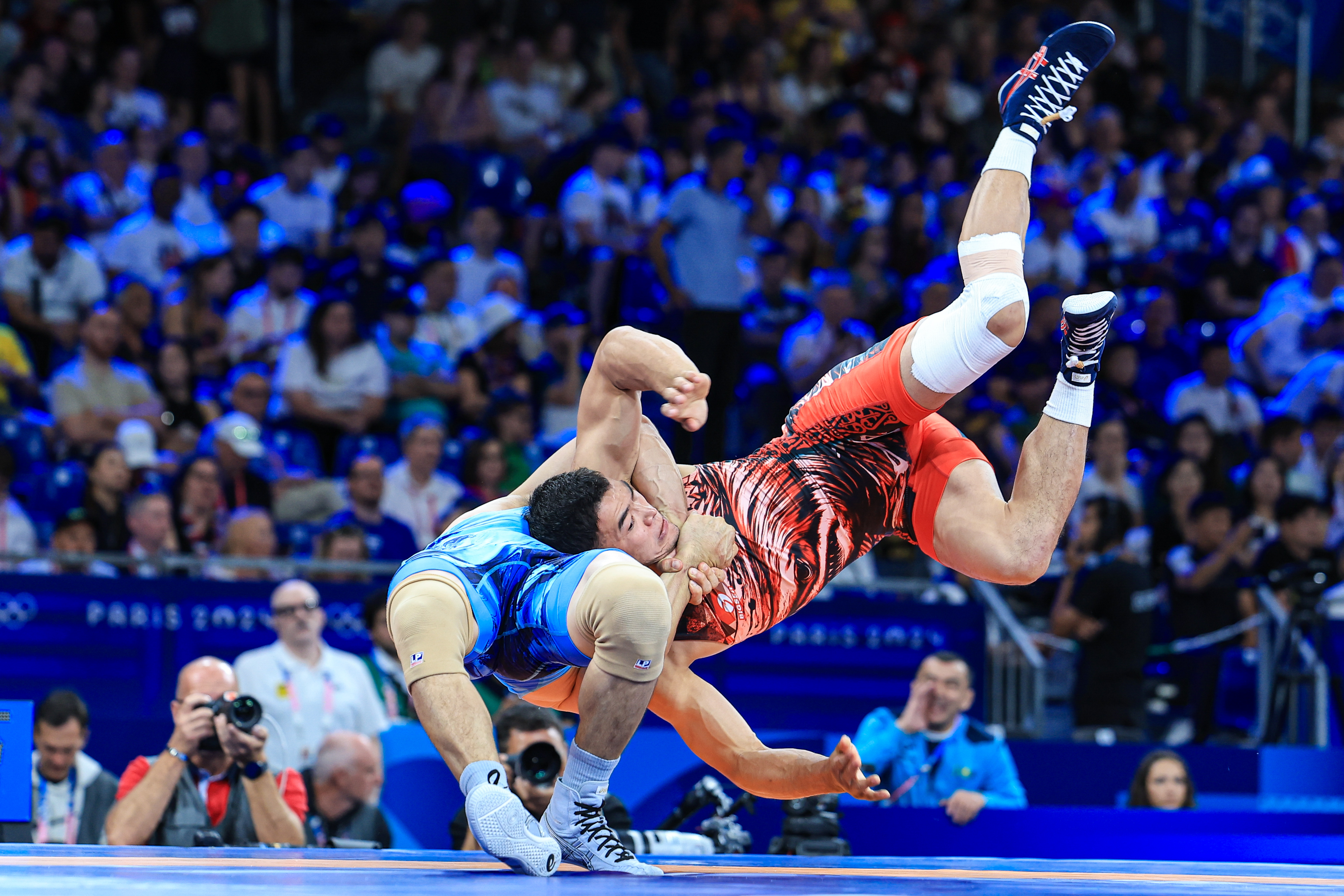
The Greco-Roman 77kg weight class was wild. Nao KUSAKA (JPN) won gold but no one expected Demeu ZHADRAYEV (KAZ) to his opponent in the final. But Zhadrayev pulled out a performance of lifetime to reach there. His biggest win was over world champion and returning Olympic silver medalist Akzhol MAKHMUDOV (KGZ). Here he is throwing Makhmudov using the front lock which sealed the bout for him.

Another top move from Paris and what courage from Razambek JAMALOV (UZB) to pull it off. Wrestling in the 74kg final, Jamalov got Daichi TAKATANI (JPN) in the cradle and secured a first-period fall to win the gold medal.
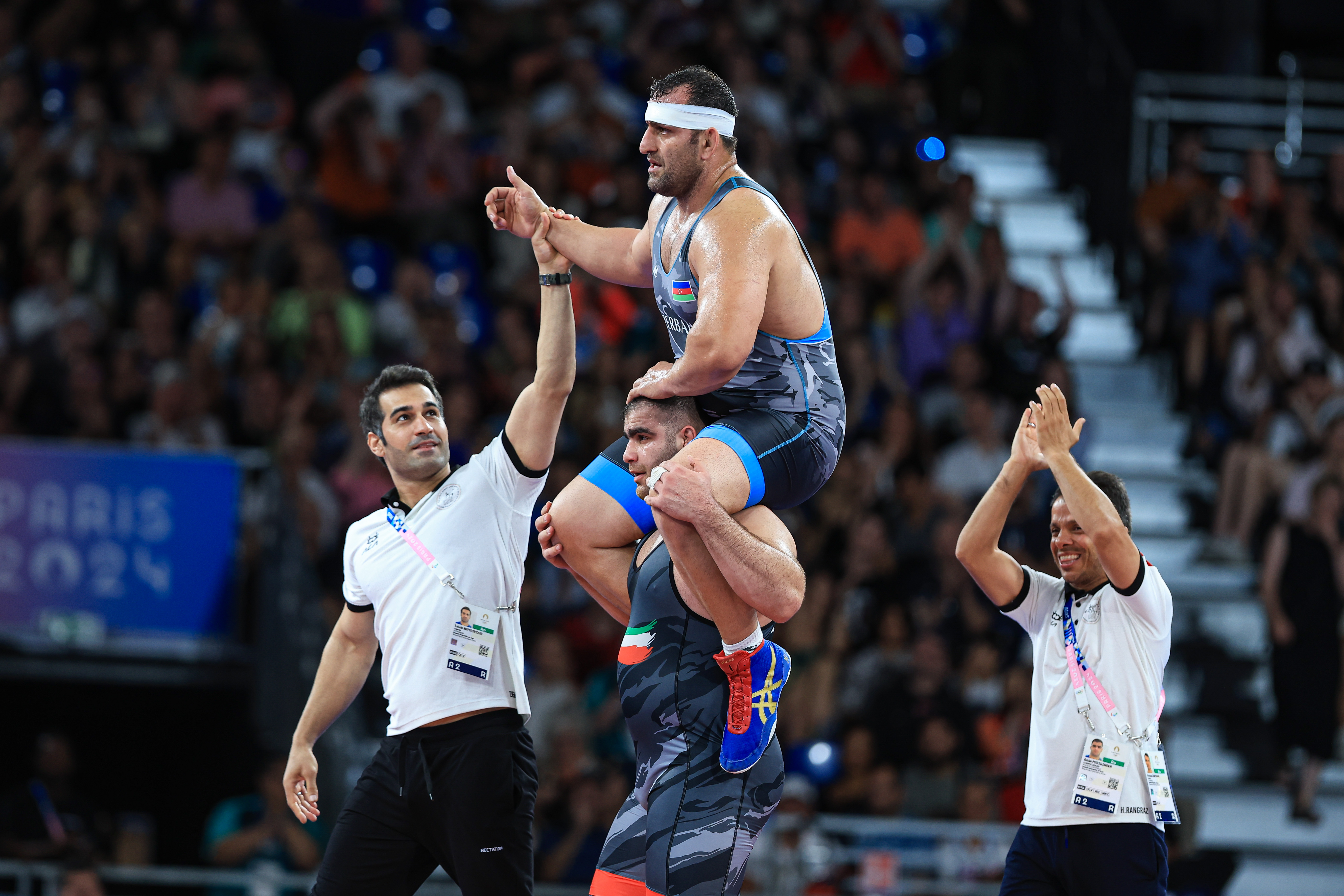
There are always some great camaraderie among wrestlers. Amin MIRZAZADEH (IRI) displayed that when he carried Sabah SAHRIATI (AZE) on his shoulders after the latter retired.
The 130kg wrestler won bronze after beating Shariati. Instead of celebrating, he saw Shariati, a bronze medalist from 2016 Rio Olympics, leave his shoes on the mat to mark his retirement from the sport. As he was about to leave the mat, Mirzazadeh congratulated Shariati and lifted him on his shoulder for a lap on the mat. As the crowd cheered, Mirzazadeh moved swiftly in a circle, carrying an over 130kg wrestler to give a fitting end to a long career. But Mirzazadeh's gesture towards Shariati has a deeper reason. Shariati was born in Kurdistan, Iran and wrestled for Iran before wrestling for Azerbaijan from 2013. Soon after the first lap, even the Iranian coaches joined them and all of them completed another lap as the Champs de Mars Arena crowd gave them thunderous applause.

Two DPR Korea wrestler congratulating each other after they won their respective bouts. Sol gum PAK (PRK) had defeated Nisha DAHIYA (IND) at 68kg while Se ung RI (PRK) had stunned Victor CIOBANU (MDA) in Greco-Roman 60kg and both met as they got off the mat. The two would later go on two win bronze medals in their respective weight classes as Pak became the first woman from DPR Korea to win an Olympic wrestling medal.

Olympics are hard. Arkadiusz KULYNYCZ (POL) gives an example.
Share your thoughts.
Comments