

Development

Level II Course for Coaches and Referees in Guatemala

By United World Wrestling Press

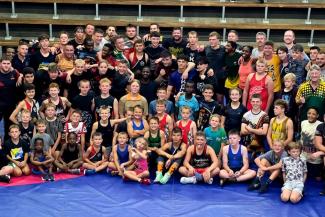
GUATEMALA CITY, Guatemala (December 30) -- 15 coaches and 5 referees from different departments from Guatemala participated in the UWW Course for Coaches and Referees Level II from the 7th to 13th December 2021 in the Guatemala National Wrestling Training Center. This course was organized by the National Federation of Guatemala, United World Wrestling Development Department, and the National Olympic Committee of Guatemala with the support of Olympic Solidarity.

UWW certified educators Abraham GALVA (PUR) for referees and Pedro ROJAS (PUR) for coaches.

The course was focused on the updating of new regulatory changes and at the same time in which they learned about teaching methodology and planification of sports training.

GUA

Group discussions were realized and experiences from other coaches were presented about topics related to methods and processes about sports training by age and stages. During every session, participants including coaches and referees showed a great level of commitment.

Recently retired athlete and current National Coach Christian Jose MOX ARIAS said “I’m very excited to have this kind of workshop in my country. This will help me to develop my skills as a coach and I can’t wait to give my students all the new knowledge.”

After the course, at the closing ceremony were present Francisco LEE LOPEZ, President UWWA, the President of the Guatemala Federation Ramón Francisco GONZÁLEZ PINEDA, and members from the National Olympic Committee of Guatemala awarding the participant with the participation certificates.
#development

South Africa Advances National Wrestling System with DNSS Phase 2

By United World Wrestling Press

PRETORIA, South Africa (April 8) -- South Africa has reached a decisive milestone in its long-term wrestling development strategy with the successful implementation of Phase 2 of the Development of National Sport System (DNSS) programme, delivered in collaboration with United World Wrestling (UWW) and supported by Olympic Solidarity.

Following the diagnostic and mapping phase conducted earlier, Phase 2 marks a clear transition from analysis to structured implementation, laying the foundation for a sustainable and internationally aligned wrestling system.

Led by UWW Development Officer Vincent AKA, in close cooperation with the South African Wrestling Federation (SAWF), the National Head Coach, Markus DEKKER and Provincial Coordinators, the programme was deployed across multiple provinces through a structured 10-day intervention from March 2 to 13. 

Activities were conducted in key locations including:

· LPWA (Ion Bachu)
· CGWA (Ruiter)
· NGWA (Menlo Park Hall)
· Frank Joubert Tournament (Menlo Park Hall)

This nationwide approach ensured direct engagement with provincial structures, strengthening alignment between national leadership and local associations while promoting inclusive development across the country.

From Talent Identification to System Building

Unlike traditional training camps, DNSS Phase 2 focused on identifying talent and building long-term development systems. Wrestlers and coaches from all age categories -- U13, U15, U17, U20, and Senior -- were actively involved, ensuring a complete pathway approach.

Provincial visits and stakeholder meetings played a key role in assessing facilities and operational structures, strengthening coordination between SAWF and provinces, and identifying emerging wrestlers.

Building Athlete Pipeline

A training camp for different provinces brought together wrestler to consolidate talent identified during Phase 1 and introduce standardized training methodologies.

The training camp included technical sessions, physical conditioning, match simulations and wrestling. The initiative contributed to the creation of an updated national prospect and the foundation of a structured athlete monitoring system.

South Africa

Beach Wrestling Gains Momentum

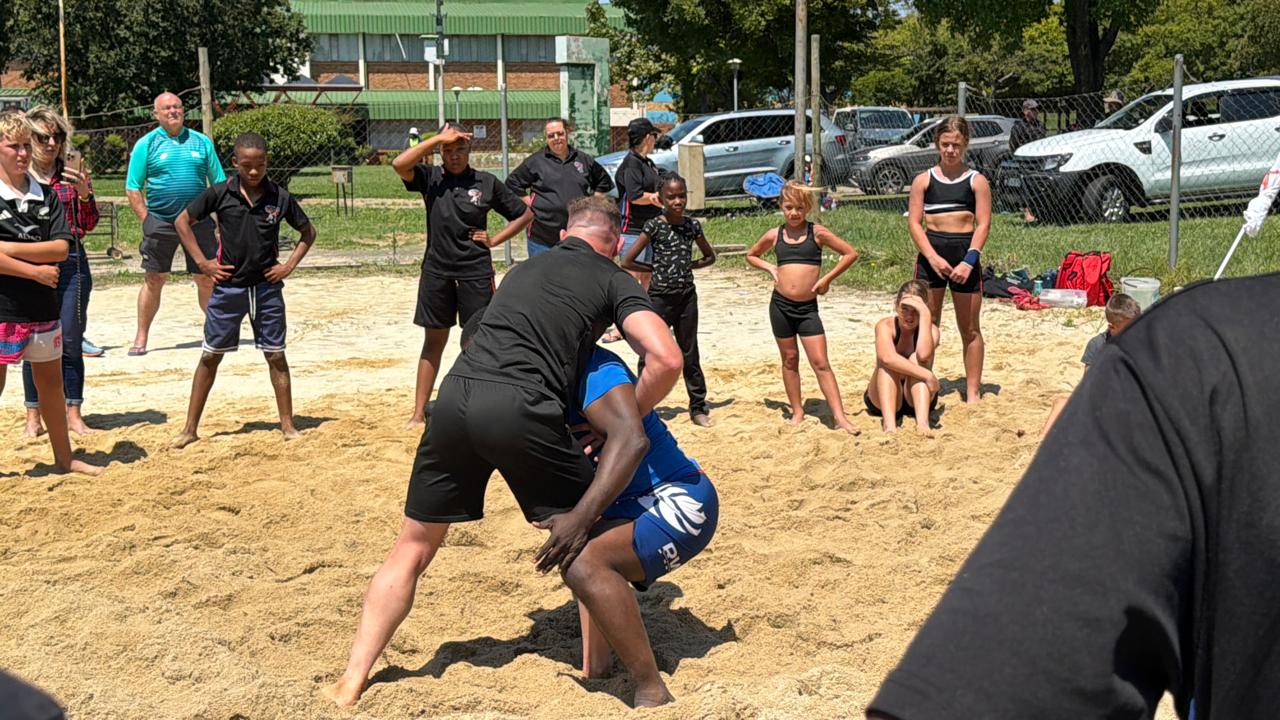
As part of the DNSS activities, a Beach Wrestling training session in Roodepoort highlighted the programme’s expanding impact.

During the visit, Aka led a specialized session, sharing advanced technical insights adapted to beach wrestling. It included stance and balance adjustments, grip and control techniques, and movement adaptation on sand.

The training programme comes at a crucial time, as South African athletes prepare for African Beach Wrestling Championships in Alexandria, Egypt and other international tournaments.