Morning Session Highlights
15:00: Greco 67kg semifinals - Diego CHKHIKVADZE (GEO) books his spot in the 67kg final after a 4-4 criteria over Otto BLACK (USA). This is the second straight Ranking Series final for Chkhikvadze. Black threatened to upset the Georgian as he scored two takedowns in the first period to lead 4-0. But Chkhikvadze managed to control the second period and scored two takedowns against a tiring Black to win.
Meiirzhan SHERMAKHANBET (KAZ) denied European bronze medalist Joni KHETSURIANI (GEO), 3-1, in the other semifinal. A takedown from Shermakhanbet which was challenge by Georgia but lost, giving a 3-0 lead to the Kazakhstan. A stepout is all Khetsuriani could score in the second period.
14:45: Greco 63kg semifinals - Sakit GULIYEV (AZE) goes high gut-wrench from par terre and turn (NOR) Morten THORESEN (NOR) four times to finish the semifinal 9-0. He will face compatriot Ziya BABASHOV (AZE) who rode on a strong first period to beat Yernur FIDAKHMETOV (KAZ), 7-3. Babashov hit a four-pointer and turn from par terre to score his points.
14:30: 76kg semifinals - World Championships final rematch in Tirana. World champion Genesis REASCO (ECU) comes back after being 4-2 down against Alexandra ANGHEL (ROU) and scores two take downs in the second period to win 6-4. World silver medalist Aiperi MEDET KYZY (KGZ) gets past the young Elmira YASIN (TUR), 9-0, to book her chance to avenge that loss from Zagreb
14:20: 72kg semifinals - Zhamila BAKBERGENOVA (KAZ) was put on the activity clock in the second period but she instantly hits Diksha MALIK (IND) with a double leg and then score six points with a lace to lead 9-1. She scores a stepout to finish the semifinal 10-0. Nurzat NURTAEVA (KGZ) will face Bakbergenova in the final after she held off Wiktoria CHOLUJ (POL) for a 2-1 win
14:10: 57kg semifinals - NEHA (IND), a U20 world bronze medalist, with a 10-0 technical superiority win over Felicitas DOMAJEVA (NOR) in just one minute and 32 seconds. A stiffer challenge awaits in the final as Solomiia VYNNYK (UKR), a U23 world champion, will stand between her and the gold medal. Vynnyk used a strong gut-wrench and then a four-pointer to win her semifinal against Nilufar RAIMOVA (KAZ), 14-2.
Semifinals will begin at 14:00 hours local time
12:55: Quick finish for Aiperi MEDET KYZY (KGZ) as she rolls Vanesa GEORGIEVA (BUL) after a takedown to win 10-0 at 76kg. She will wrestle in the semifinals.
12:50: World champion Genesis REASCO (ECU) is too good for European champion Anastasiya ALPYEYEVA (UKR) at 76kg. She opens with a double-leg four-pointer before Alpyeyeva is hit with caution which makes her score 5-0. A scramble is score two points for Reasco and one for Alpyeyeva which Ukraine challenges but loses the challenge, giving extra point to Reasco who wins 8-5
12:45: Zhamila BAKBERGENOVA (KAZ) shits gears in the final minute to beat Bose TOSUN (TUR) 6-1 at 72kg. Bakbergenova led 2-1 after two activity clock points and then scored a double-leg takedown and roll to complete the victory
12:40: In a battle of age-group stars, Elmira YASIN (TUR) beats KAJAL (IND), 7-5, at 76kg. Kajal led 3-0 when Yasin hit double-leg for four points which Kajal challenged but lost to give Yasin a 5-3 lead. The first two minutes of the second period were slow before Kajal got a takedown but that only made it 5-5 with Yasin holding criteria. A desperate throw from Kajal at the end resulted in Yasin on top, giving the Turkiye wrestler two more points
12:35: Another excellent win for Felicitas DOMAJEVA (NOR) over Samantha STEWART (CAN) at 57kg. Once again, Domajeva with a comeback from 4-0 down to make it 4-4 in the second period and win on criteria.
12:20: Ali HAJIVAND (IRI) and Murad MAMMADOV (AZE) took a long time to finish their 63kg bout and it is the Iranian who comes out on top 6-3. Mammadov took a 3-0 lead in the first period. But, Hajivand got the par terre in the second and Mammadov committed a defensive foul which gave a 3-3 criteria lead to Hajivand. He then hit a correct throw to make it 5-3. Hajivand then almost got Mammadov in a fall but did not complete it but his lead swelled to 7-3. Mammadov challanged that asking for leg foul but lost it which gave Hajivand the additional one point.
12:00: Zagreb Open champion Diego CHKHIKVADZE (GEO) with first-period victory over Erzu ZAKRIEV (UWW) 67kg. Chkhikvadze hits an opening four-pointer and then gets a pushout which was actually a throw but Zakriev did not land in danger. Zakriev challenges for two points for himself but challenge is lost. A two-point takedown and stepout gives Chkhikvadze the 9-1 win
11:50: Wiktoria CHOLUJ (POL) gets a win over Buse TOSUN (TUR), 12-1, in the Nelson bracket bout. Tosun unusually clueless in that bout was even docked a caution point
11:25: World silver medalist Aiperi MEDET KYZY (KGZ) recovers from the first takedown that Gulmaral YERKEBAYEVA (KAZ) scored on her to complete a 12-2 victory in her opening bout at 76kg in Tirana.
11:15: World champion Genesis REASCO (ECU) needed a stepout with 20 seconds left to pull off a victory against Dymond GUILFORD (USA) in the opening round bout at 76kg. The United States challenged the call but Guilford stepped out first, giving Reasco another point as she wins 3-2.
11:05: U20 world silver medalist Felicitas DOMAJEVA (NOR) with a activity clock point and a stepout to complete a 2-2 win over Jenna HEMIAE (FIN) at 57kg. Really clutch from Domajeva
10:55: Zhamila BAKBERGENOVA (KAZ), a three-time world silver medalist, with a 4-3 victory over Wiktoria CHOLUJ (POL) at 72kg
10:45: Starting the day with 53kg as Natalia MALYSHEVA (UWW) takes out MEENAKSHI (IND), 5-0, and then Zeynep YETGIL (TUR) hangs on for a 3-3 criteria win over Roksana ZASINA (POL), also at 53kg
10:30: A big day in Tirana as a World Championships final rematch on the cards between champion Genesis REASCO (ECU) and Aiperi MEDET KYZY (KGZ) at women's 76kg.



 Grappling was held in U15, U17 and Veteran categories on the first two days. (Photo: UWW / Assem Shalgumbayeva)
 Grappling in women's category saw participants from four countries. (Photo: UWW / Assem Shalgumbayeva)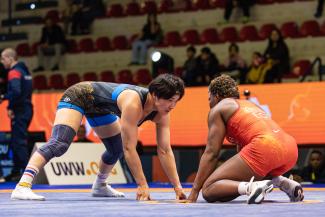
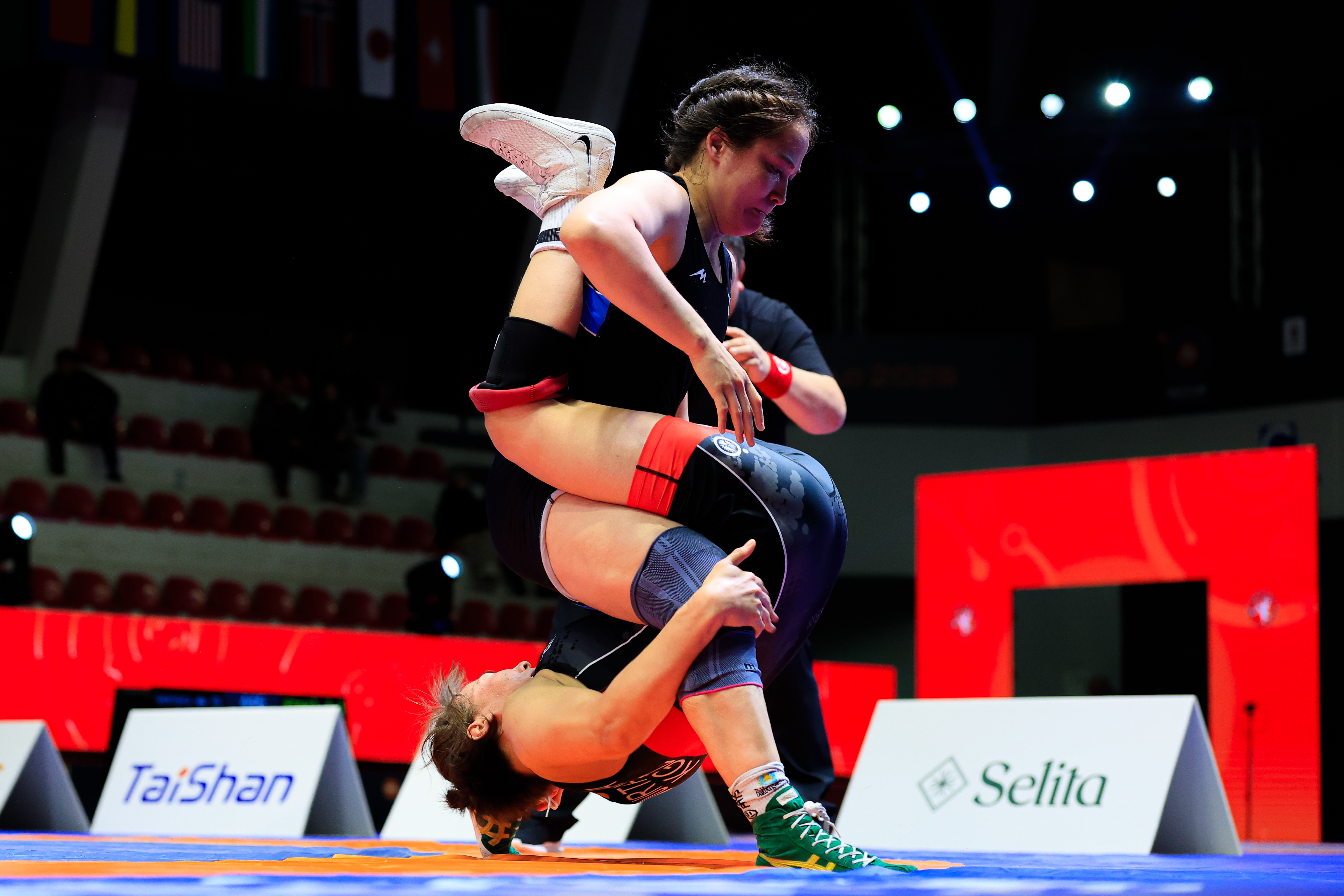 Zhamila BAKBERGENOVA (KAZ) finishes her final against Nurzat NURTAEVA (KGZ). (Photo: United World Wrestling / Kostadin Andonov)
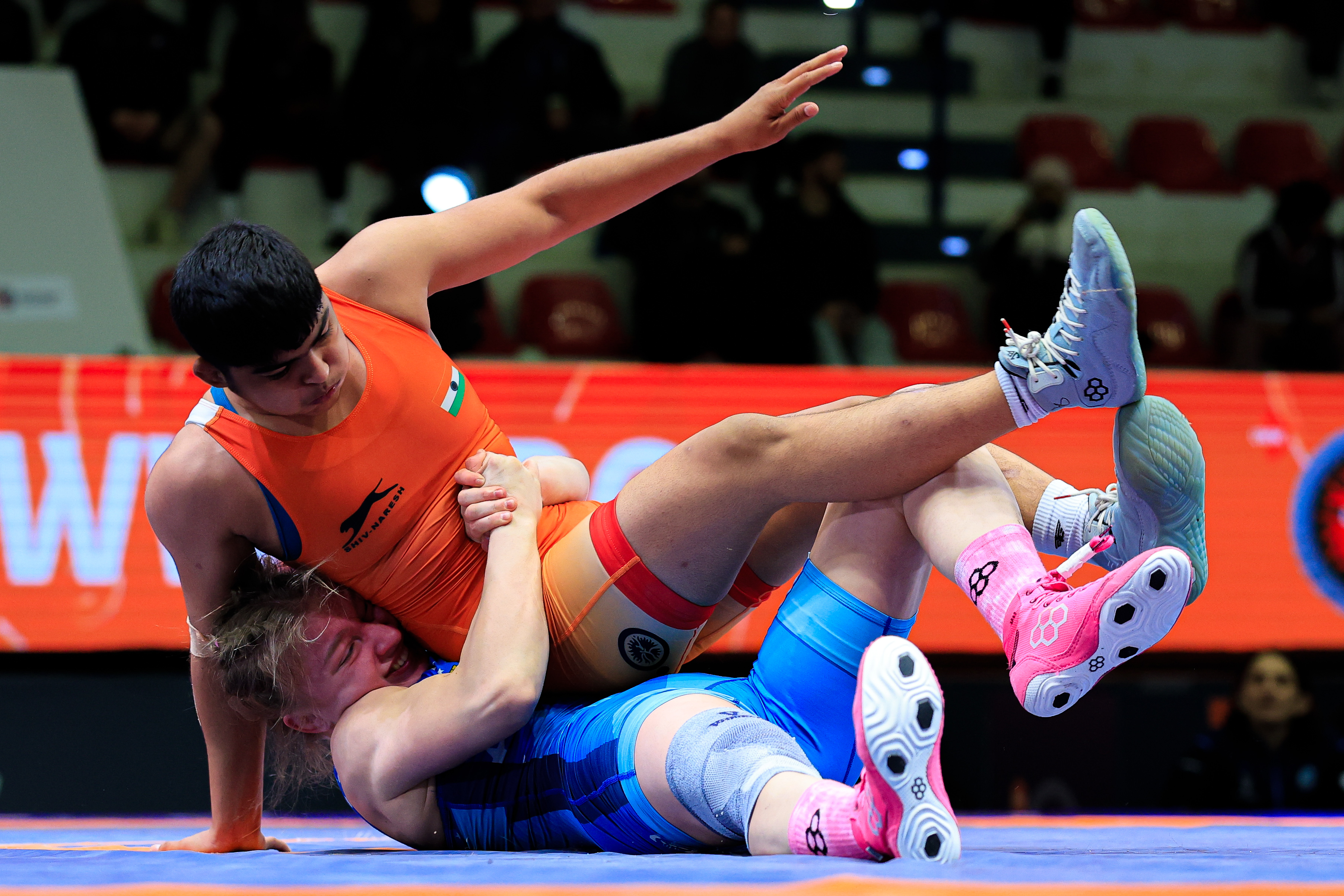 Solomiia VYNNYK (UKR) turns NEHA (IND) during the 57kg final. (Photo: United World Wrestling / Kostadin Andonov)
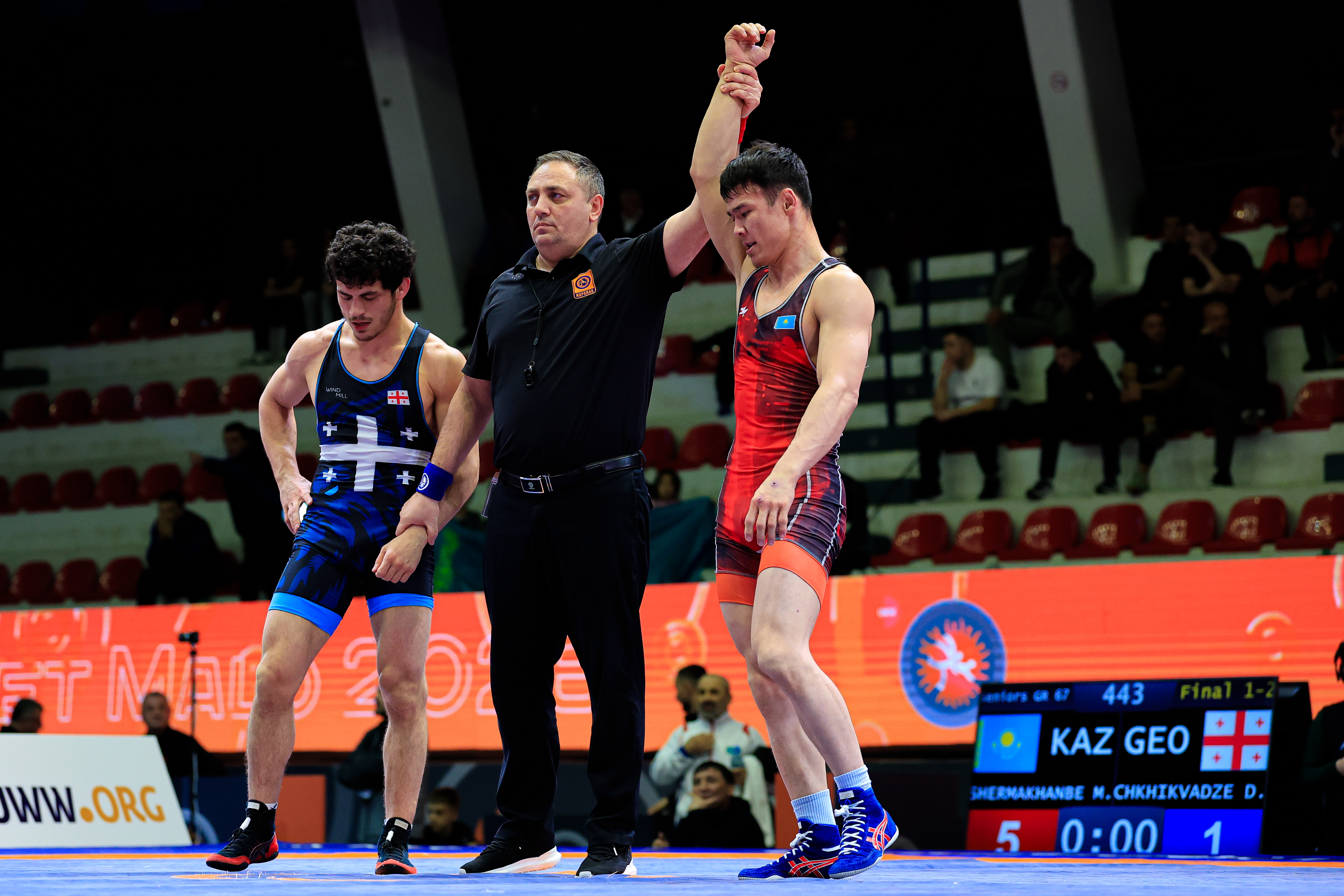 Meiirzhan SHERMAKHANBET (KAZ) won the 67kg gold after a 5-1 win over Diego CHKHIKVADZE (GEO). (Photo: United World Wrestling / Kostadin Andonov)
Share your thoughts.
Comments