

Ishiguro Brushes Aside Rivals to Earn 1st Ticket to Senior Worlds
Friday, May 28, 2021 - 16:54 By Ken Marantz

TOKYO (May 28) --- In 2018, Hayato ISHIGURO became the first Japanese male to capture a world junior title in over three decades. The next year, he added a world U-23 bronze medal. On Friday, he earned his first shot at the big kids.
Ishiguro secured a place on Japan's team to this year's World Championships by taking the freestyle 86kg title at the Meiji Cup All-Japan Invitational Championships on Friday in Tokyo.
Ishiguro scored a takedown and a 4-point move in the second period in posting a 7-1 victory in the final over Taisei MATSUYUKI to follow up on his title run at the Emperor's Cup All-Japan Championships in December.
The Emperor's Cup and Meiji Cup serve as domestic qualifiers for the World Championships, to be held in October in Oslo. Weight classes in which the winners of the two tournaments are different are decided by playoffs, which turned out to be the case in three of the eight divisions on Friday.
None of the 12 Japanese wrestlers who will appear at the Tokyo Olympics entered the qualifying process for the Oslo worlds, opening the door for young prospects like Ishiguro to make the step up to the senior global stage.
Ishiguro, bouncing back from a disappointing fifth-place finish at the Asian Championships in April in Almaty, avoided the playoff route with a solid run at spectator-less Komazawa Gym. Starting with a 9-3 victory over 2020 Asian champion Shutaro YAMADA, he advanced to the final with a 10-0 technical fall of 2019 Asian junior champion Tatsuya SHIRAI.
It all came in a tournament Ishiguro considered skipping beforehand, as well as dropping out midway through, due to problems with weight control.
"After the Asian Championships, I didn't put much thought into maintaining my weight," Ishiguro said. "I had to drop 8 or 9 kilograms all in one week. It had me worried, but I was able to put out a full effort."
Upon returning to Japan from Almaty, Ishiguro had to follow protocols and self-quarantine in a hotel for two weeks. He intended to work out in the single room doing core exercises and push-ups, but ended up "watching Netflix."
"Before the semifinal, I thought of defaulting, because I was feeling the effects of the weight loss and my legs were cramping," Ishiguro admitted. "I talked to my coach and my father and they said to just give it a shot and see what happens."
In Almaty, the luck of the draw matched Ishiguro with world and Olympic champion Hassan YAZDANI (IRI) in the second round, and while the Japanese put up resistance, he went down by technical fall.
That was expected. It was in the bronze-medal match against Mustafa AL OBAIDI (IRQ) that things went awry. As Ishiguro sprawled from a takedown attempt, Al Obaidi locked his arms from below, then twisted the Japanese over and onto his back for a stunning fall in 1:07.
There is speculation that that loss might be behind a new "look" that Ishiguro sported on Friday at Komazawa Gym -- he took the mat with a completely shaven head. Some wondered if it might be some sort of ascetic atonement for his performance in Almaty.
"I thought it could improve my footwork," Ishiguro said tongue-in-cheek when asked about it at the postmatch press conference. "The opponents looked a little scared."
Ishiguro, a two-time national collegiate champion now in his senior year at Nihon University, isn't sure he will keep the shiny dome in Oslo.
"I like it," he said. "but I'll listen to what other people think and decide for the World Championships. Most people don't like it."
Ishiguro competed in Almaty alongside his older brother Takashi ISHIGURO, who won a bronze medal at 97kg. Takashi will aim to join Hayato in Oslo as well when he looks to add to his Emperor's Cup title on Sunday.

Yuta NARA defeated Emperor's Cup champion Masayuki AMANO, 3-1, in a 97kg playoff and earned his fourth berth to the World Championships. (Photo: Japan Wrestling Federation)
Nara grabs 5th title, world team spot in playoff
In other action, Yuta NARA bounced back from the disappointment of failing to qualify for the Tokyo Olympics at both the Asian and world qualifiers by taking his fifth straight title at Greco 97kg, then winning a playoff to earn a fourth career trip to the World Championships.
Nara scored all of his points in the second period in beating Yuri NAKAZATO 6-1 in the final. He then came back for the world playoff an hour or so later and defeated Emperor's Cup champion Masayuki AMANO 3-1.
"The time you have for a wrestling career is limited," Nara said when asked why he entered the tournament so soon after the Olympic qualifiers. "Also, I feel that I'm the one carrying this weight class for Japan."
Nara has dominated the weight class in recent years. He had not lost a domestic match in it since 2016 when he was dealt a stunning defeat in the semifinals at the 2020 Emperor's Cup to Masaaki SHIKIYA, who then lost to Amano in the final.
The other playoff winners were in freestyle, Jintaro MOTOYAMA at 70kg and Masaki SATO at 74kg.
For Motoyama, the 2019 world junior silver medalist and 2018 world U-23 bronze medalist, his playoff victory over Ayumu SUZUKI avenged a loss to the fellow collegian earlier in the day.
Suzuki forged out a 6-4 win over Motoyama in the quarterfinals en route to winning the gold by beating Hirotaka ABE 6-3 in the final.
But Motoyama took his game up a notch in the playoff, scoring four stepouts in building up an 8-0 first-period lead before going on to win 10-1.
Sato's road to Oslo meant beating Emperor's Cup champion Kirin KINOSHITA twice, and he did it by the narrowest of margins.
First Sato won the Meiji Cup gold with a 2-2 win in the final, with his second-period takedown trumping the two single points scored by Kinoshita. Then in the playoff, a second-period takedown gave Sato a 2-1 win and the ticket to Oslo.
At 70kg, the spotlight was more on the return of Taishi NARIKUNI, a former collegiate champion who has competed just twice -- back in 2019 -- since being hit with a two-year doping ban in 2017 after a doctor mistakenly prescribed a cold medication containing a banned substance.
After starting off with a fall, Narikuni saw his dreams of making it to the World Championships shattered with a come-from-behind 8-3 loss to Abe in the semifinals. A late stepout put him behind before a failed throw attempt in desperation gave Abe his final points.
It was reminiscent of his loss at the Emperor's Cup in 2019, where he wrestled at 74kg because it was the first domestic qualifier linked to the Tokyo Olympics.
"It was the same at the Tokyo Olympic qualifier, at the end I lost the same way," he said. "At the 5-minute mark, I was the one attacking, only to be pushed out for the decisive point. It's a waste and shameful to lose the same way."
Narikuni came back to win the bronze medal by fall over Hidetaka SAKANO, but the damage was done.
"It's like it wasn't worth coming, it was so shameful," Narikuni said. "After the Tokyo Olympics qualifiers, I have been aiming for the World Championships for the past 1 1/2 years. I think I put more into this than I did for the Tokyo Olympics."
Narikuni won national collegiate titles in both freestyle and Greco-Roman in 2017 while at Aoyama Gakuin University. He has a goal of achieving the rare feat of winning world titles in both styles -- a sort of Shohei Ohtani of wrestling, referring to the Japanese baseball star who is a rarity by being both a pitcher and a slugger.
Upon graduating, Narikuni became a staff member at the Gold Kids wrestling club in Tokyo run by his mother, a two-time world champion under her maiden name of Akiko IIJIMA. As for what lies ahead, he's still too stunned to think about it.
"My goal was to win the title, win the playoff, then win the world title," Narikuni said. "There were nearly 100 people backing me up from Gold Kids, and I have a real sense of loss. My mind is a blank right now, I can't think of anything."
Reminded that the World Championships are held every year so it won't be long until the next one, he replied, "That's what everyone around me says. But inside, I really can't think of anything. I had only thought of this tournament."

Akie HANAI snuck past Yumeka TANABE by one point in the 59kg gold-medal match. (Photo: Japan Wrestling Federation)
There was one women's title up for grabs, which went to 2019 world junior champion Akie HANAI after edging Yumeka TANABE 2-1 in the 59kg final, with all of the points coming on the activity clock.
Combined with her Emperor's Cup victory, it gives Hanai a place on her first senior world team. She missed out on a first appearance at the Asian Championships in April when Japan withdrew its women's team due to contact with a person infected with the coronavirus.
In the semifinals, Tanabe scored a last-gasp victory by fall over fellow 2019 world U-23 champion Yuzuka INAGAKI. Trailing 3-2 in the final minute, Tanabe used a nifty inside leg hook to trip Inagaki backwards, then clamped down for the fall.
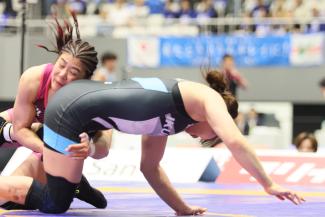
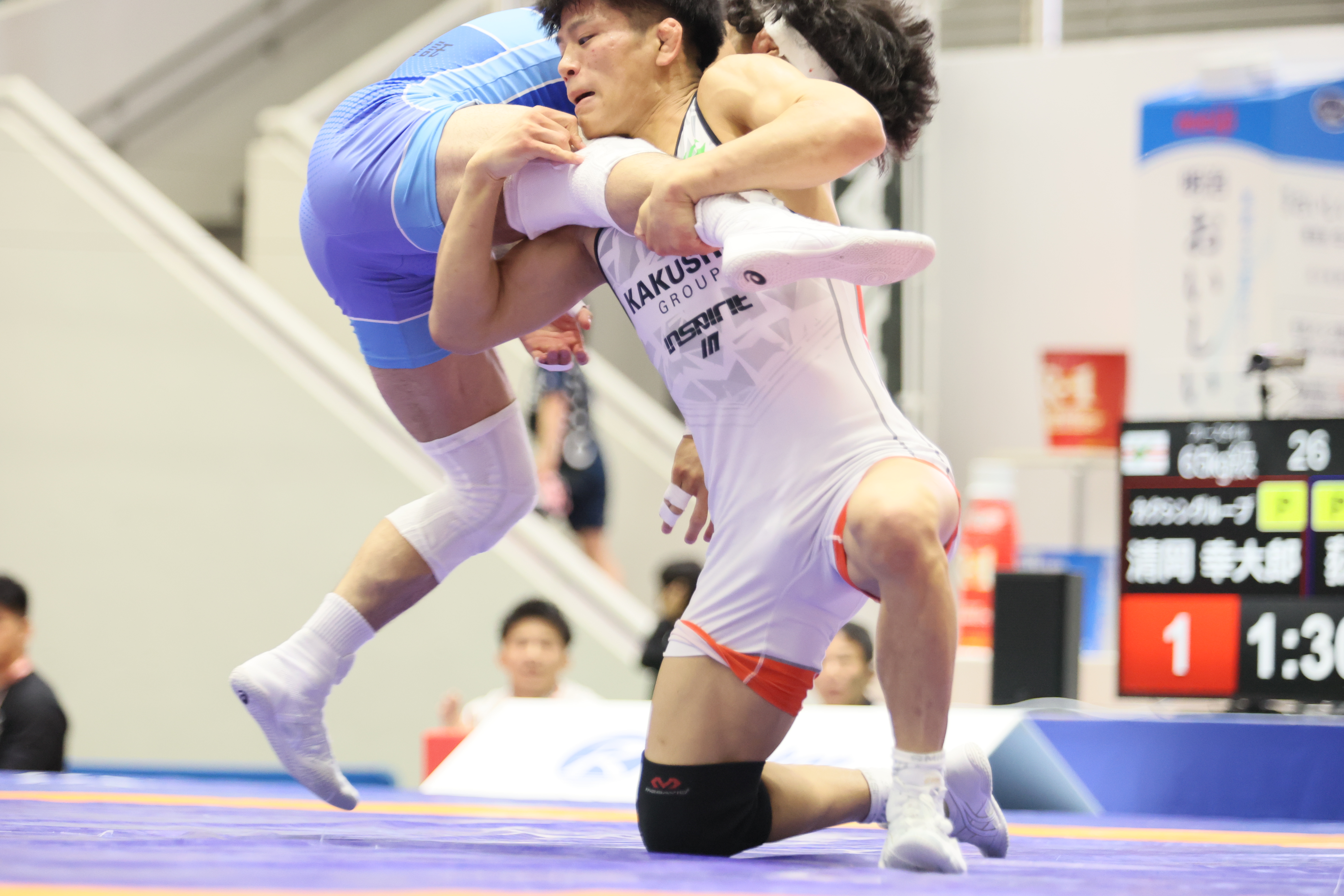 Kotaro KIYOOKA (JPN) reached the 65kg final and will take on Kaisei TANABE (JPN) for the gold medal. (Photo: wrestling-spirits.jp / Takeo Yabuki)
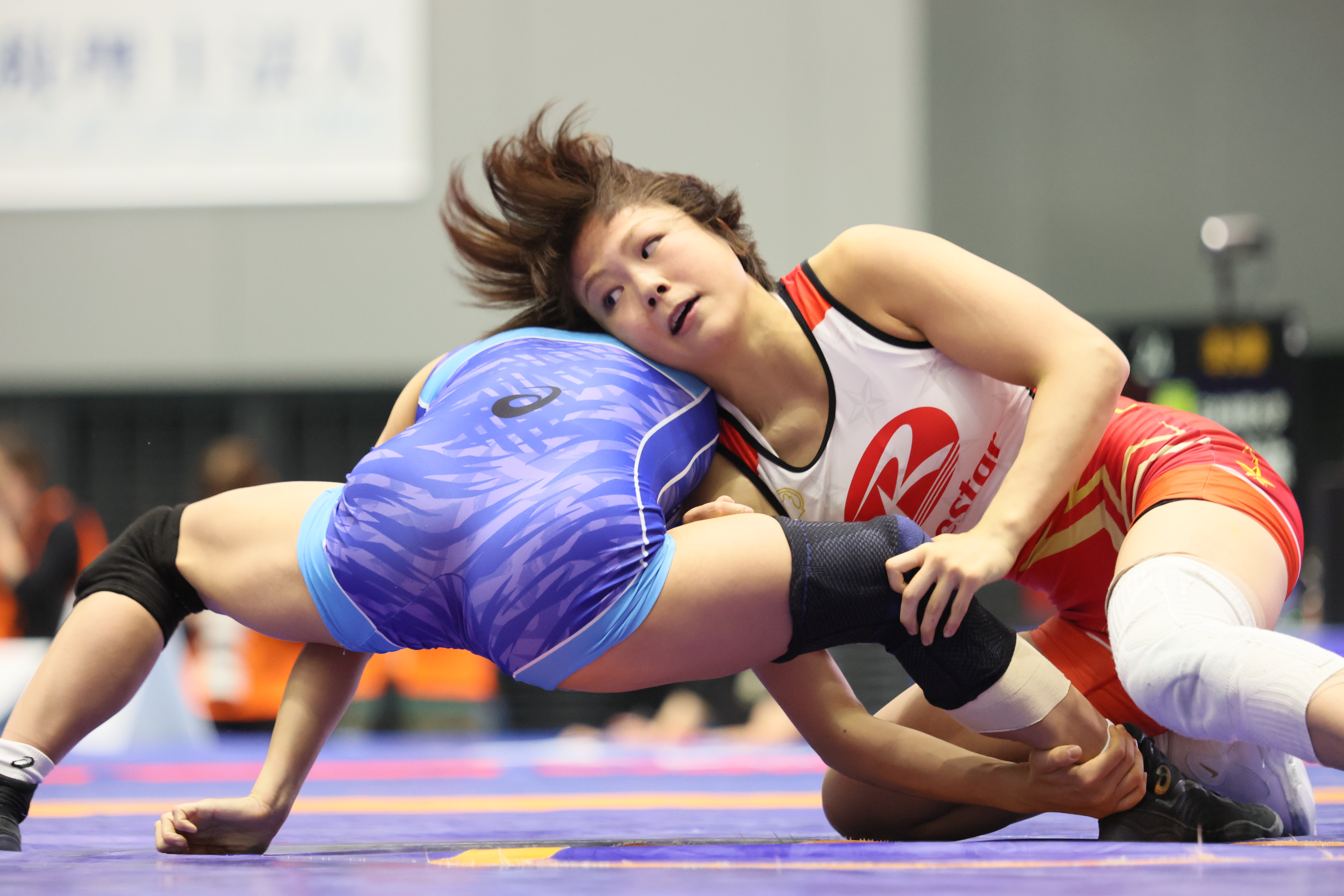 Akari FUJINAMI (JPN) moved into the 57kg final after a 10-0 win over Sara NATAMI (JPN). (Photo: wrestling-spirits.jp / Takeo Yabuki)
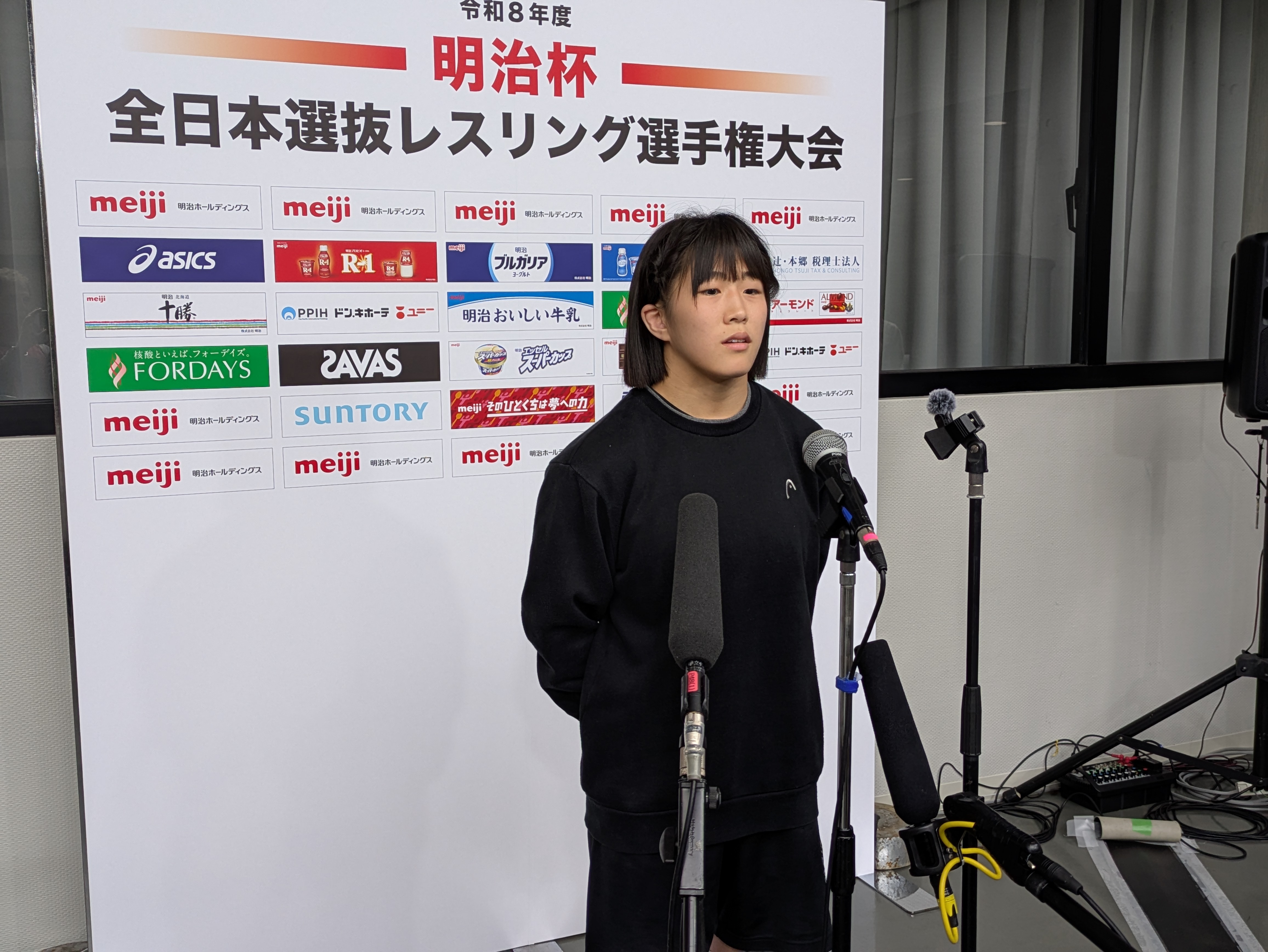 Yu KATSUME (JPN), 18, suffered her first-ever loss since July 2019. (Photo: United World Wrestling)
Share your thoughts.
Comments