

Iran wins three Greco-Roman golds in Amman
Saturday, August 19, 2023 - 17:40 By Vinay Siwach

AMMAN, Jordan (August 19) -- A technical superiority, a defensive masterclass and a power show. Iran wrestlers have made a habit of clinching the Greco-Roman team title early at most World Championships and the U20 World Championships in Amman, Jordan was no different as Iran, with its three golds, all but locked up the title.
After sweeping the Freestyle team title earlier this week, Iran got going in Greco-Roman adding 105 points after five weight classes and steering clear of other countries for the team title.
 Ahmadreza MOHSEN NEZHAD (IRI) scores a takedown against Zhantoro MIRZALIEV (KGZ) in the 63kg final. (Photo: UWW / Kostadin Andonov)
The gold rush was led by rising start Ahmadreza MOHSEN NEHZAD (IRI) at 63kg. He wrestled 2022 U17 Asian champion Zhantoro MIRZALIEV (KGZ) in the gold medal bout and came out 9-0 on top.
The technical superiority in the final by Mohsen Nehzad was set up on the basis of an aggressive show by Ahmadreza. Mirzaliev was put in par terre and the Iranian got one turn to lead 3-0. He scored a stepout to lead extend his lead to 4-0 at the break.
Mirzaliev would have hoped to get an advantage of par terre in the second period but in a rare case, Ahmadreza got the second par terre position. On this occasion, Ahmadreza got two gut-wrenches to finish the bout 9-0.
One can be forgiven for mistaken identity as a glance at Ahmadreza would remind them of multiple-time Asian and U23 world medalist Mehdi MOHSEN NEJAD (IRI), Ahmadreza's elder brother.
The Mohsen Nejad family hails from Kuzestan, Iran and all four siblings are wrestlers. Apart from Mehdi and Ahmadreza, Emarreza and Yasin are also Greco-Roman wrestlers with the former being the U15 Asian champion at 68kg.
As far as world events go, Ahmadreza has already bettered his brother Mehdi's position. Mehdi finished fifth at the 2016 U20 Worlds but Ahmadreza has won gold in his first World Championships experience.
 Alireza ABDEVALI (IRI) and Alexandru SOLOVEI (MDA) battle it out in the 77kg final. (Photo: UWW / Amirreza Aliasgari)
After completing his final, Ahmadreza took to cheering for Alireza ABDEVALI (IRI) against returning silver medalist Alexandru SOLOVEI (MDA) in the 77kg final. Abdevali, one of the seven siblings, denied Solovei a chance to create history for Moldova, beating him 1-1 in the 77kg final.
Solovei was hoping to become Moldova's first U20 world champion in Greco-Roman but for the second straight year, he will have to be satisfied with a silver medal. Abdevali and Solovei exchanged activity points in the final with Abdevali holding the criteria and despite his best efforts, Solovei failed to score the point needed to win.
By winning the final, Abdevali also avenged his 2021 U17 World Championships final's loss to Solovei. That was also a similar final in which the criteria was with Solovei, giving the Moldovan a gold medal.
 Fardin HEDAYATI (IRI) defeated Wenhao JIANG (CHN) in the 130kg. (Photo: UWW / Kostadin Andonov)
The focus then turned to Fardin HEDAYATI (IRI) as he wrestled for the 130kg gold for the second straight year. He suffered a heartbreaking loss in Sofia last year but Hedayati made amends and won the gold medal via technical superiority.
It was in Amman a month ago that Hedayati rocked Wenhao JIANG (CHN) 11-1 in the 130kg final of the U20 Asian Championships. Jiang was hoping to at least close the gap but there was no change in the result as Hedayati beat Jiang 8-0 and put behind the disappointment from last year. Hedayati scored four steptous and two takedowns in the 8-0 win over Jiang.
"I’m glad that I was able to change the silver I won in Sofia to gold in Amman and make my people happy," Hedayati said. "I won all the bouts with excellent scores and became the world champion without giving a single score."
In his four bouts in Amman, Hedayati outscored his opponents 32-0 which also means that he was not in par terre for being passive even once. For the final, Hedayati was aware of Jiang's style which made it easier for him to prepare for the gold medal bout.
"I wrestled with him in the finals of the U20 Asian Championships and won 11-1," he said. "I was able to defeat him in less than three minutes with a score of 8-0. Jiang is a good wrestler as well."
Back home in Iran, the 130kg weight class is dominated by world silver medalist Amin MIRZAZADEH (IRI). But Hedayati, who hails from the Freestyle hub of Mazandaran, is open to have a go at any wrestler.
"I have very good opponents in Iran including Amin Mirzazadeh and other dear friends," he said. "I respect all of them. I’m doing my best to be a good representative for my country in the 2024 Olympics. I want to become a champion in Paris and having good opponents motivates me to increase my training and be able to pass these champions and reach the top of an Olympics."
 The throw that gave Achiko BOLKVADZE (GEO) a win over Ali CHOUBANI (IRI). (Photo: UWW / Amirreza Aliasgari)
Iran could have had another gold medalist if Ali CHOUBANI (IRI) had found a way to beat Achiko BOLKVADZE (GEO) in the 87kg final.
Last year, Choubani suffered a dramatic 2-1 final's loss at the 2022 U20 World Championships but Achiko BOLKVADZE (GEO) added insult to injury as he scored two points via correct throw on third passivity to take a 3-1 lead. Choubani could not score the takedown needed to win the gold medal and for the second successive year, he will go home with a silver medal.
After exchanging activity points, Choubani had the criteria but the referees called him inactive. Bolkvadze asked for par terre and got the lift but Choubani stood his ground. From the bear-hug, Bolkvade managed to implement a correct throw to get two points. Iran challenged the call but lost on review.
As Bolkvadze celebrated his exception win, Choubani lay on may in disbelief after losing the final for the second straight year.
The fifth gold medal on Saturday was won by Iskhar KURBAYEV (KAZ) who defeated Farid SADIKHLI (AZE), 5-1, in the 55kg final. This was Kazakhstan's first gold medal in Greco-Roman at U20 Worlds in seven years.

RESULTS
55kg
GOLD: Iskhar KURBAYEV (KAZ) df. Farid SADIKHLI (AZE), 5-1
BRONZE: Nuristan SUIORKULOV (KGZ) df. Emre MUTLU (TUR), 2-1
BRONZE: Alisher GANIEV (UZB) df. Ali AHMADI VAFA (IRI), 9-0
63kg
GOLD: Ahmadreza MOHSEN NEZHAD (IRI) df. Zhantoro MIRZALIEV (KGZ), 9-0
BRONZE: Dinislam SAGITZHAN (KAZ) df. Landon DRURY (USA), 9-0
BRONZE: Komei SAWADA (JPN) df. SANDEEP (IND), 4-0
77kg
GOLD: Alireza ABDEVALI (IRI) df. Alexandru SOLOVEI (MDA), 1-1
BRONZE: Deepak PUNIA (IND) df. Tornike MIKELADZE (GEO), 4-2
BRONZE: Abdulmasih ABDULMASIH (AIN) df. Erlan MARS UULU (KGZ), 11-2
87kg
GOLD: Achiko BOLKVADZE (GEO) df. Abolfazl CHOUBANI (IRI), 4-1
BRONZE: Asan ZHANYSHOV (KGZ) df. Tourpal MAGAMADOV (FRA), 13-4
BRONZE: Vigen NAZARYAN (ARM) df. Wyatt VOELKER (USA), 7-0
130kg
GOLD: Fardin HEDAYATI (IRI) df. Wenhao JIANG (CHN), 8-0
BRONZE: Achilleas CHRYSIDIS (GRE) df. Aleksandr MELEKHOV (AIN), 5-0
BRONZE: Fekry EISSA (EGY) df. Talip CIFTCI (TUR), 3-2
GR Semifinals
60kg
GOLD: SUMIT (IND) vs. Suren AGHAJANYAN (ARM)
SF 1: SUMIT (IND) df. Amirreza DEHBOZORGI (IRI), 10-0
SF 2: Suren AGHAJANYAN (ARM) df. Emirlan DUISHENALIEV (KGZ),
67kg
GOLD: Moustafa ALAMELDIN (EGY) vs. Gaspar TERTERYAN (ARM)
SF 1: Moustafa ALAMELDIN (EGY) df. Ahoura BOUVEIRI PIANI (IRI), 9-4
SF 2: Gaspar TERTERYAN (ARM) df. Nestori MANNILA (FIN), 5-2
72kg
GOLD: Imran ALIEV (AIN) vs. Levente LEVAI (HUN)
SF 1: Imran ALIEV (AIN) df. Anri PUTKARADZE (GEO), 9-0
SF 2: Levente LEVAI (HUN) df. Aaron BELLSCHEIDT (GER), 5-1
82kg
GOLD: Alperen BERBER (TUR) vs. Yasin YAZDI (IRI)
SF 1: Alperen BERBER (TUR) df. Data CHKHAIDZE (GEO), 8-0
SF 2: Yasin YAZDI (IRI) df. Ruben GEVORGYAN (ARM), 4-0
97kg
GOLD: Abubakar KHASLAKHANAU (AIN) vs. Gor AYVAZYAN (GEO)
SF 1: Abubakar KHASLAKHANAU (AIN) df. Kevin USPENSKI (EST), 14-4
SF 2: Gor AYVAZYAN (GEO) df. Rostislav COVALI (MDA), 3-1

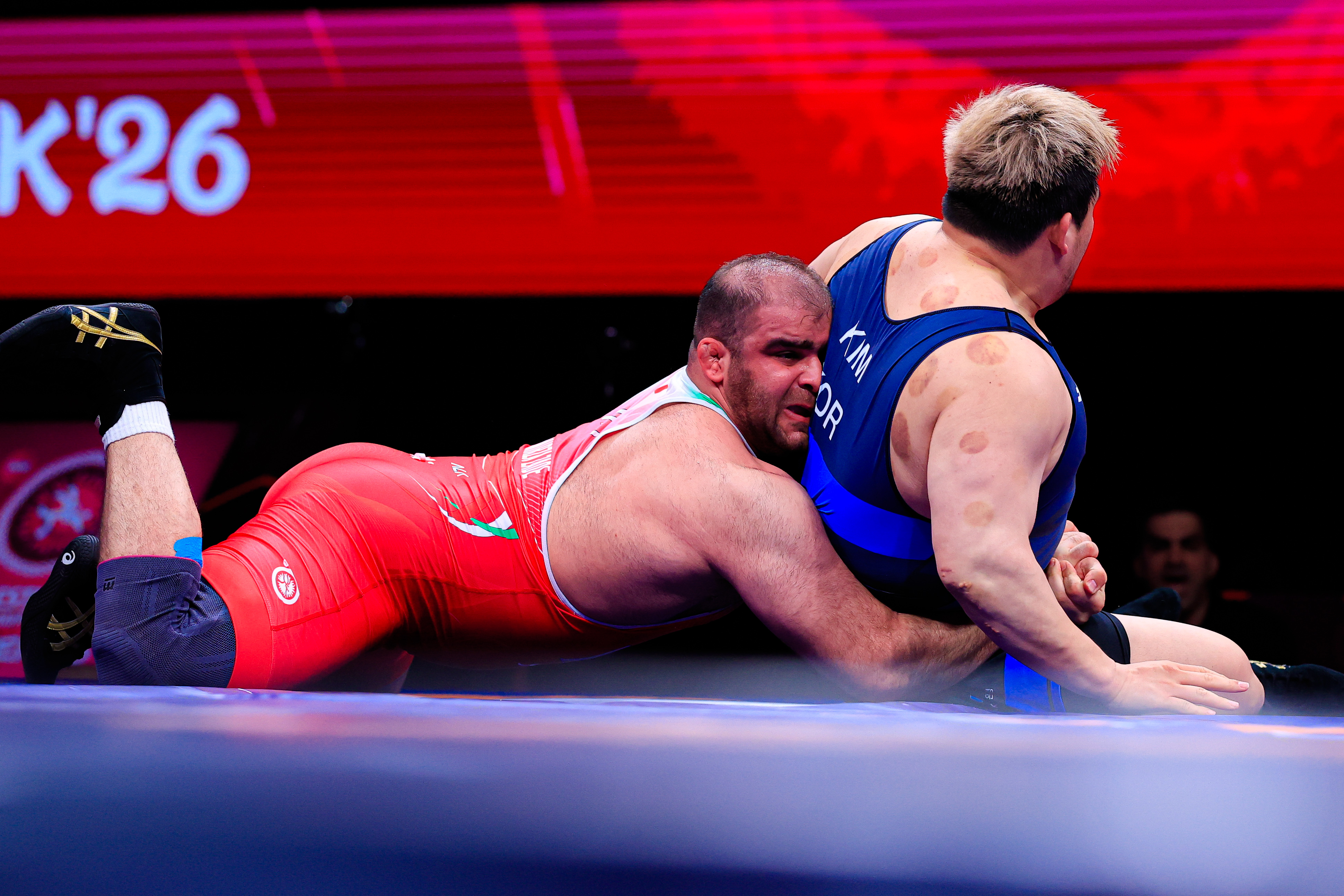 Amin MIRZAZADEH (IRI) turns Minseok KIM (KOR) during the 130kg semifinal at the Asian Championships. (Photo: United World Wrestling / Kostadin Andonov)
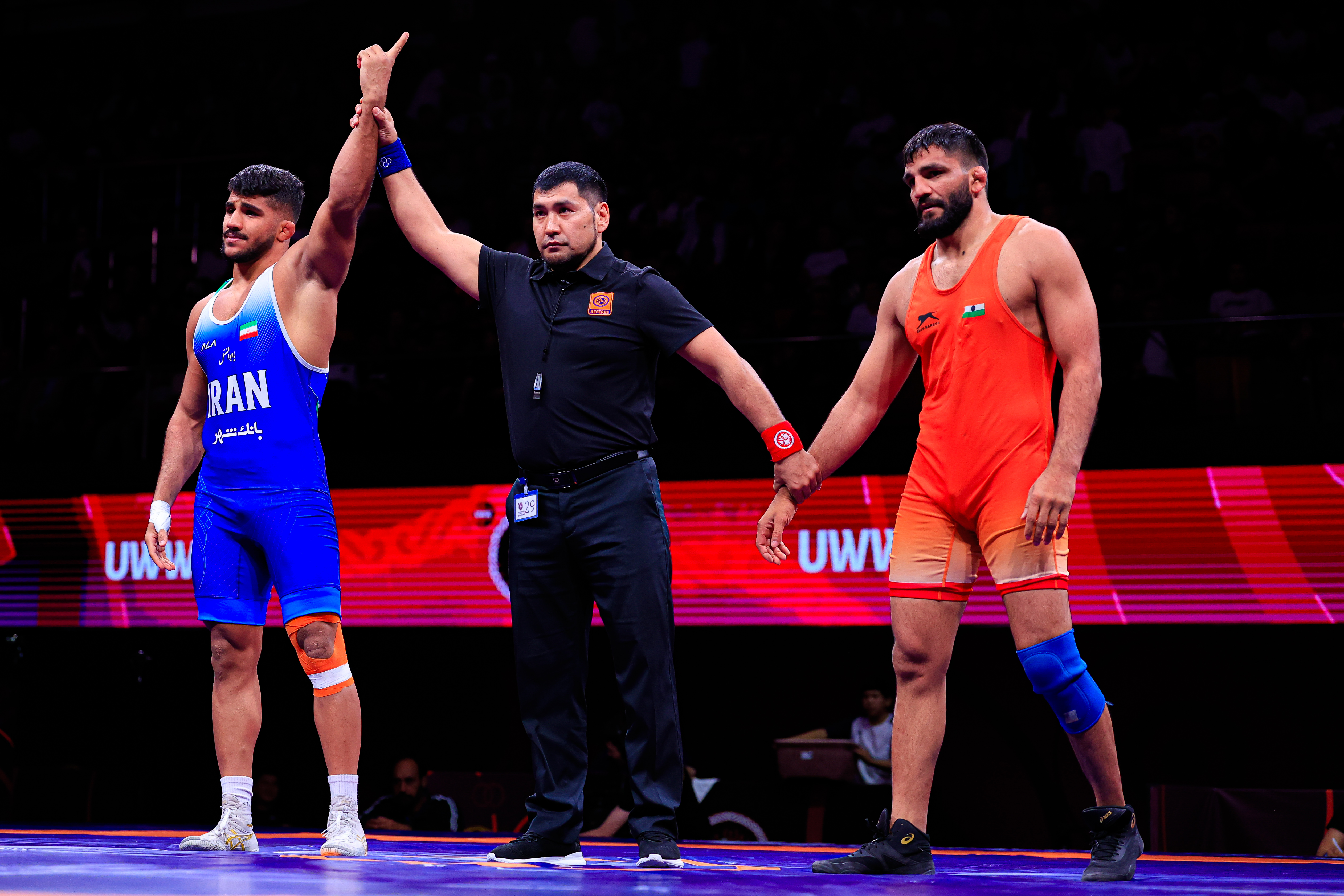 Gholamreza FAROKHI (IRI), the world champion at 82kg, defeated Sunil KUMAR (IND) in 87kg semifinals at the Asian Championships. (Photo: United World Wrestling / Kostadin Andonov)
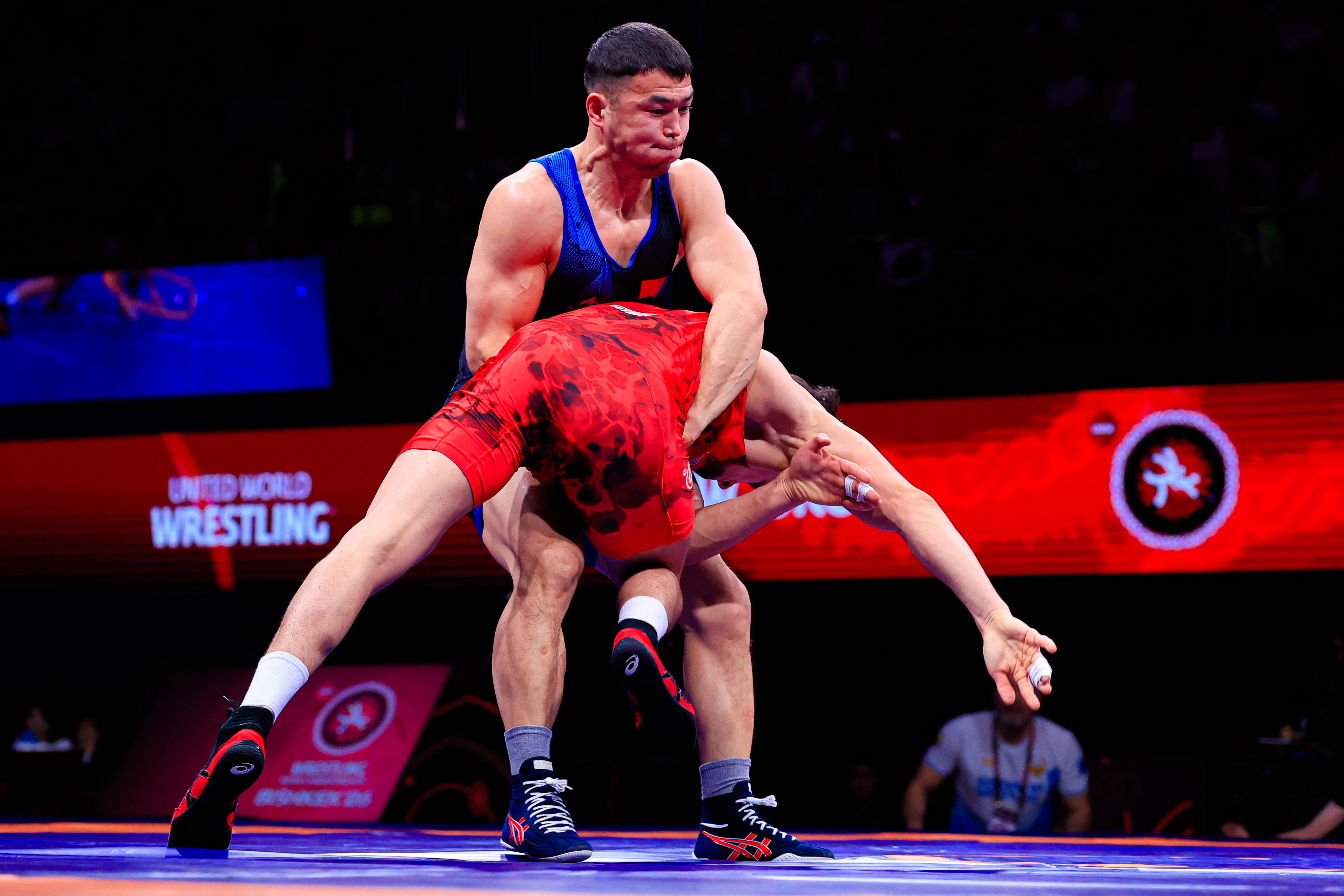 Akzhol MAKHMUDOV (KGZ) launches Doniyorkhon NAKIBOV (UZB) for four points during the 77kg semifinals in Bishkek. (Photo: United World Wrestling / Kostadin Andonov)
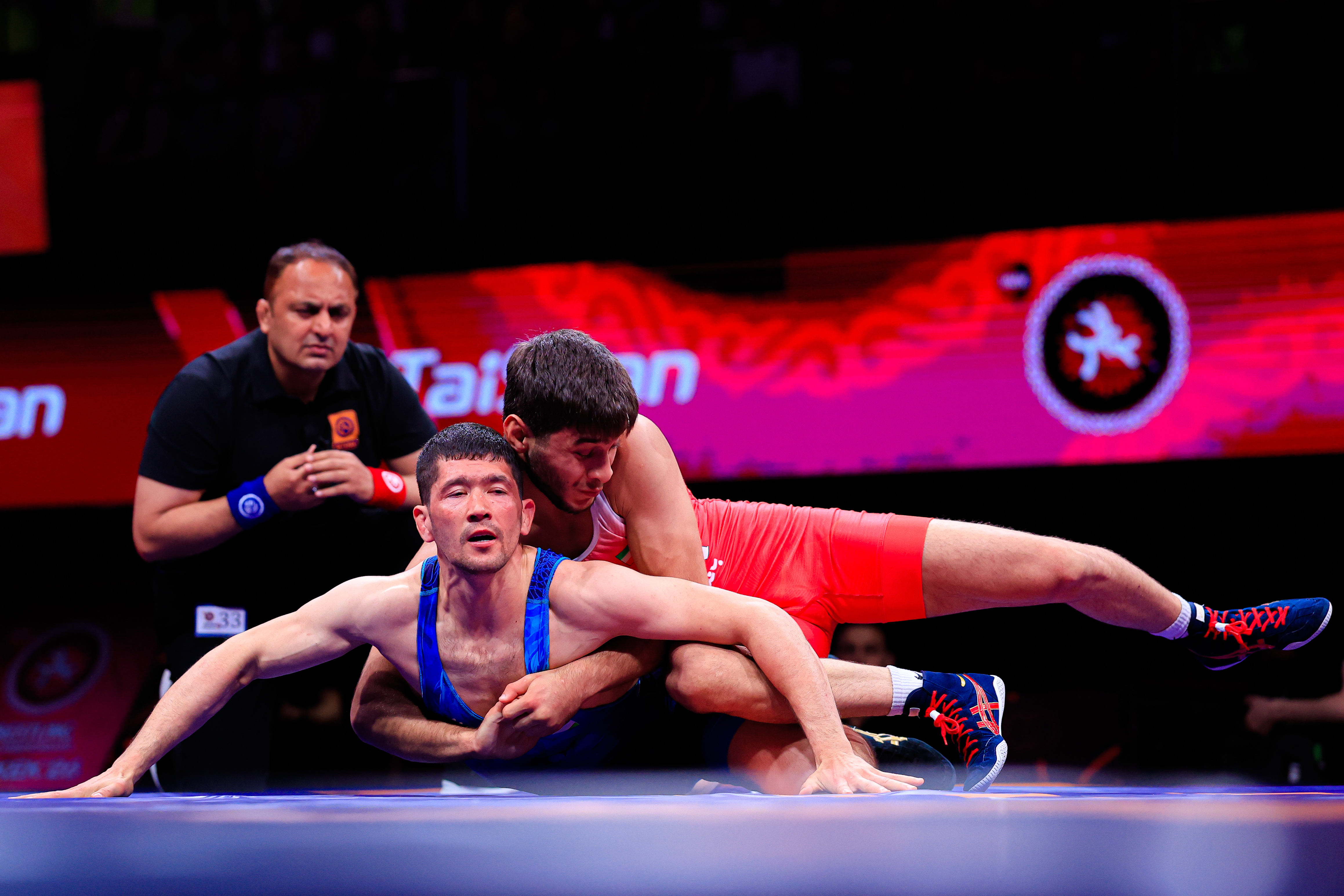 Erfan JARKANI (IRI) battles it out with Islomjon BAKHRAMOV (UZB) in the 63kg semifinal. (Photo: United World Wrestling / Kostadin Andonov)
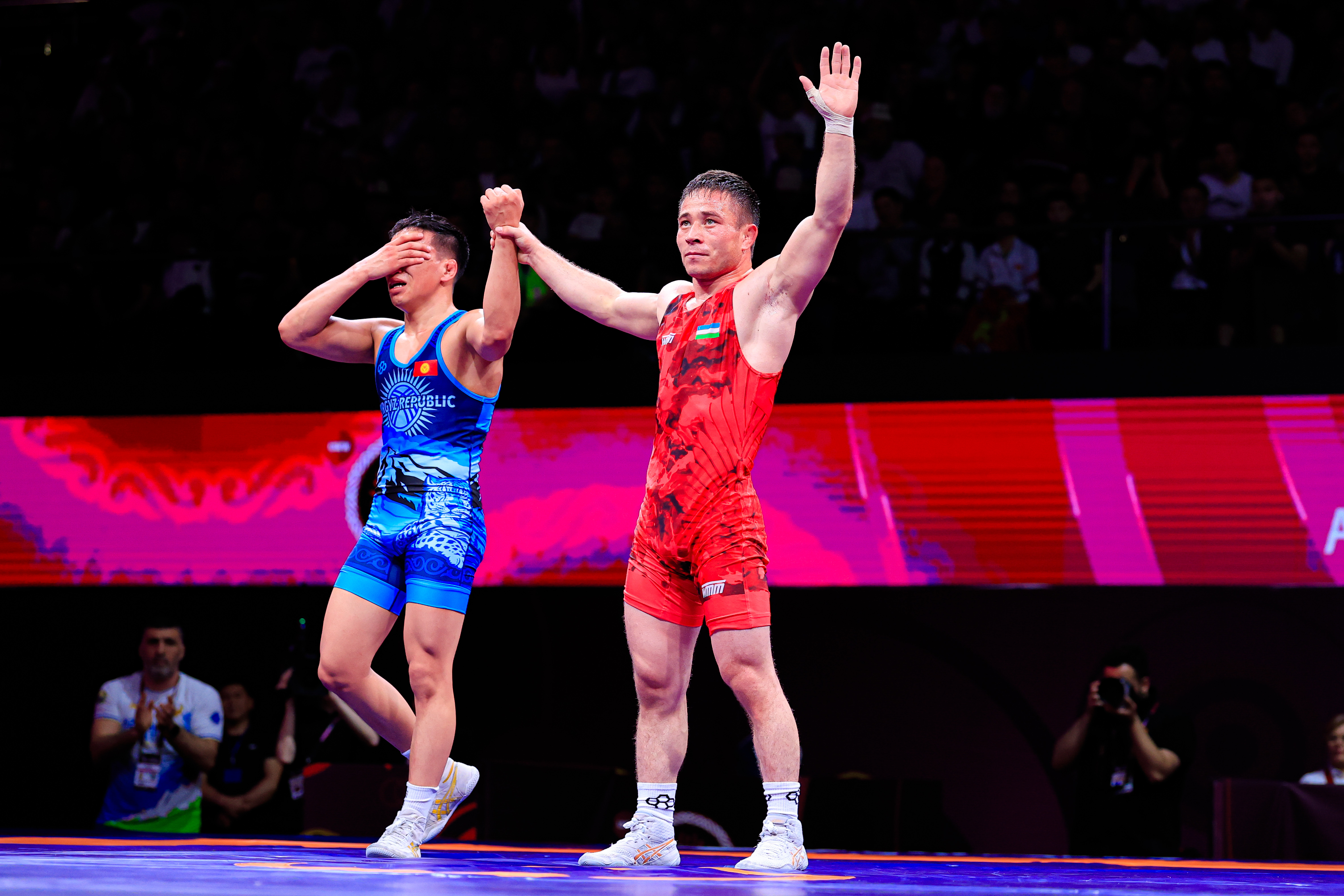 Ikhtiyor BOTIROV (UZB) raises the hand of Ulan MURATBEK UULU (KGZ) after beating the home wrestler in the 55kg semifinal. (Photo: United World Wrestling / Kostadin Andonov)
 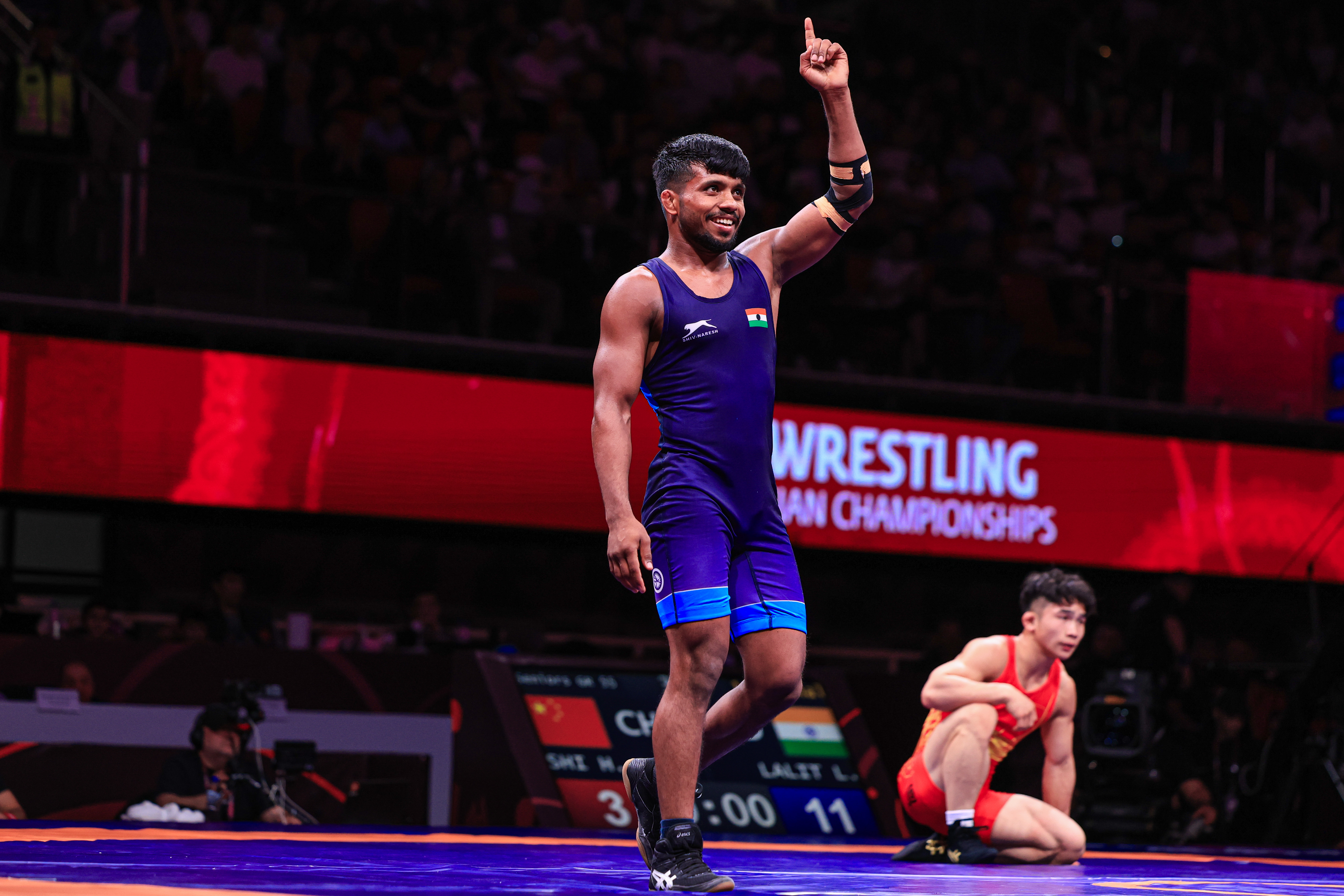 LALIT (IND) reached the 55kg final after beating Houying SHI (CHN), 11-3. (Photo: United World Wrestling / Amirreza Aliasgari)
Share your thoughts.
Comments