

Greco-Roman Rankings Updated Following Cerro Pelado
Thursday, March 8, 2018 - 14:27 By United World Wrestling Press

CORSIER-SUR-VEVEY (March 8) -- United World Wrestling has posted updates to the 2018 Ranking Series in Greco-Roman. The rankings come after Greco-Roman wrestlers competed at the Cerro Pelado in Havana, Cuba.
Iran and Kazakhstan both have four No.1-ranked wrestlers, while Kyrgyzstan has two.  df. Atakan YUKSEL. (TUR).jpg)
Four wrestlers held their No.1 rankings in Greco-Roman: K. ZHOLCHUBEKOV (KGZ) at 60kg, Almat KEBISPAYEV (KAZ) at 67kg, Demeu ZHADRAYEV (KAZ) at 72kg and Mohammadali GERAEI (IRI) at 77kg.
New top-ranked wrestlers in Greco-Roman include Reza KHEDRI (IRI) at 55kg, U. AMATOV (KGZ) at 63kg, Askhat DILMUKHAMEDOV (KAZ) at 82kg, Khussein MUTSOLGOV (KAZ) at 87kg, Seyedmostafa SALEHIZADEH (IRI) at 97kg and Behnam ARPATAPEH (IRI).
Winners of the Ranking Series events each received 8 points, plus an additional point for ever entry in their bracket. Placement points (plus number entries) were also awarded to the rest of the top five finishers: runner-up (6), bronze (4) and fifth place (2).
Points will be automatically uploaded on the UWW homepage following the conclusion of all Ranking Series events, continental and world championships.
In case of a points tie between two or more athletes, the following will determine the highest ranked individual:
- Highest number of participation in the ranking events*
- Highest number of Gold Medals in the ranking events*
- Highest number of Silver Medals in the ranking events*
- Highest number of Bronze Medals in the ranking events*
- The most classification points in the ranking events*
- The most match won by superiority in the ranking events*
- The most technical points scored in the ranking events*
* Continental Championship and UWW Select Ranking Events of the concerned year.
Should top seeded athletes not participate in the Senior World Championships or Olympic Games the same criteria will be applied to determine which athletes move into the seeding for the event.
55kg
1. Reza KHEDRI (IRI) // 24 Points
2. Shota TANOKURA (JPN) // 22 Points
3. Zholaman SHARSHENBEKOV (KGZ) // 20 Points
4. Kumar RAJENDER (IND) // 18 Points
5. Khorlan ZHAKANSHA (KAZ) // 18 Points
60kg
1. K. ZHOLCHUBEKOV (KGZ) // 36 Points
2. Shinobu OTA (JPN) // 23 Points
3. Se Ung RI (PRK) // 21 Points
4. Islomjon BAKHRAMOV (UZB) // 19 Points
5. Abdennour LAOUNI (ALG) // 17 Points
63kg
1. U. AMATOV (KGZ) // 30 Points
2. Elmurat TASMURADOV (UZB) // 21 Points
3. Mirambek AINAGULOV (KAZ) // 17 Points
4. Dokyung JUNG (KOR) // 17 Points
5. Hassan Hassan Ahmed MOHAMED (EGY) // 16 Points
67kg
1. Almat KEBISPAYEV (KAZ) // 42 Points
2. Ismael BORRERO (CUB) // 24 Points
3. Tsuchika SHIMOYAMADA (JPN) // 22 Points
4. Mohamed Ibrahim Elsayed Ibrahi ELSAYED (EGY) // 20 Points
5. Gaoquan ZHANG (CHN) // 20 Points
72kg
1. Demeu ZHADRAYEV (KAZ) // 38 Points
2. Akzhol MAKHMUDOV (KGZ) // 24 Points
3. Tomohiro INOUE (JPN) // 20 Points
4. Aram VARDANYAN (UZB) // 20 Points
5. Kuldeep MALIK (IND) // 18 Points
77kg
1. Mohammadali GERAEI (IRI) // 38 Points
2. Bin YANG (CHN) // 24 Points
3. Akrem BOUDJEMLINE (ALG) // 21 Points
4. Maxat YEREZHEPOV (KAZ) // 20 Points
5. Shermet PERMANOV (TKM) // 20 Points
82kg
1. Askhat DILMUKHAMEDOV (KAZ) // 22 Points
2. Atabek AZISBEKOV (KGZ) // 20 Points
3. Ahmed Hassan Aly Mahmoud AHMED (EGY) // 19 Points
4. Singh HARPREET (IND) // 18 Points
5. Jinhyeok KIM (KOR) // 18 Points
87kg
1. Khussein MUTSOLGOV (KAZ) // 29 Points
2. Hossein Ahmad NOURI (IRI) // 22 Points
3. Masato SUMI (JPN) // 20 Points
4. Adem BOUDJEMLINE (ALG) // 18 Points
5. Fei PENG (CHN) // 18 Points
97kg
1. Seyedmostafa Seyedghanbar SALEHIZADEH (IRI) // 22 Points
2. Rustam ASSAKALOV (UZB) // 20 Points
3. Hemza HALOUI (ALG) // 19 Points
4. Uzur DZHUZUPBEKOV (KGZ) // 18 Points
5. Yerulan ISKAKOV (KAZ) // 18 Points
130kg
1. Behnam mahdizadeh ARPATAPEH (IRI) // 34 Points
2. Anton SAVENKO (KAZ) // 21 Points
3. Muminjon ABDULLAEV (UZB) // 20 Points
4. Radhouane CHEBBI (TUN) // 18 Points
5. Xiaoming NIE (CHN) // 18 Points
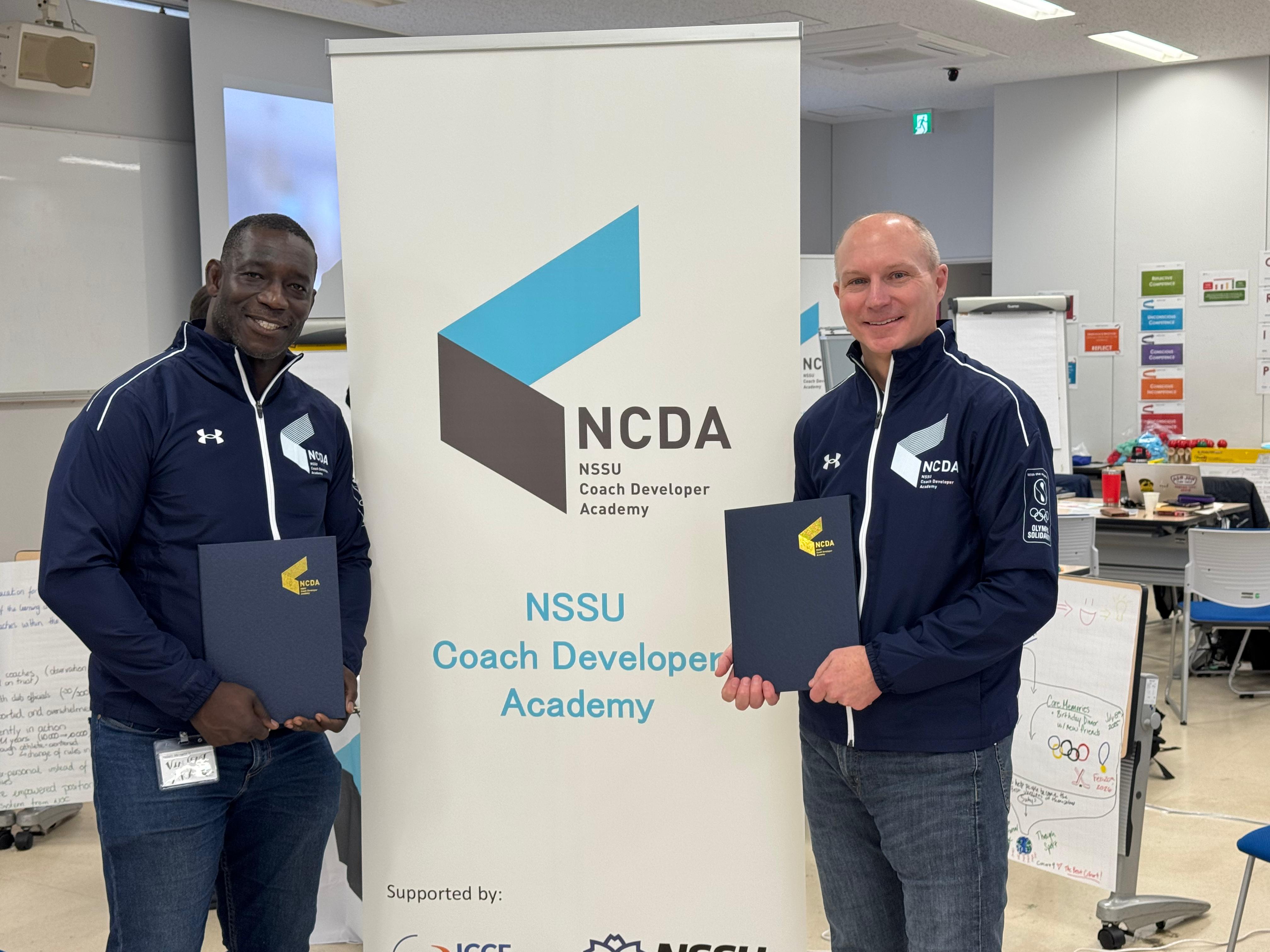 UWW Educators Vincent AKA, left, and Zach ERRETT.
Share your thoughts.
Comments