

In 68kg debut, Blades suplexes her way to gold
Saturday, February 8, 2025 - 06:55 By Vinay Siwach

ZAGREB, Croatia (February 8) -- Kennedy BLADES (USA) may have changed her weight class but there was no change in her style. Wrestling at 68kg, down from 76kg in which she won the Paris Olympics silver medal, Blades won the gold medal at Zagreb Open Ranking Series on Friday.
READ MORE: Blades shines, Jafarov injured
In a round-robin bracket which had four bouts for each wrestler, Blades was a notch above the rest as she secured two falls and two victory via superiority with none of the four bouts going to the second period.
Blades had moved from 76kg to 68kg for this tournament and is expected to remain at this weight class for the Los Angeles Olympic cycle.
"I feel really good," Blades said about the weight cut. "I ate the night so I'm just happy that I have a lot of energy still, and I was able to use my power, even though same day weigh-in. I'm feeling great."
 Kennedy BLADES (USA) completes a suplex over Karolina POK (HUN). (Photo: United World Wrestling / Kadir Caliskan)
Blades began the day with a fall over Kendra DACHER (FRA) and another over world bronze medalist Adela HANZLICKOVA (CZE) before Noémi SZABADOS (HUN) became the victim of her pace. Blades' moment of the day came in the Round 5 in the evening session when she launched a near-perfect suplex against Karolina POK (HUN). She was awarded five points for the suplex.
"I feel like a lot of people overlook wrestling," she said. "So I just want to make it as exciting as possible, and if I can do a big move or make it like, oh, then I just go for the big move."
The move over Pok reminded wrestling fans of the beautiful suplex Blades performed over Catalina AXENTE (ROU) at the Paris Olympics in the first bout itself. Blades went on to win the silver medal, and five months later she has captured her first Ranking Series gold medal using the same move.
"I've just been with my college team at University of Iowa," she said. "After Olympics, I only took about two weeks off because I was like I have college season. So I eased into it. I've just been competing and training hard and I just feel very prepared for what's to come."
At 68kg, Amit ELOR (USA) is the Olympic champion but with a new Olympic cycle, it is expected that she will be at 72kg before moving around to decide which weight class is beneficial for her. Blades hinted she will remain at 68kg for the World Championships.
"Honestly, I'm still deciding what I want to do," Blades said. "But I just feel really good at this whole tournament. I know it was plus two kilos, but I mean, I weighed like 68.9kg and I was like hydrated. So I'm like I'm fine. We'll see. I feel like it might be the move, so I just have to talk to my coaches, I'm going to figure some things out."
The U.S. won another gold medal at 62kg as Adaugo NWACHUKWU (USA) won three bouts in the round-robin bracket, keeping a clean slate.
Nwachukwu was in trouble of finishing second as former world champion Bilyana DUDOVA (BUL) was winning 2-0 with less than 20 seconds left. However, Nwachukwu got a takedown and a turn to win the bout and confirm her gold medal.
In an all Azerbaijan final at 59kg, Hiunai HURBANOVA (AZE) defeated Alyona KOLESNIK (AZE), 4-2, winning the gold medal.
Greco-Roman also began on Friday and Iran had a forgetful day in office. Treating the Zagreb Open as a trial for the Asian Championships, Iran had brought multiple wrestlers in various categories.
But it failed to win gold medal in the two Greco-Roman weight classes in action on Friday and drew a blank at 67kg.
U20 world champion Ahmadreza MOHSEN NEZHAD (IRI) dropped his semifinal against Valentin PETIC (MDA) 6-1 and then lost his bronze medal bout. Haavard JOERGENSEN (NOR) stopped Mohammadreza GHOLAMI (IRI), 10-1, in the other semifinal.
Joergensen capped off his day with a stunning 9-1 win over Petic in the 67kg to win the gold medal.
At 63kg, U23 world silver medalist Dinislam BAMMATOV (AIN) dominated the field and defeated Mohammad KESHTKAR (IRI), via fall in the final to win the gold medal.
RESULTS
Women's Wrestling
59kg
GOLD: Hiunai HURBANOVA (AZE) df. Alyona KOLESNIK (AZE), 4-2
BRONZE: Micheala BECK (USA) df. Mariana CHERDIVARA (MDA), via inj. def.
62kg
GOLD: Adaugo NWACHUKWU (USA)
SILVER: Amina TANDELOVA (AIN)
BRONZE: Bilyana DUDOVA (BUL)
65kg
GOLD: Dinara KUDAEVA (AIN)
SILVER: Eniko ELEKES (HUN)
BRONZE: Elizaveta PETLIAKOVA (AIN)
68kg
GOLD: Kennedy BLADES (USA)
SILVER: Adela HANZLICKOVA (CZE)
BRONZE: Noémi SZABADOS (HUN)
Greco-Roman
63kg
GOLD: Dinislam BAMMATOV (AIN) df. Mohammad KESHTKAR (IRI), via fall (10-0)
BRONZE: Ellis COLEMAN (USA) df. Ziya BABASHOV (AZE), 5-3
BRONZE: AYTJAN KHALMAKHANOV (UZB) df. Islomjon BAKHRAMOV (UZB), 5-4
67kg
GOLD: Haavard JOERGENSEN (NOR) df. Valentin PETIC (MDA), 9-1
BRONZE: Razvan ARNAUT (ROU) df. Ahmadreza MOHSEN NEZHAD (IRI), 5-0
BRONZE: Dominik ETLINGER (CRO) df. Mohammadreza GHOLAMI (IRI), 10-1
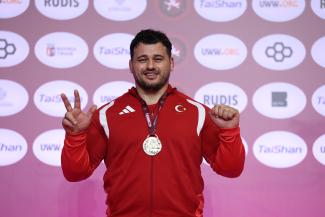
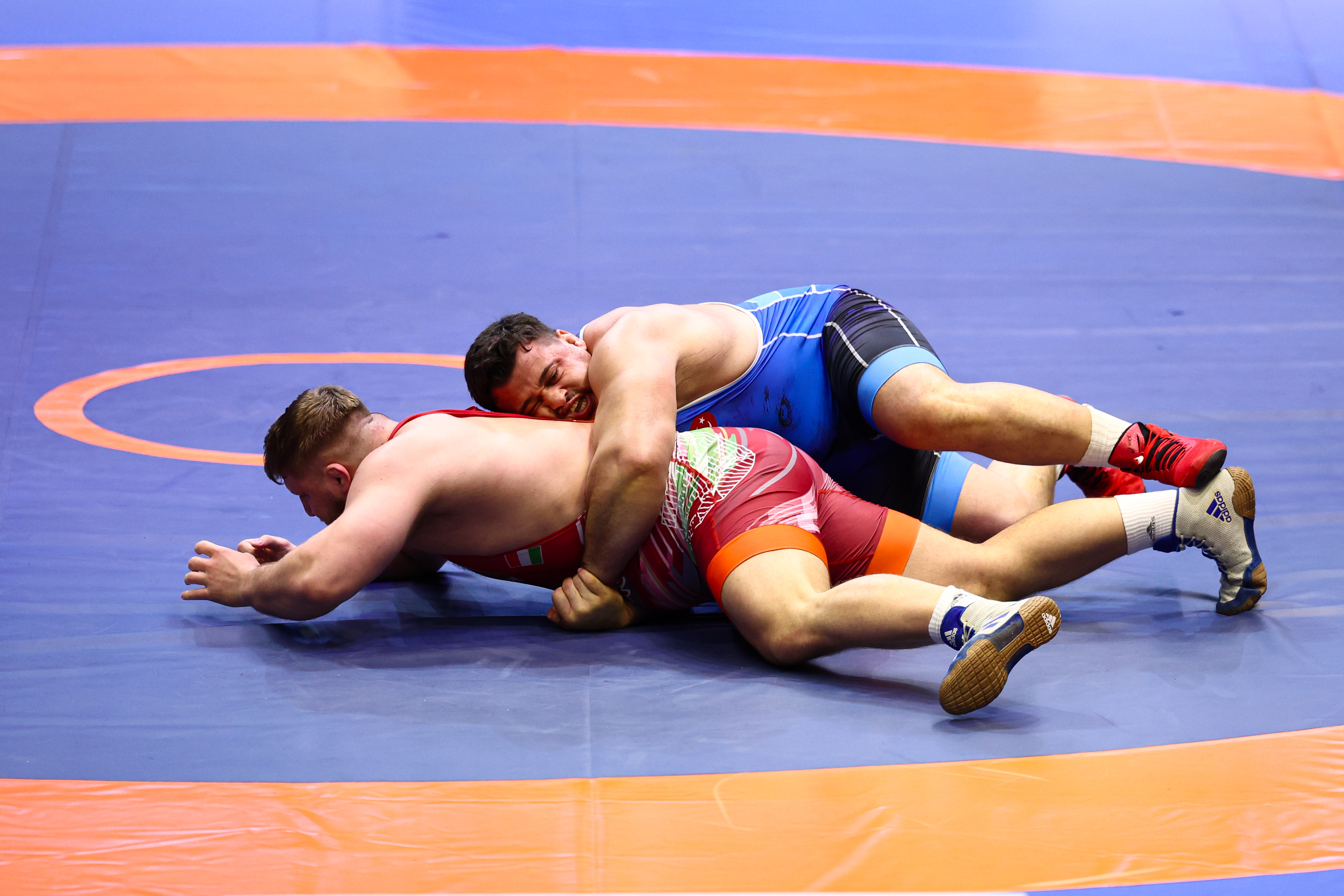 Riza KAYAALP (TUR) turns Darius VITEK (HUN) in the 130kg final. (Photo: United World Wrestling / Kadir Caliskan)
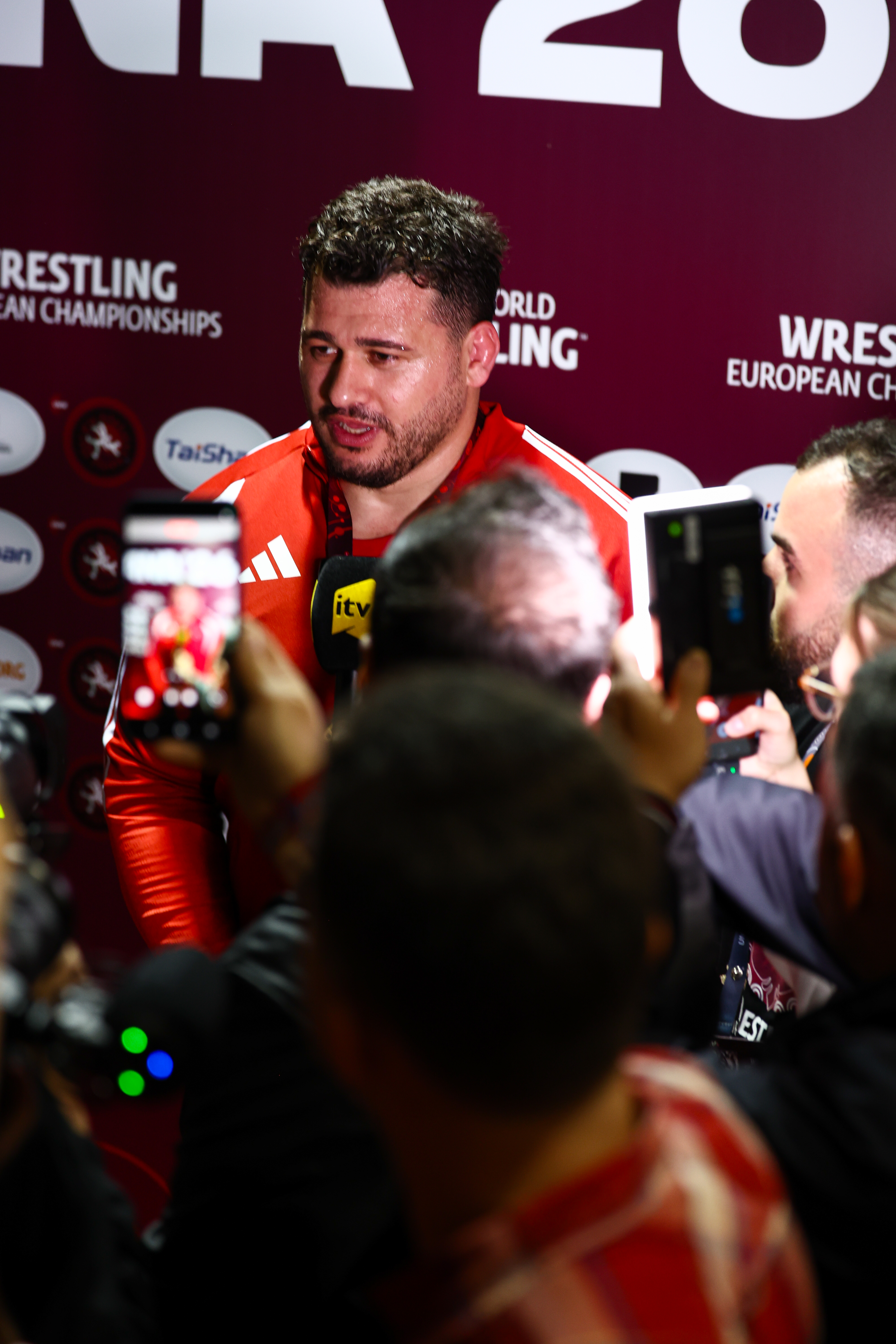 Riza KAYAALP (TUR) speaks to the media after winning the gold medal at the European Championships. (United World Wrestling / Jake Kirkman)
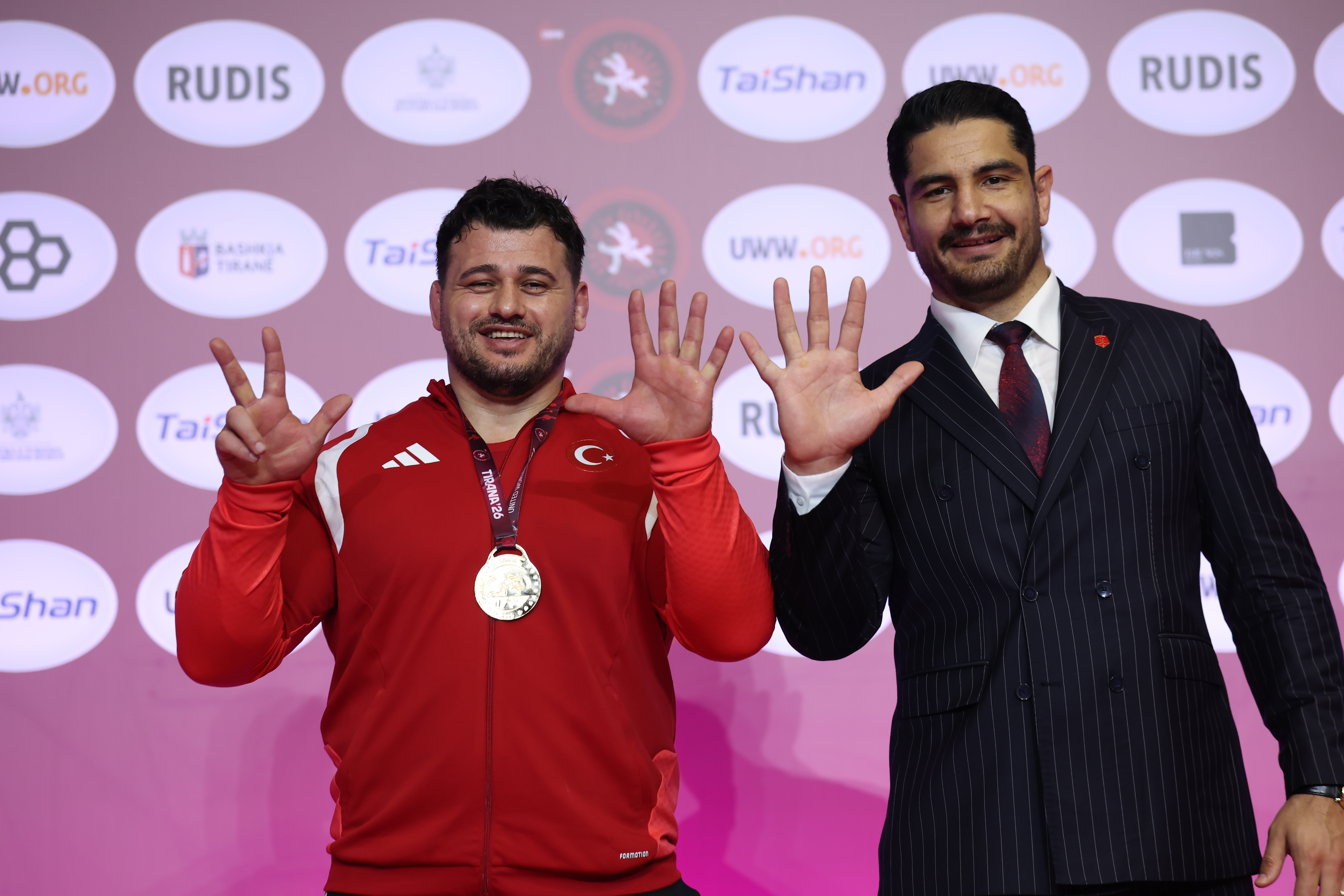 Riza KAYAALP (TUR) with Taha AKGUL (TUR) at the medal ceremony in Tirana. (Photo: United World Wrestling / Kadir Caliskan)
Share your thoughts.
Comments