

Grappling, No-Gi Grappling

2019 European No-GI Grappling Championship

By

Bucharest, Romania (April 5th) – For Grappling fans and competitors the European Championship is one of the most looked forward to events of the year. With all major European teams having the event circled on their calendar, the athletes show up in top shape to try and claim this year's title. This year proved to be one of the best championships yet with many thrilling matches, big throws, and slick submissions. After 4 years under the new ruleset, teams and competitors had been able to fully prepare for the event and it showed in the matches!

16 nations sent their teams in an effort to claim the 2019 European title. France sent a young and talented team but, fell just short of traditional powerhouse Russia on Day 1 in Men’s No-Gi. Russia secured the Men’s No-Gi Grappling by claiming 6 of 7 individual gold medals. Anthony DE OLIVEIRA (FRA) made sure that France did not leave without any gold by winning the 62KG title. He battled through a challenging bracket before meeting Dmytro Baranov (UKR) in the final. After a feeling out period on the feet DE OLIVEIRA (FRA) shot in a for a single leg takedown before jumping on the back. In the following scramble DE OLIVEIRA (FRA) locked in a nasty triangle choke and forced the tap.

Men’s No-Gi Team Result:
1.) Russia- 190 points
2.) France- 98 points
3.) Ukraine- 73 points
4.) Poland- 71points
5.) Romania- 44 points

In Women’s No-Gi Action all eyes were on the race between Russia and Ukraine for team gold. It proved to come down to the wire with Russia winning with 90 team points to Ukraine's 85 points. In the contest for the team bronze medal, Italy just edged out Poland by 2 points for the title. France’s team finished in 5th place, showing that they ready to go neck in neck with the best of Europe in the near future.

Svitlana SKRYPNYK (UKR) won 1 of 2 Gold medals in Women’s No-Gi for Ukraine. She made it to the finals of 53KG by beating home town favorite Madalina LINGURARU (ROU) in the Semifinal. The finals match against Oxana MOSKALENKO (RUS), she showed off her takedowns and guard passing to score 12 unanswered points, the exclamation point came when she pressured her way into the mount position in the final moments of the match. 

Women’s No-Gi Team Result:
1.) Russia- 90 Points
2.) Ukraine- 85 Points
3.) Italy- 60 Points
4.) Poland- 58 Points
5.) France- 53 Points

The action picks up again today with Gi Grappling. Catch all the matches live on United World Wrestling, with Finals matches starting at the 6pm local time.
#development

South Africa Advances National Wrestling System with DNSS Phase 2

By United World Wrestling Press

PRETORIA, South Africa (April 8) -- South Africa has reached a decisive milestone in its long-term wrestling development strategy with the successful implementation of Phase 2 of the Development of National Sport System (DNSS) programme, delivered in collaboration with United World Wrestling (UWW) and supported by Olympic Solidarity.

Following the diagnostic and mapping phase conducted earlier, Phase 2 marks a clear transition from analysis to structured implementation, laying the foundation for a sustainable and internationally aligned wrestling system.

Led by UWW Development Officer Vincent AKA, in close cooperation with the South African Wrestling Federation (SAWF), the National Head Coach, Markus DEKKER and Provincial Coordinators, the programme was deployed across multiple provinces through a structured 10-day intervention from March 2 to 13. 

Activities were conducted in key locations including:

· LPWA (Ion Bachu)
· CGWA (Ruiter)
· NGWA (Menlo Park Hall)
· Frank Joubert Tournament (Menlo Park Hall)

This nationwide approach ensured direct engagement with provincial structures, strengthening alignment between national leadership and local associations while promoting inclusive development across the country.

From Talent Identification to System Building

Unlike traditional training camps, DNSS Phase 2 focused on identifying talent and building long-term development systems. Wrestlers and coaches from all age categories -- U13, U15, U17, U20, and Senior -- were actively involved, ensuring a complete pathway approach.

Provincial visits and stakeholder meetings played a key role in assessing facilities and operational structures, strengthening coordination between SAWF and provinces, and identifying emerging wrestlers.

Building Athlete Pipeline

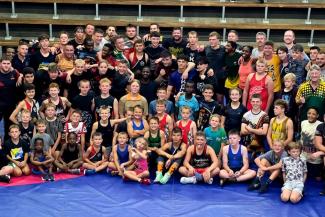
A training camp for different provinces brought together wrestler to consolidate talent identified during Phase 1 and introduce standardized training methodologies.

The training camp included technical sessions, physical conditioning, match simulations and wrestling. The initiative contributed to the creation of an updated national prospect and the foundation of a structured athlete monitoring system.

South Africa

Beach Wrestling Gains Momentum

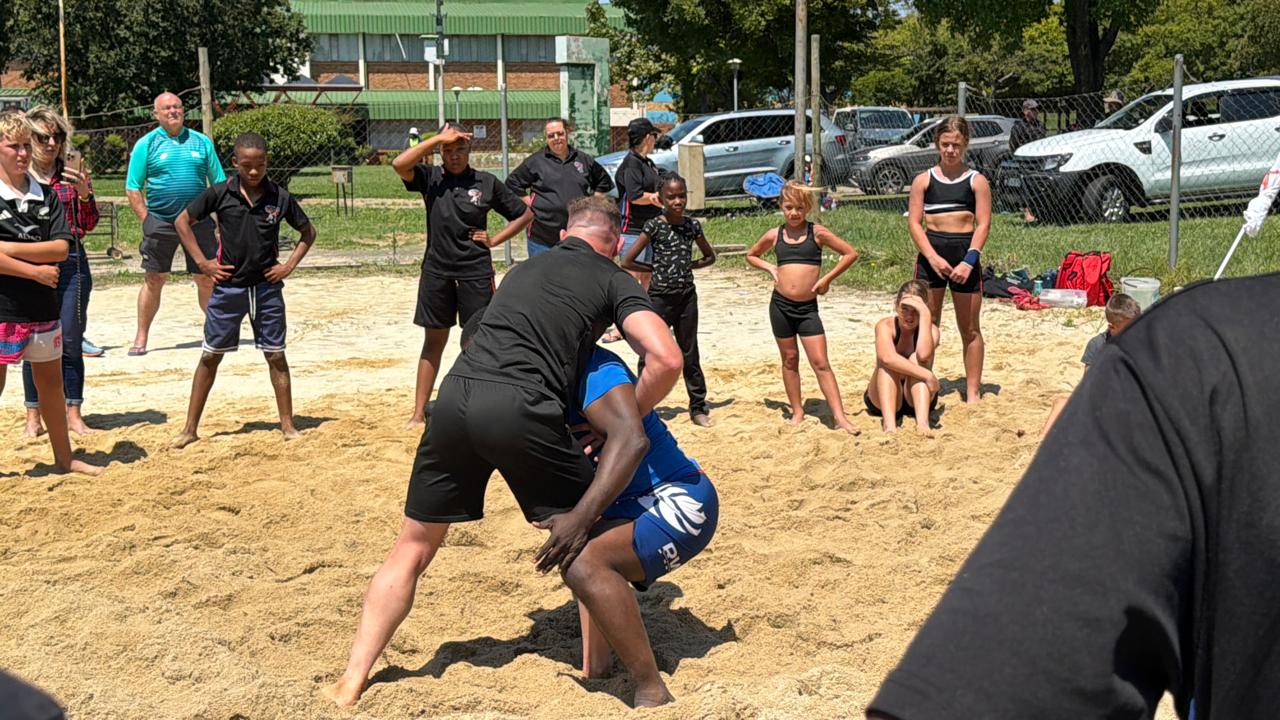
As part of the DNSS activities, a Beach Wrestling training session in Roodepoort highlighted the programme’s expanding impact.

During the visit, Aka led a specialized session, sharing advanced technical insights adapted to beach wrestling. It included stance and balance adjustments, grip and control techniques, and movement adaptation on sand.

The training programme comes at a crucial time, as South African athletes prepare for African Beach Wrestling Championships in Alexandria, Egypt and other international tournaments.